The Central Criminal Court of England and Wales, the iconic Old Bailey, is entering the hospitality business, offering visitors the chance to combine a tour of the historic courthouse with a traditional afternoon tea served beneath its grand dome. The new experience, priced at just over £100 per person, aims to capitalise on the building’s formidable history, from its origins on the site of a notorious prison to its status as the venue for some of the country’s most infamous trials.
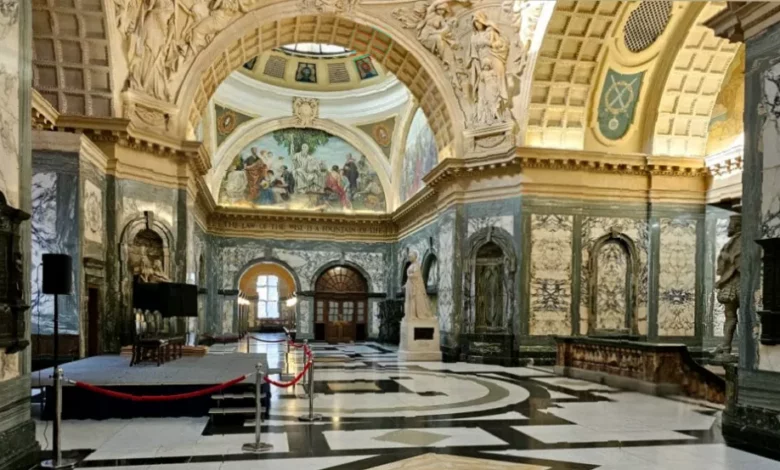
The afternoon tea tour begins like the standard public visit, with a guided exploration of the working court. Visitors are taken through courtrooms, the judges’ dining room, and the cells below, before those who have booked the premium experience are led back to the richly decorated Grand Hall for tea. A standard tour without the refreshments costs £27.80. The court has confirmed that all tours typically take place on Saturdays, require advance booking, and are subject to stringent security measures.
Upon arrival, all visitors must pass through a security check and are required to bring photo ID. The court operates a strict age limit, refusing admission to children under 14, and proof of age may be requested. Large bags and rucksacks are not permitted, though handbags are acceptable. While mobile phones are allowed on the tour, photography is prohibited in courtrooms, the cells, and the judges’ dining room. Taking photographs within a law court is a criminal offence that can result in a fine.
The grandeur of the setting is a key part of the appeal. The current Old Bailey building, a neo-Baroque landmark designed by E.W. Mountford and opened by King Edward VII in 1907, is famed for its intricate stonework and the gold-leafed statue of Lady Justice atop its dome. The Grand Hall itself is decorated with murals. The court’s history, however, is rooted in something far darker. It stands on the site of the former Newgate Prison, a notorious institution where public executions were carried out until 1868. The name “Old Bailey” itself derives from the street, which follows the line of an ancient fortified wall, or bailey, of London.
This history permeates the building, which has been the stage for trials that captivated the nation, including those of Oscar Wilde, Dr. Crippen, the Kray twins, and Peter Sutcliffe, the Yorkshire Ripper. The building has also been damaged by bombing during the Second World War and was targeted in an IRA attack in 1973.
The concept of afternoon tea, now a staple of British tourism, has its own aristocratic origins. It is credited to Anna Maria Russell, the Duchess of Bedford, in the 1840s, as a means to bridge the long gap between lunch and dinner. The tradition was commercialised by London’s hotels, with The Langham noted as the first to offer an afternoon tea service in 1896. Today, prices in the capital vary widely, from around £12 for a simple cream tea to well over £100 at luxury establishments, placing the Old Bailey’s offering at the premium end of the market. It joins a host of other historic venues, including museums and castles, in offering the experience.
For those wishing to watch actual court proceedings from the public galleries after a tour, the Old Bailey maintains a dress code, warning that entry may be refused to those deemed inappropriately attired. The new afternoon tea package presents a contrast between the solemnity of British justice and a quintessentially British social ritual, all served up within one of London’s most storied buildings.