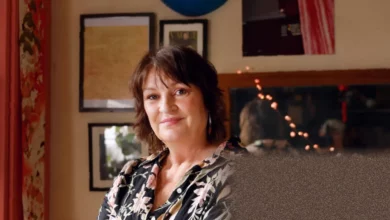
British Palestinians are increasingly afraid to speak openly about Israel’s war on Gaza, according to the director of the British Palestinian Committee, Sara Husseini, who described a climate of hostility that has left many feeling unable to express their identity or grief without fear of reprisal. “We have many documented reports of Palestinians and allies being silenced or punished for wearing Palestinian symbols, watermelon pins, or speaking about the genocide,” she said. Some are afraid to display Arabic jewellery or keffiyehs at work or in public, while others say their accounts of suffering are disbelieved, interrogated, or treated as politicised. “Many colleagues across all kinds of sectors feel they are being gaslit while friends and families are being massacred back home,” Husseini added.
The fear extends beyond casual comment. A recent high-profile case involves Dr. Tamara Ali, a trainee GP in Scotland, who is taking legal action against NHS Education for Scotland after being asked to remove a Palestinian flag and pin badge from her consulting room; she alleges discrimination and harassment under the Equality Act 2010. Three NHS workers at Barts Health NHS Trust are also suing their employer over a new uniform policy that bans political symbols. They argue the policy disproportionately affects pro‑Palestinian expression and was influenced by the lobbying group UK Lawyers for Israel. One of the claimants was told to remove a Microsoft Teams background image of a watermelon – a widely used symbol of Palestinian solidarity – because it could be perceived as antisemitic. British Airways staff were reportedly told that a Palestine Flag badge in the shape of a Black Power fist was a symbol of religious faith, a claim the airline later retracted, stating that political symbols are not permitted. A poll by Muslamic Makers found that 76 per cent of surveyed Muslims feel uncomfortable expressing their views at work due to fear of repercussions or job loss.
Husseini said many Palestinians feel they are being treated not as victims of mass suffering but as suspects whose grief has become politicised. “Cruelty is the word I would use, particularly for colleagues who are from Gaza or have family there,” she said. “Knowing these atrocities are being inflicted on their loved ones day in, day out, and then being effectively told: not only are we not going to acknowledge that this is happening to you, we’re going to disbelieve you, interrogate you, stop you from speaking about it, and if you do speak, we’re going to paint you as the problem.”
Erasure and dehumanisation
Husseini identified a deliberate pattern behind the silencing. “This is part of a broader attempt to erase and invisibilise Palestinians,” she said. “It goes hand in hand with attempts to dehumanise Palestinians, and dehumanisation is a prerequisite for genocide.” She pointed to commentary in mainstream British media that, she argued, casts Palestinian identity itself as suspicious or extremist. The effect, she said, is to strip Palestinians of their humanity and reduce their lived experience to a political liability. The watermelon, once a simple fruit, has become a flashpoint: its colours mirror the Palestinian flag, and displaying it at work has triggered investigations and disciplinary warnings. The keffiyeh, too, is viewed with suspicion. This erasure, Husseini argued, is not incidental – it creates the moral distance that allows mass suffering to continue without public outcry.
The United Nations Relief and Works Agency (UNRWA) recently reported that 111 Palestinians, including at least 18 children and seven women, were killed by Israeli forces in Gaza in April alone, bringing the total number of Palestinian deaths since the war began to 72,619. The agency said emergency tents for displaced people are now infested with disease‑carrying rodents, causing an increase in skin infections. UNRWA itself faces an “unprecedented crisis” after funding cuts triggered by Israeli allegations of staff involvement in the October 7 attacks; an independent review found no evidence of wrongdoing by UNRWA staff. The UK government has committed more than £100 million in humanitarian aid for Gaza in 2023‑24 and a further £129 million for 2024‑25, and has been involved in airlifting aid and facilitating medical evacuations for critically ill children to NHS hospitals.
An estimated 700 Palestinians have managed to flee Gaza for the UK. “Palestinians who came over during this period have had to find specialist nutritional support because they had been starved and couldn’t just take food on normally when they first arrived,” Husseini said. “That’s not to mention the trauma, the psychological damage, that will seep down through generations.”
The Nakba and solidarity
Husseini spoke ahead of Saturday’s national march in London commemorating the 78th anniversary of the Nakba – the “catastrophe” that saw the displacement of at least 700,000 Palestinians during the creation of Israel in 1948. For her, the current conflict represents the darkest chapter for Palestinians since that event. Yet despite her fury at successive British governments, she repeatedly returned to the solidarity shown by ordinary Britons. “We feel a great deal of solidarity from the British public,” she said. “What we’ve seen is hundreds of thousands, if not millions, of people of conscience from all walks of life and all backgrounds who have marched, signed petitions, written to their MPs and protested our government’s complicity in Israeli war crimes.”
The marches have themselves become a source of tension. Some Jewish groups and politicians have called on ministers and police to impose tighter restrictions on pro‑Palestinian demonstrations, which have been labelled “hate marches” by critics. Husseini rejected that characterisation outright. “It’s actually the complete inverse: it’s a protest against the most hateful acts possible: war and genocide,” she said. She attends the protests with her two young children and says they walk alongside people of all faiths, including 13 organised Jewish blocs. “These are all Britons of conscience protesting against the killing of children, the bombing of a captive population, the forced starvation of human beings,” she said. “I think the answer to why they’re being very clearly misrepresented as hate marches is to undermine the hundreds and thousands of people who are turning up on the street. It’s to distract from the government’s complicity in these crimes.”
The Palestine Solidarity Campaign (PSC) says protesters march against what it describes as Israel’s “racist system of oppression, including ethnic cleansing, settler‑colonialism, apartheid, and genocide.” The scale of the demonstrations has been notable – an estimated half a million people marched in London for the 77th Nakba anniversary in May 2025, described as the largest and most sustained solidarity movement in British history.
Political engagement and hope
Last year, under the government of Prime Minister Keir Starmer, the UK formally recognised a Palestinian state – a move that was conditional on Israel making progress towards ending the situation in Gaza and committing to a two‑state solution. Some Palestinians had hoped Starmer’s government would take a more robust stance in defence of Palestinian rights. Husseini said engagement with Palestinians in Britain often amounted to little more than “photo opportunities”. She cited Starmer’s visit to a Cardiff mosque shortly after his 2023 LBC interview, in which he appeared to defend Israel’s right to withhold power and water from Gaza – remarks he later backtracked on, but which led to resignations among Labour councillors. “This is part of stirring up communal tensions and a wider culture‑wars mentality that frames it as Muslims against Jews,” she said. “That framing is just not right.”
Husseini drew a parallel between the Palestinian struggle and the anti‑apartheid movement in South Africa, a comparison widely made by scholars and activists who point to similarities in policies of segregation, dispossession and settler‑colonialism. The Boycott, Divestment and Sanctions (BDS) campaign, inspired by the South African model, remains a significant part of Palestinian solidarity efforts. Despite the hostility she and others face, Husseini said she remained hopeful. “Our freedom is ultimately inevitable,” she said.