A failed asylum seeker has been sentenced to two-and-a-half years in prison for planting a fake stick of dynamite outside MI5 headquarters on New Year’s Day. Julian Valente Pereira, a 33-year-old Brazilian national, carried out the hoax at Thames House in central London on 1 January 2026 – the same day he received a deportation notice from the Home Office.
The bomb hoax
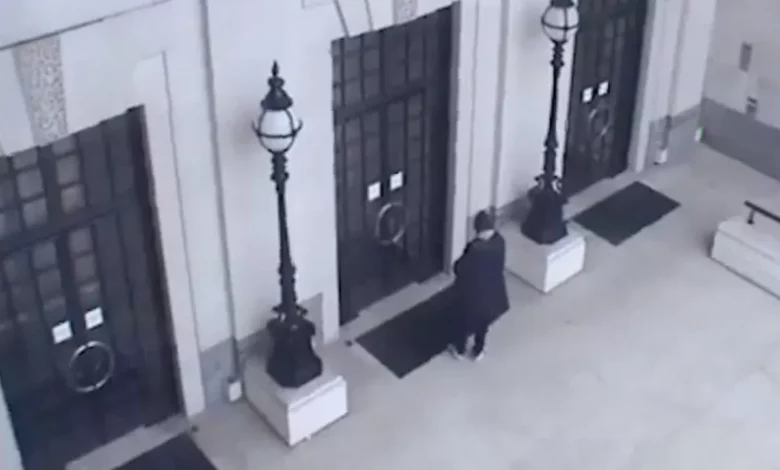
CCTV footage showed Pereira pushing paperwork relating to his immigration case through the doors of the MI5 building before retrieving the imitation explosive from his bag. He then threw it onto the pavement, with what appeared to be a fuse hanging from the top of the brown cylinder. The device was later found to be made from rolled-up A4 paper, brown masking tape and string, and Pereira had also placed a green cigarette lighter beside it.
The incident occurred on the same day as the London New Year’s Day Parade, a large annual event that attracts thousands of spectators and performers in the capital. A bomb expert was called to examine the device and confirmed it was a hoax within an hour. However, Judge Mark Lucraft KC noted at sentencing that police concerns at the time were that the fake dynamite could have been a “genuine explosive”, and that dealing with the incident “diverted them from other things”. The judge added that even after the hoax was identified, there remained fears it could have been “a diversionary tactic in preparation for another incident elsewhere”.
Pereira was found guilty in February 2026 after a trial at City of London Magistrates’ Court of placing an article with the intention of inducing another to believe it was going to explode, an offence under section 51(1)(a) and (4) of the Criminal Law Act 1977. The case was committed to the Old Bailey for sentencing, where Judge Lucraft jailed him for two years and six months. The judge said Pereira “may well” be deported from the UK: under Home Office rules, individuals receiving a prison sentence of 12 months or more can face deportation, which typically carries a ban on re-entry for at least ten years.
Mental health and motive
The court heard that Pereira had been diagnosed with bipolar disorder and schizophrenia. A psychiatric report by Dr Hannah Williams, Consultant Forensic Psychiatrist, indicated that Pereira was “significantly mentally unwell” at the time of the offence, with a diagnosis of schizoaffective disorder and bipolar disorder. Pereira himself stated he had been hearing voices in his head when he carried out the hoax. The judge noted that his mental health diminished his culpability for the offence.
Prosecutor Shannon Revel told the court that Pereira sought “maximum attention” for his grievances against the Home Office, following a protracted and unsuccessful attempt to remain in Britain. Pereira admitted he wanted to draw “maximum attention” to his complaints, saying he felt he had been “tortured” by the asylum system. He expressed dismay that others he perceived as less deserving had been granted asylum while his own application was rejected, and claimed to have evidence of corruption within the system.
Pereira had arrived in the UK in July 2018 with permission to work. He later claimed asylum, but his application was refused in 2023. Despite voluntarily reporting himself as an overstayer in October 2020 and being placed in asylum accommodation in June 2021, his final appeal against the refusal was dismissed on 31 December 2025 – the day before the hoax. His paid-for accommodation was withdrawn on 9 January 2026. At the time of the incident, he was living in an asylum hotel in Uxbridge, west London.
Giving evidence, Pereira claimed the device he left outside MI5 would not have been mistaken for an explosive, though he admitted it “looked like a dynamite or a firework”. He also mentioned his desire to join the police service and MI5, and said he was a supporter of the security service. A note on his phone indicated he had considered going to Buckingham Palace with a knife and a pen drive containing information, and also mentioned giving information to the Archbishop of Canterbury.
Judge Lucraft told the defendant: “You are of good character, demonstrating some remorse for what you did, expressing regret and sorrow for your actions that day. You accept now that what you did was foolish.”