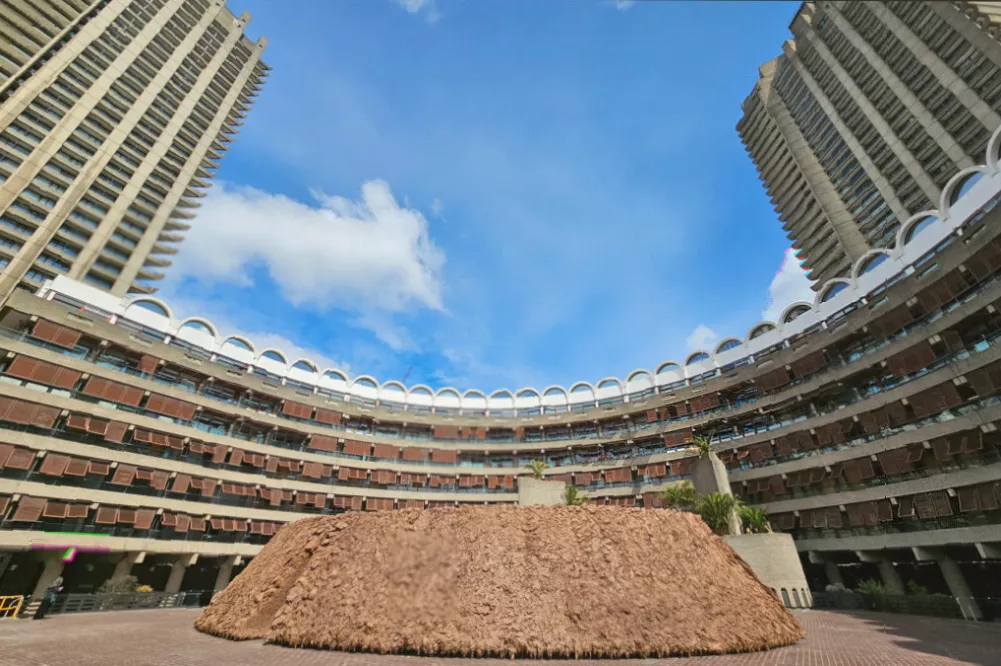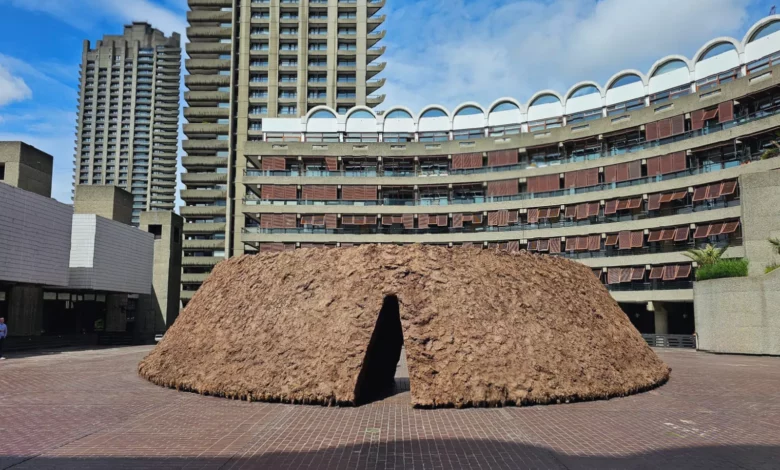
A giant muddy doughnut has landed at the Barbican. The oval-shaped earthwork, titled Origo — Latin for “origin” — fills the Sculpture Court on the third floor of the arts centre, a space that has been largely unused for roughly four decades. Handcrafted by Colombian artist Delcy Morelos, the installation is her first public artwork in the United Kingdom and, at roughly 24 metres (78 feet) in circumference and more than three metres high, her most ambitious to date. Morelos and her team worked with approximately 30 tonnes of soil, shaping a structure built from clay, earth, hay, plant seeds and spices such as cinnamon and cloves — chosen not only for their scent but also for their natural antifungal properties, which help preserve the organic materials.
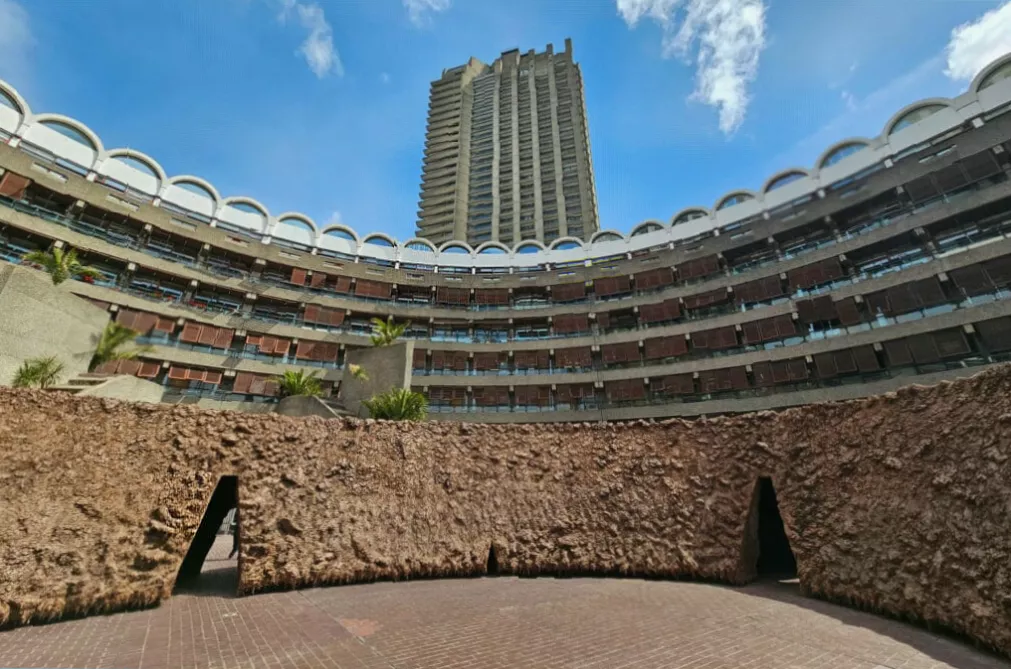
The artwork’s purpose is rooted in Morelos’s deep conviction that human beings are “living earth” and that there is no real separation between ourselves and the planet. She describes soil as “the mother of all materials” and draws on ancestral Andean cosmovision, a worldview in which natural elements are sentient and everything is interconnected — a concept she credits to her Amazonian teacher, Isaías Román, who spoke of the universe as a tejido, or woven fabric. Origo is intended to invite visitors to connect with the earth and reorient their relationship to land. The artist, born in 1967 in Tierralta, Córdoba — a Colombian region deeply scarred by armed conflict and land dispossession — uses her practice to explore how bodies relate to soil, and to foster a more ethical, reciprocal bond with the ground beneath us. That intention is given particular force by the setting. The Barbican Estate, conceived by Chamberlin, Powell and Bon in 1959 as a utopian “city within a city,” is built from brutalist concrete — a material Morelos points out is itself derived from the earth. She has deliberately placed the organic, earthen form of Origo in “direct dialogue” with the cement around it, crystallising a conversation between soil and the humanist values that underpin the estate.
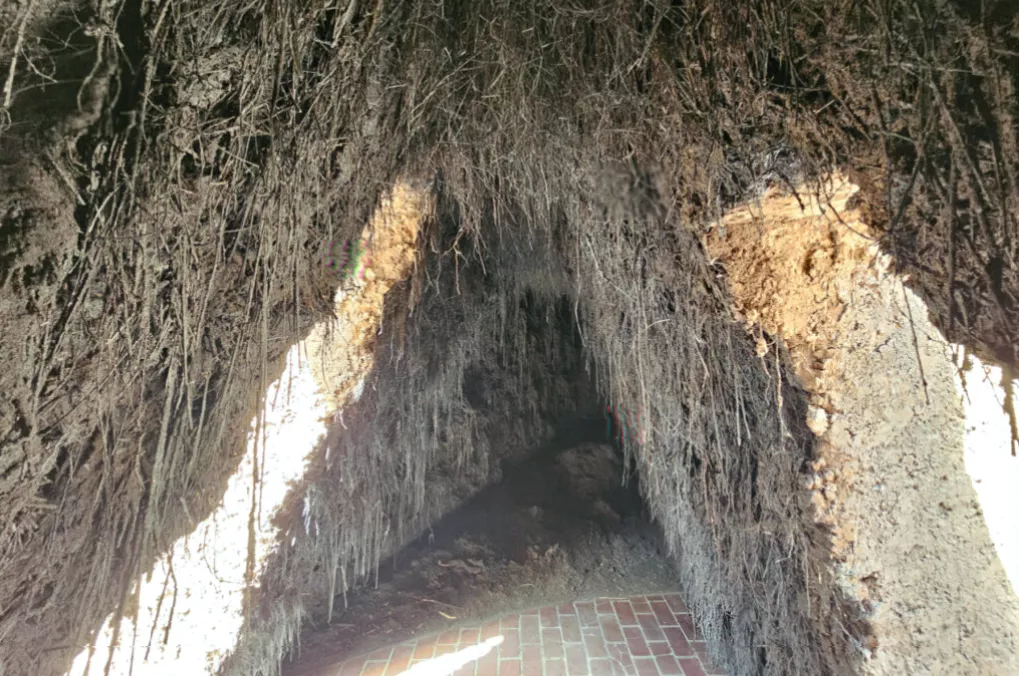
The visitor experience is deliberately multisensory and immersive. People are invited to walk around the installation, enter it through narrow cave-like passages, and explore its interior, where shifting light, the scent of spices and varied textures engage the senses. One section allows visitors to walk inside the wall itself. A central patio area has been designed as a space for meditative activities such as tai chi, reflecting Morelos’s wish to offer Londoners a moment of calm and a reminder of shared origins. The entrances are quite narrow, so large rucksacks are not advisable. Admission is free, encouraging repeat visits so the public can observe how the artwork evolves with weather and time. Origo opened on 15 May 2026 and will remain on view until 31 July 2026. It sits in the Sculpture Court on the third floor of the Barbican Arts Centre, within Frobisher Crescent, above the Concert Hall. Morelos, who studied at the Cartagena School of Fine Arts and is now based in Bogotá, previously presented Earthly Paradise at the 2022 Venice Biennale and an installation at Dia Chelsea in New York in 2023, for which she received the inaugural ARTnews Award for Established Artist of the Year. Her Mexico City work The Womb Space ran for nine months and drew more than 60,000 visitors.