The walls of Britain’s Victorian prisons, designed to keep inmates in, are proving too weak to hold the netting intended to keep drones out. Plans by the Prison Service to install anti-drone mesh and reinforced window grilles at ageing jails have stalled after engineers discovered that the historic brickwork cannot support the extra weight, forcing officials to reconsider the physical defences needed to combat what inspectors have called a “national security threat”.
Victorian bricks unable to bear the load
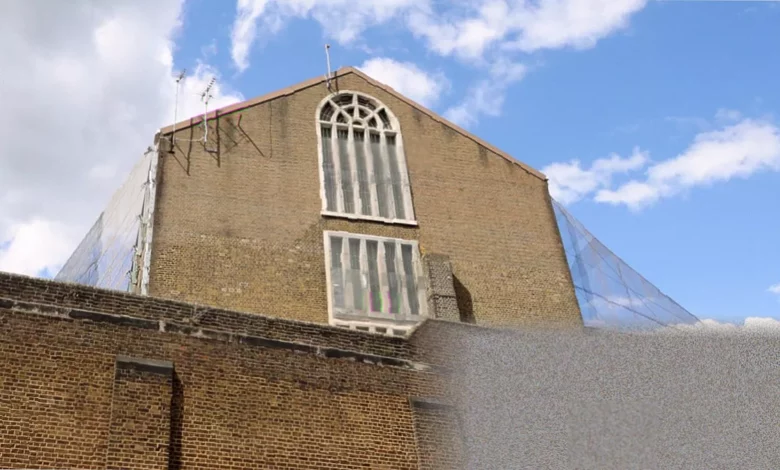
The structural problem is most acute in prisons built during the mid-19th century, when “London stock brick” was the material of choice. These yellowy bricks, made from Thames basin clay mixed with chalk and ash, are noticeably softer than modern equivalents. At HMP Pentonville, the category B prison in north London that holds around 1,200 inmates, recent attempts to install stronger netting across parts of the site were abandoned after engineers found that both the bricks and the original mortar were too weak to hold the mesh at the necessary tension. An industry insider familiar with the work told The Times that “not only are the yellowy bricks soft, but the mortar between them is very old. It is very difficult to fix ropes and meshes as a result.”
To get round the problem, installers would need to design steel brackets and support structures that share the load across larger areas. “That can be difficult to do in such restricted places,” the insider added. “It is not an easy task.” Tom Wheatley, president of the Prison Governors Association, confirmed that the issue was widespread. “Physical measures such as netting, wires and grilles are the preferred option for preventing contraband getting into prisons,” he said. “They make it almost impossible. In some prisons, there are concerns that such measures put extra weight on the walls and the weight can be too much for the buildings.”
The weakness of Victorian-era buildings is not new. Inspectors called for an overhaul of security in these jails in 2024 after inmates at HMP Winchester succeeded in digging through cell walls using plastic cutlery. Yet despite their age and crumbling fabric, 31 prisons built by the Victorians remain in operation across England and Wales, housing about 22,000 prisoners — a quarter of the entire prison population. Their thick walls, originally designed for soundproofing under the “separate system” of solitary confinement, were considered robust for the 19th century but are now a liability when it comes to modern security upgrades. Some netting was installed at Pentonville’s exercise yard several years ago, but plans to extend coverage were abandoned after the structural assessment. The prison is undergoing a significant overhaul after the chief inspector of prisons, Charlie Taylor, issued an urgent notification in July.
Drones: a 1,000% surge in incidents
The urgency stems from a dramatic rise in drone activity above Britain’s prisons. The number of recorded drone incursions rose from 138 in the year to March 2021 to 1,712 in the year to March 2025 — an increase of more than 1,000 per cent. That figure does not include drops that went undetected. In 2024 alone, there were 1,468 drone sightings, a 38 per cent increase on the previous year. Taylor last month warned that the Prison Service had “ceded the airspace above many of our prisons to serious organised crime”, describing the situation as a “national security threat”. Reports from inside jails suggest the problem has become routine: one inmate reportedly described the atmosphere as “This is now an airport”.
The drones are not carrying small packages. Inspectors have found deliveries weighing more than 15kg, and some recovered drones have been capable of carrying up to 7kg — equivalent to a bowling ball — with the ability to hold four loads at once. Among the items seized are weight loss drugs, hair loss medication, anabolic steroids, fast food, mobile phones and weapons including large knives. There have also been concerns about potent synthetic opioids such as Nitazenes reaching prisoners. In some cases, packages are flown directly to cell windows and retrieved by inmates using a hook. Gang members have become so proficient that a criminal group using drones to smuggle drugs into Pentonville and other London prisons was jailed in March. Earlier, a man named Mahamood Diallo Blin was sentenced for completing 37 drone deliveries to Pentonville carrying drugs, tobacco and phones.
The problem extends beyond Pentonville. Inspections at HMP Manchester and HMP Long Lartin found thriving illicit economies of drugs, phones and weapons, with basic security measures in disrepair and prisoners burning holes in windows to receive drone deliveries. At HMP Parc, a critical report highlighted systemic security failures and an “alarming” level of illicit substance availability, with drones identified as a key delivery method contributing to a spike in inmate deaths. Even the most secure prisons are vulnerable: the technology has advanced to the point where officials consider escapes via drone a “theoretical possibility”.
Nets fixed to walls can catch drones by snagging their propellers, while fixed window grilles prevent prisoners from pulling packages inside. But the physical constraints of the Victorian estate mean these measures cannot be rolled out universally. Wheatley said the pace of introduction was too slow. The problem is compounded by the fact that many Victorian prisons were originally built on the outskirts of towns but are now surrounded by urban development, making them more accessible to drone operators. Despite the structural challenges, campaigners note that maintaining these inner-city jails helps preserve family contact, which supports rehabilitation.
Government promises £10m but underspends on security
Ministers have pledged action. The government has promised to invest £10 million on anti-drone measures, and overall has spent over £40 million on physical security enhancements including exterior netting and reinforced windows. A further £900,000 has been announced for a nationwide crackdown on drone drops. David Lammy, the justice secretary, visited the Ukrainian military in January to discuss how battlefield tactics used against drones in the war with Russia could be adapted for use in British prisons. The UK is also investing £6.5 million in research and development for counter-drone technology, and a competition launched in February offers up to £1.85 million for new technologies that can safely stop drones once they breach secure airspace.
Legislation has also been tightened. Since January 2024, flying a drone within a 400-metre radius of any closed prison or young offender institution in England and Wales is an automatic offence, carrying fines of up to £2,500. Guernsey Prison became the first UK jail to deploy an electronic disruptor shield — known as a “Sky Fence” — at a cost of between £100,000 and £250,000, to detect and deflect drones.
Yet despite the scale of the threat, a National Audit Office report found that HM Prison and Probation Service was too slow to respond and underspent its security investment budget. Between 2019 and 2022, only 75 per cent of a £100 million allocation was spent; between 2022 and 2025, just £67 million of the £97 million budgeted was used. A Prison Service spokesperson denied that some prison walls were too weak to support anti-drone measures such as nets, insisting that “all improvements to prison security are tailored to individual jails, following detailed structural assessments to ensure they are safe and effective”. They added: “We have invested over £40m to fund a range of physical security enhancements. These improved measures will boost safety, combat the influx of drone activity and clamp down on suspected wrongdoing behind bars.”