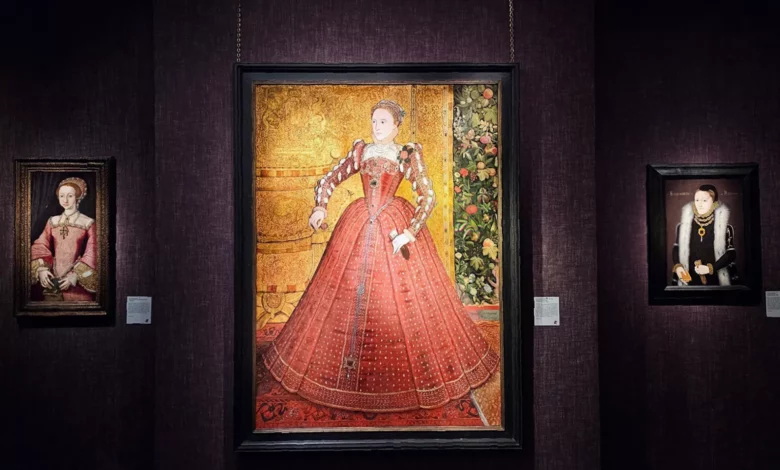
From mid-May, visitors to a central London gallery will have the chance to step inside the court of Elizabeth I — not through the eyes of a chronicler, but through the faces of the queen herself and the men who circled her. A free exhibition at the Philip Mould Gallery on Pall Mall, titled Elizabeth I: Queen and Court, brings together rarely seen portraits from private collections, placing four likenesses of the monarch at the heart of a room filled with her most powerful courtiers.
Portrait of a queen: from modest start to regal icon
The exhibition traces the evolution of Elizabeth’s image across her reign, from an uncertain young woman to the commanding “Virgin Queen”. The earliest painting on display, known as the “Clopton Portrait”, dates from around 1558, just after her accession, and presents a strikingly modest queen. According to the gallery, portrait painters of the time were still grappling with how to depict a female monarch, and the result is almost masculine in style, lacking the trappings of regal grandeur that later portraits would make standard. In this painting, the queen could pass for any wealthy lady of the era. The Clopton Portrait is also significant for showing a specific jewel, “The Mirror of France”, which had previously belonged to Henry VIII.
Dominating the room is a very different kind of portrait — one painted in Tudor red, with all the symbols of power and wealth. The gallery notes that this painting may have been intended as a marriage proposal portrait, designed to be sent to a prospective husband. The background is filled with codes of fertility and coupling, supporting the theory. It may have been painted at Greenwich Palace, offering the view of the queen that a visiting ambassador would have seen upon arrival.
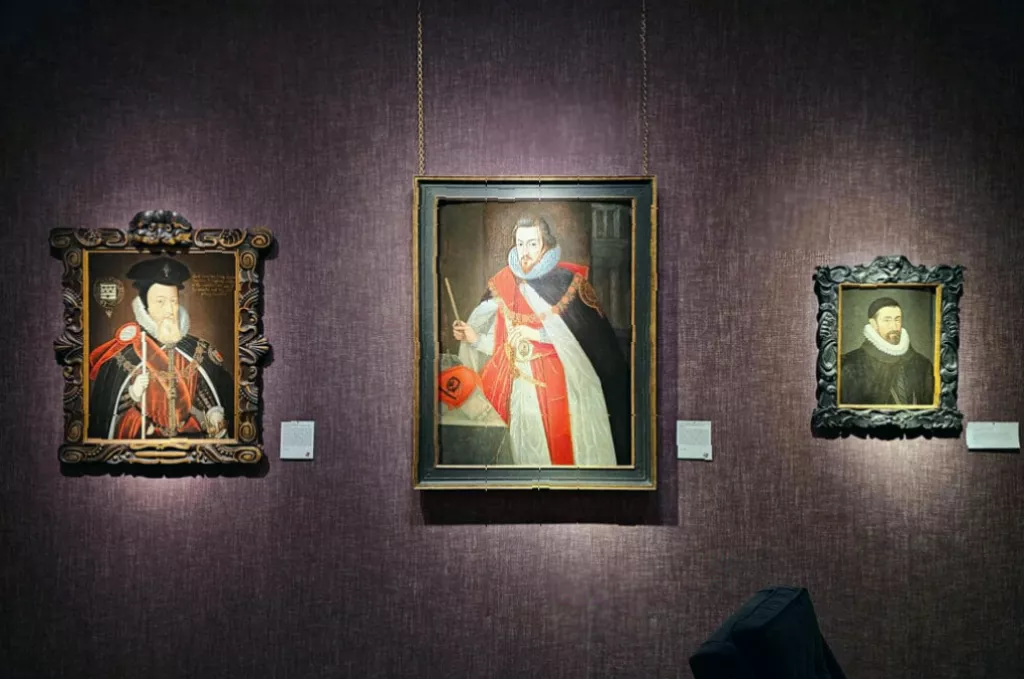
Together, the four portraits of Elizabeth chart her deliberate construction of a public image — one that evolved from unassuming to iconic. The exhibition explores how portraiture was used not merely to record likenesses, but to project authority, secure allegiance, and even register dissent. A 20-minute video in a side room explains the painters’ codes in detail, showing how animals and flowers that were obvious in meaning to Tudor audiences have become opaque over time.
Courtiers, suitors and a severed hand
Around the queen hang portraits of the men who shaped her reign. Names such as Walsingham, Cecil, Essex and Burley are all present, alongside Robert Dudley, the earl of Leicester and the queen’s lifelong favourite and suitor. Dudley’s portrait is resplendent in red and bears a striking resemblance to a painting of Erik XIV of Sweden by Steven van der Meulen. The gallery points out that the Swedish king was a rival suitor for Elizabeth’s hand, making the visual parallel unlikely to be a coincidence.
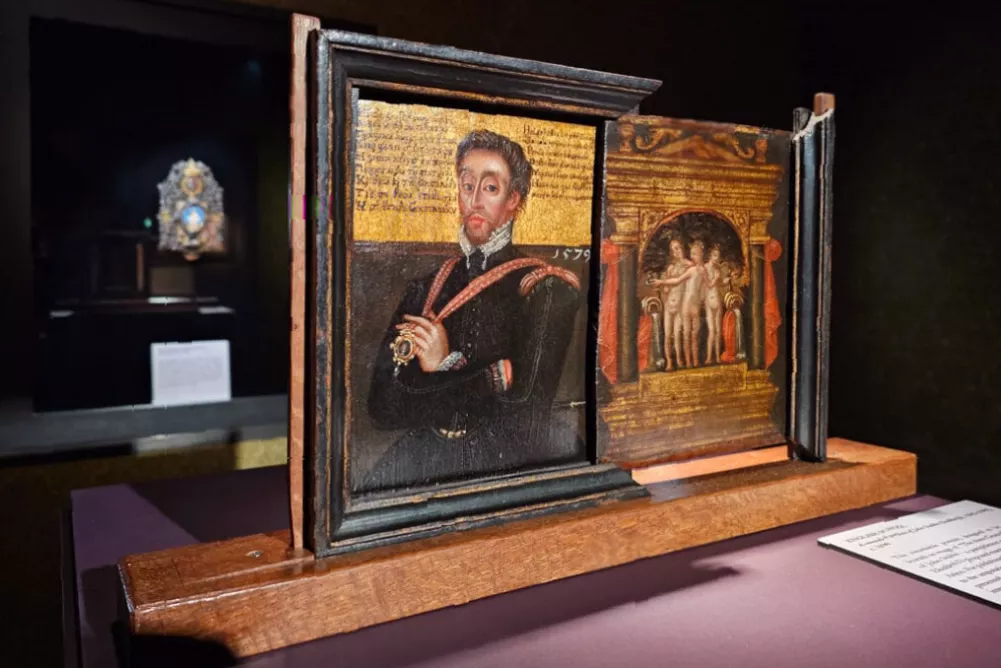
A particularly grim story attaches to a travelling portrait of John Stubbs, a Puritan pamphleteer. In 1579, Stubbs published a pamphlet criticising Elizabeth’s proposed marriage to Francis, Duke of Anjou, arguing that at 46 the queen was too old to bear children and should remain single for the good of the country. The furious queen initially demanded the death penalty but commuted it to dismemberment. Stubbs and his publisher each had their right hands cut off. The portrait shows Stubbs with his arms folded — and one hand is conspicuously missing. The gallery describes this as a rare act of visual resistance.
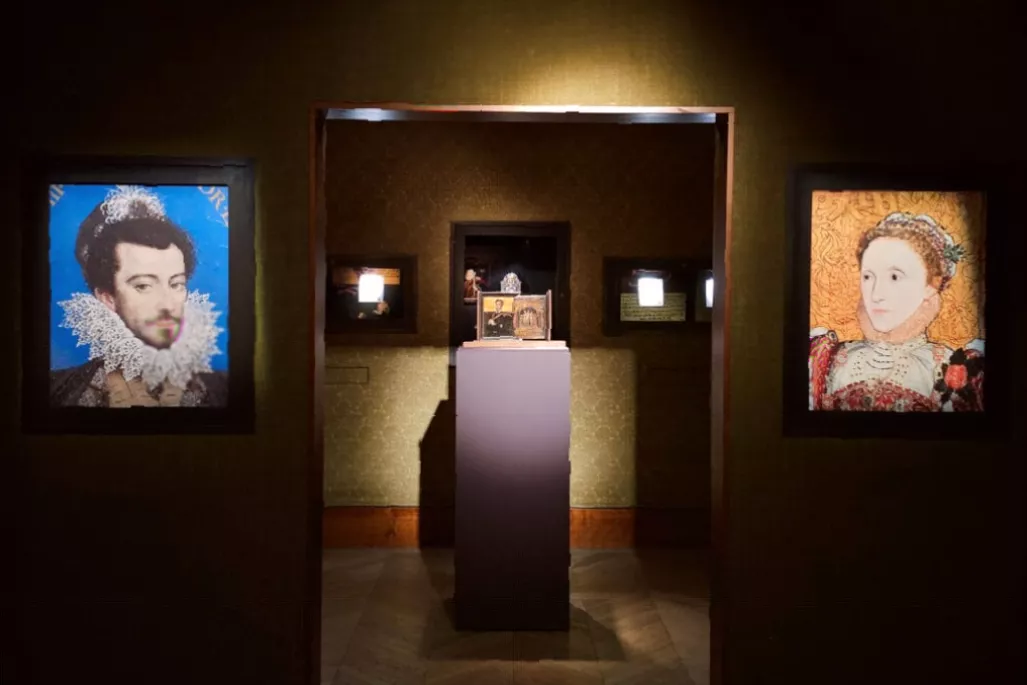
The exhibition also includes a portrait of Henry III of France — the Duke of Anjou’s father — which draws attention for its remarkable resemblance to the fictional character Edmund Blackadder. Another work, simply labelled “portrait of a lady” from the 1590s, is painted on an unusual curved panel. Elsewhere, a rather severe-looking Henry Carey belies his artistic nature: he was a patron of William Shakespeare and is thought to have introduced the playwright to the queen.
Supporting materials and symbolism
Alongside the portraits, the gallery has created a short film that demystifies the iconography of Tudor portraiture. The video explains, for example, that white often symbolised purity and faithfulness, while black could signify constancy. Flowers carried specific meanings — carnations for matrimony, roses for chastity — and the ermine was a symbol of purity. Such codes were widely understood at the time but have since been lost to all but specialists.
Philip Mould & Company, which operates the gallery, is known for its expertise in British art and Old Master paintings. The gallery’s founder, Philip Mould OBE, co-presents the BBC’s Fake or Fortune? and has advised institutions including the National Portrait Gallery and the House of Commons. The exhibition, running from 14th May to 10th July 2026, is free and open Monday to Friday from 9:30 am to 6:00 pm, with no booking required.