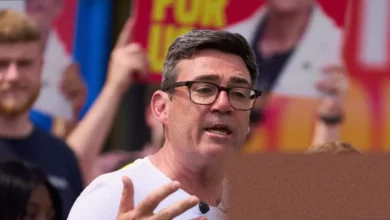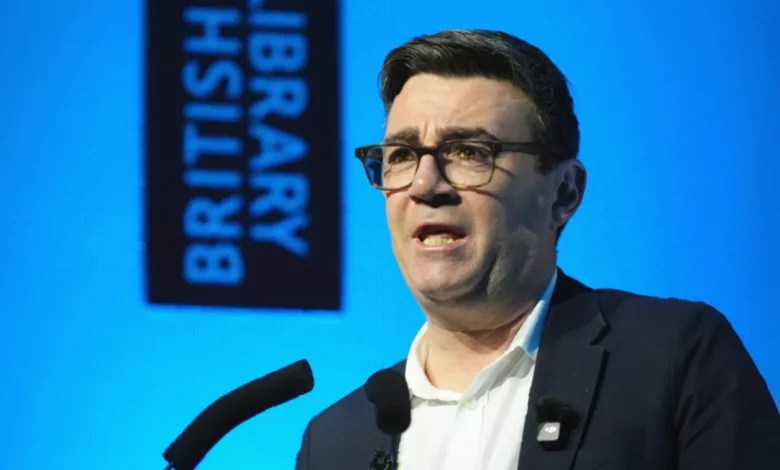
Andy Burnham is emerging as a leading contender to replace Sir Keir Starmer as Labour leader and Prime Minister, a prospect that has gained momentum amid mounting unrest inside the party after bruising local election results. The Mayor of Greater Manchester has previously indicated he would be willing to challenge the current leader, calling at last year’s party conference for a “debate on our direction” and, in November, refusing to rule out a bid, telling BBC Breakfast: “I don’t know what the future will hold.” Yet Burnham’s path to Downing Street is unusually treacherous: because he is not an MP, he must first secure a parliamentary seat, win the approval of Labour’s ruling National Executive Committee, and then clear a high bar for nominations before he can even enter a leadership ballot.
The first hurdle: finding a vacant seat
The most immediate obstacle for Burnham is the absence of a Commons seat. Under Labour’s rules, the party leader must be a Member of Parliament — a requirement that rules out any non-MP from entering a leadership contest. Two by-elections are pending in Scotland, after SNP Westminster leader Stephen Flynn (Aberdeen South) and SNP MP Stephen Gethins (Arbroath and Broughty Ferry) were elected to Holyrood, but Burnham is considered unlikely to stand in either Scottish seat.
The search for a willing Labour MP prepared to step down has proved difficult. In November 2025, Clive Lewis, the Labour MP for Norwich South, indicated he would vacate his seat for Burnham, telling BBC’s Politics Live: “If I’m going to sit here and say country before party, party before personal ambition, then yes, I have to say yes, don’t I?” However, Lewis has since distanced himself from that position, describing such plans as “total hallucinatory Jackanory” on X. Paula Barker, a Burnham backer and Labour MP for Liverpool, was asked on Monday whether she would stand down for him; she replied “no.” Marie Rimmer, Labour MP for St Helens South and Whiston, told the Guardian she is “not planning to stand down for anybody” after her seat was reportedly eyed by Burnham’s allies. Even among his supporters, the willingness to make way has evaporated.
Burnham’s allies are nonetheless monitoring the political landscape. Any vacancy would have to occur — and then be filled — before he could take the next step.
NEC permission: a gatekeeper with recent form
Even if a seat were to become available, Burnham would need the consent of Labour’s National Executive Committee, the body responsible for approving candidates in by-elections. The NEC has already blocked him once. In January this year, a 10-strong group including the Prime Minister voted to deny Burnham permission to stand in the Gorton and Denton by-election. Sir Keir justified the move by arguing that “an election for the Mayor of Manchester when it’s not necessary would divert our resources away from the elections that we must have.” The decision drew criticism, particularly after the Green Party’s Hannah Spencer won the seat, and Labour deputy leader Lucy Powell — the only NEC member to vote in favour of allowing Burnham to stand — said he “probably would have” held it.
Burnham’s backers are now eyeing a summer shake-up of the NEC, with voting for 16 of its places opening. They have held conversations with trade unions about shifting the balance of power on the committee, which is currently controlled by Sir Keir’s faction. Any change in the NEC’s composition could ease Burnham’s path, but the committee’s previous hostility suggests the route remains politically fraught.
Winning the seat and meeting the nomination threshold
If Burnham were to secure NEC approval and win a by-election, he would finally become an MP — but that is only the beginning of the leadership process. Labour’s rule book sets out two thresholds for entry onto the ballot. First, a candidate must receive nominations from 20 per cent of Labour MPs. Second, they must also secure nominations from 5 per cent of Constituency Labour Parties, or at least three affiliated organisations of the party — with at least two of those being trade unions — representing no less than 5 per cent of affiliated membership.
Burnham’s popularity among the public could help. An Ipsos poll found that 17 per cent of Britons chose Burnham as their preferred leader if Starmer resigned, more than triple his nearest rival Angela Rayner at 5 per cent; among 2024 Labour voters, Burnham’s support reached 25 per cent. But parliamentary support is a different matter. Although he has cultivated a network of allies across the soft left and centrist wings of the party, the requirement to collect the backing of one in five Labour MPs would demand organisation and timing. Any challenge to the incumbent leader can be triggered when 20 per cent of Labour MPs nominate a challenger; if that happens, the current leader is automatically on the ballot.
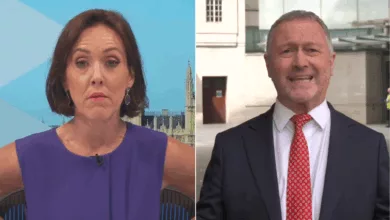
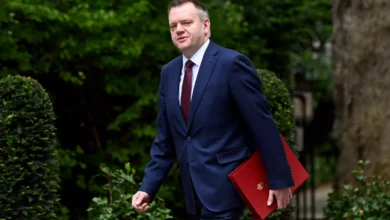
The political climate inside the party is febrile. Several MPs have called for Sir Keir Starmer’s resignation after recent local election losses, and some have threatened to initiate a formal leadership challenge. Wes Streeting, the Health Secretary, is widely mentioned as a strong contender, with reports suggesting he could have the backing of up to 200 MPs. Angela Rayner, the former Deputy Leader, is also seen as a potential candidate, though she has an unresolved tax problem. Burnham’s own “King of the North” persona — built on a platform of regional devolution and what he has termed “Manchesterism,” a concept rooted in the city’s history of driving social progress alongside economic growth — offers a distinctive alternative, but his absence from Westminster remains a critical weakness.
The long road to the top
Burnham has a documented history of seeking Labour’s highest office, having stood in the 2010 leadership contest (losing to Ed Miliband) and been a prominent candidate in 2015, initially considered a frontrunner before losing to Jeremy Corbyn. He has publicly stated that any leadership challenge is up to Labour MPs and that he is ineligible as a non-MP. But his refusal to rule out a future bid, combined with the sustained public support, keeps the speculation alive.
The sequence of necessary steps remains daunting: a vacant seat must appear, the NEC must grant permission, he must win a by-election and take his place in the Commons, then clear the nomination thresholds, and finally win a leadership competition. Each stage is vulnerable to political calculation and institutional blocking. As Marie Rimmer put it, she wants to avoid the “chaos” of a leadership contest and has backed Sir Keir to remain leader. With the NEC currently controlled by Starmer’s faction, and with sitting MPs unwilling to step aside, Burnham’s route to the top is not just arduous — it is contingent on developments he does not control.