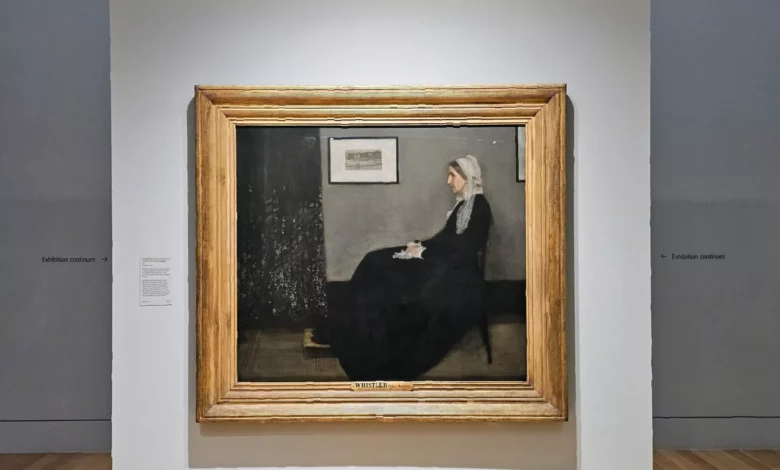
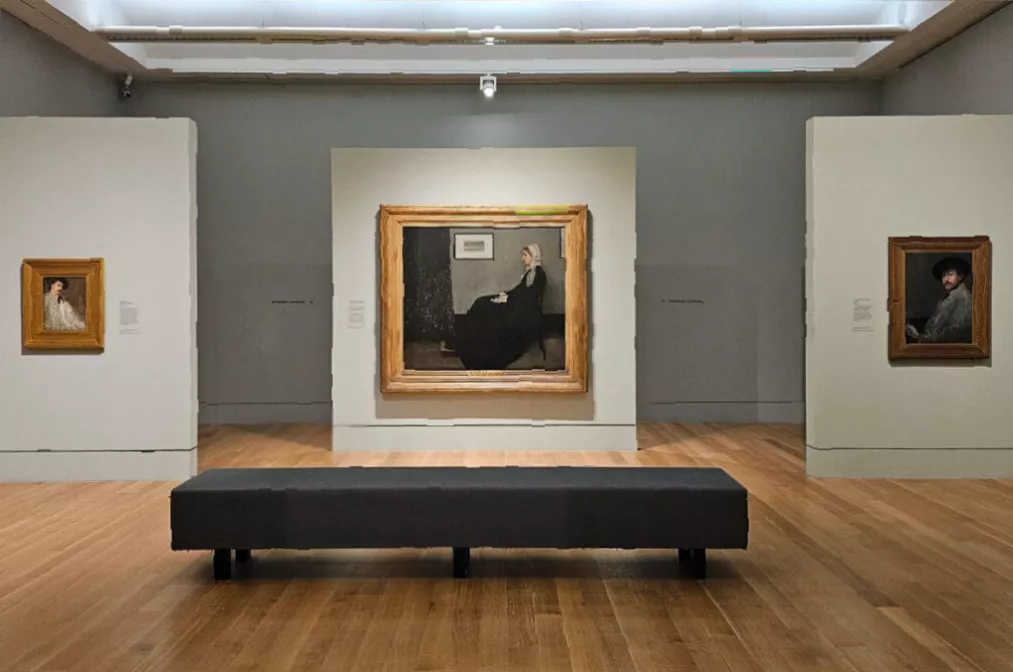
It is one of the most reproduced images in art history, a stooped figure in blacklace and white cap that has been memed, merchandised and shrunk to fit a phone screen a billion times over. Then you walk into the central gallery of Tate Britain’s new Whistler exhibition and realise: the actual painting is enormous. Arrangement in Grey and Black No. 1 — far better known as Whistler’s Mother — looms above you at a scale that its digital life completely disguises. The shock of looking up at a canvas most of us have only ever looked down at is, on its own, probably worth the entry price.
This is the first time the painting has been shown in London in two decades, and it is the centrepiece of what Tate Britain describes as the largest Whistler exhibition in Europe in 30 years — a once-in-a-generation survey that brings together around 150 works. Painted in 1871, the portrait was originally titled by Whistler simply as an Arrangement, a term he used to insist that the composition should be appreciated for its formal qualities — the austere palette, the minimalist use of line and tone — rather than as a sentimental family picture. It was the Royal Academy of Arts that added the subtitle Portrait of the Painter’s Mother, and the popular name stuck. The Musée d’Orsay in Paris, which acquired the work in 1891, holds it permanently. Art historian Alfred Barr later described it as a precursor to modern abstract art, so pared-down is its design.
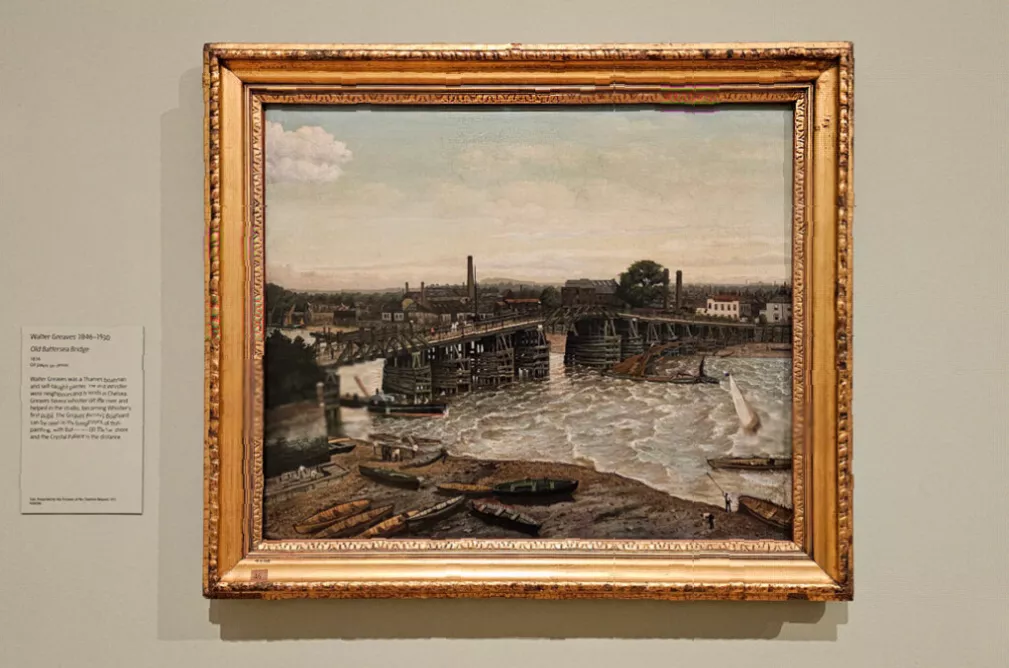
Whistler himself was as combative as his most famous painting is serene. Born in Lowell, Massachusetts in 1834, he was educated in Russia, France and at West Point before dedicating himself to art, spending most of his adult life in Britain. He became the apostle of “art for art’s sake”, rejecting sentimentality and moralising in favour of tonal harmony and musical analogies: he called his works Arrangements, Harmonies and Nocturnes, the last term borrowed from Chopin. The exhibition at Tate Britain — which runs from 21 May to 27 September 2026 — charts his restless evolution through portraits, landscapes, etchings, decorative schemes and those nocturnal scenes of the Thames that capture a London now lost: the foggy, industrial reach of Battersea, the still-rural stretches past Hammersmith, the river frozen over at Chelsea. Whistler’s note on one ice painting states that he saw his job as correcting nature’s occasional mishaps.
The same instinct — to impose his own vision regardless of the client’s wishes — lies behind the recreation of the Peacock Room that is a highlight of the show. Whistler was hired by shipping magnate Frederick Leyland to decorate a dining room in his London townhouse, but he took over the job from architect Thomas Jeckyll and transformed it into an interior masterpiece of blue, gold and fighting peacocks — entirely against Leyland’s wishes. The room, later purchased by American industrialist Charles Lang Freer, is now at the Smithsonian’s Freer Gallery of Art in Washington, D.C.. The two peacocks in the design are understood to represent Whistler and Leyland in dispute.
Fog, Fireworks and Financial Ruin
If the Peacock Room shows Whistler’s arrogance, the exhibition’s darkest room shows its consequence. It is filled with his nocturnes — the largest assembly of these landscapes in more than 30 years — and the atmosphere turns literal as well as figurative. Among them is Nocturne in Black and Gold – The Falling Rocket (c. 1875), a shimmering depiction of fireworks over Cremorne Gardens. When it was exhibited in 1877, the leading critic John Ruskin accused Whistler of “flinging a pot of paint in the public’s face”. Outraged, Whistler sued for libel.
The trial in 1878 became a cause célèbre. Whistler won — he secured a farthing in damages — but the legal costs were devastating. He was declared bankrupt the following year and forced into exile from London, first to Venice and then to other European cities. The exhibition follows that trajectory, moving from the moody nocturnes into rooms filled with smaller works and sketches, the grand ambitions scaled back by financial necessity. Whistler’s habit of painting his night scenes from memory in the studio, rather than en plein air, had been central to Ruskin’s attack; the critics saw it as a con, whereas Whistler insisted it was the only way to capture transient light and atmosphere. The trial upended Victorian thinking about how paintings should be made and judged, but it also broke the man.
Yet the story does not end in ruin. The later rooms of the exhibition show Whistler returning to large-scale portraiture, including his final self-portrait. He also remained a sharp observer of the city around him: he painted not only the rich and powerful but street children and working people, and his etchings of London and Venice reimagined urban views as atmospheric experiences. He was a pioneer in printmaking and a foundational figure in modern visual culture, influencing Impressionism and foreshadowing Symbolism. His combative public persona — he painted several self-portraits over the years, seemingly unable to resist a “selfie” — often overshadowed the range of his craft.
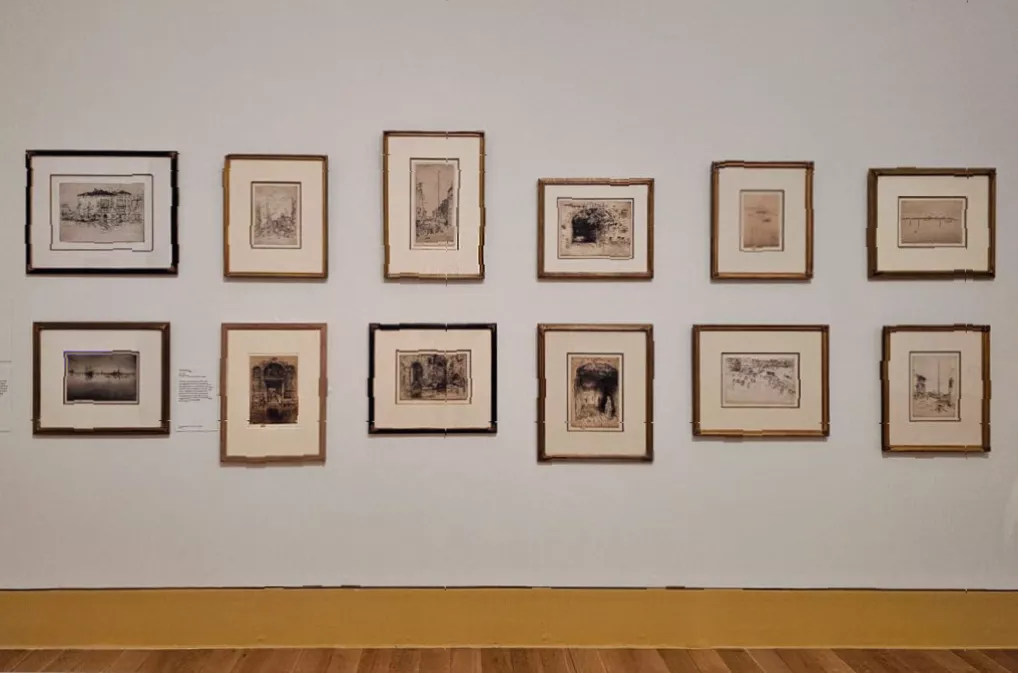
Tate Britain’s exhibition is organised chronologically and thematically, with rooms designed almost as stage-sets to evoke his living and working environments. There are personal items on display: his easel, his palette, his brushes, notebooks — “padding” for some, no doubt, but honest context for a career that spanned realism and abstraction, portraiture and atmosphere. And through it all, in the central gallery, is that painting — the one whose scale still surprises. Arrangement in Grey and Black No. 1 was created when Anna McNeill Whistler posed for her son while living with him in London; legend has it she was a replacement model or sat because she could not stand for long. Whatever its origin, the work endures as an American icon, a Victorian Mona Lisa, and — in the flesh — a revelation.
Tickets range from £24 standard to £5 for Tate Collective (16–25) and Universal or Pension Credit recipients. Members enter free. Advance booking is recommended.