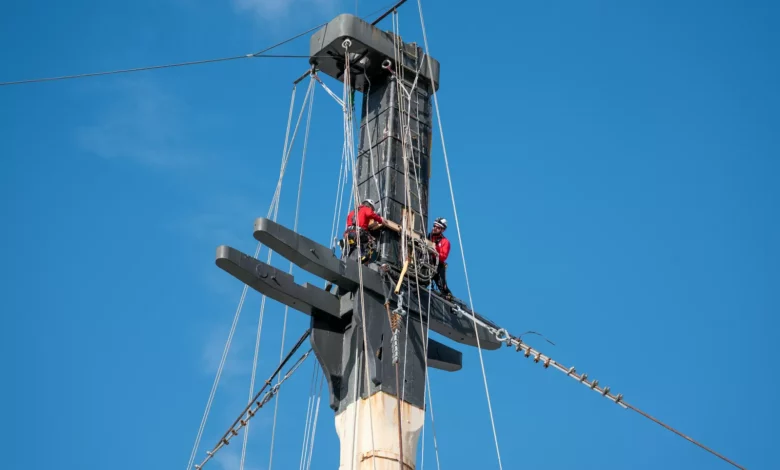
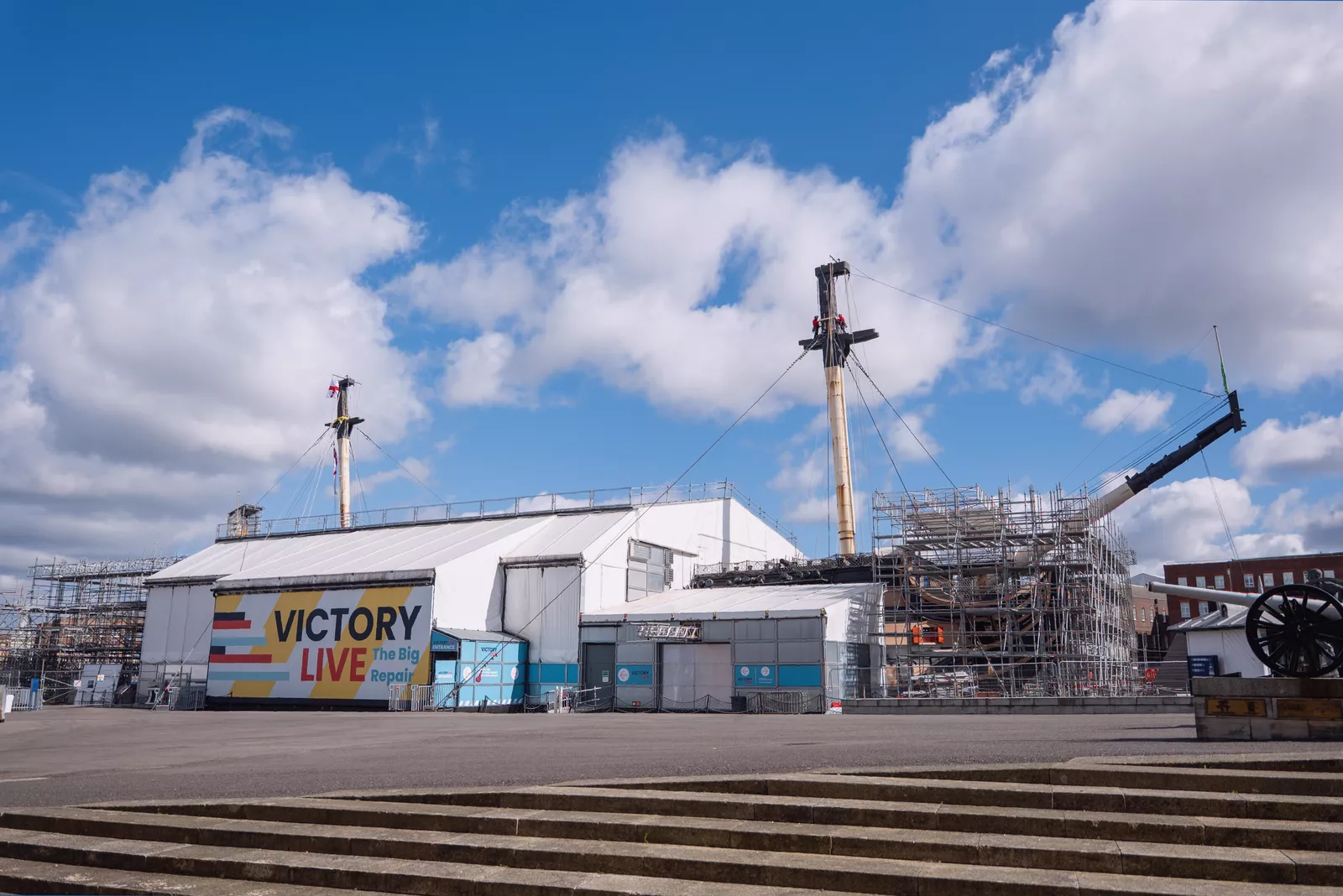
For the first time since the early 1890s, HMS Victory is to be stripped of all her masts, with a 750-tonne crane arriving at Portsmouth Historic Dockyard from Monday evening to lift the mizzen, foremast and bowsprit from the 18th-century warship. The operation marks the next major phase of The Big Repair, a £42 million conservation project that has already seen the main lower mast removed in 2021. Once the three remaining masts are laid safely alongside the vessel, the National Museum of the Royal Navy (NMRN) will begin the critical work of conserving them before they are returned to the ship in 2033.
Mast removal operation
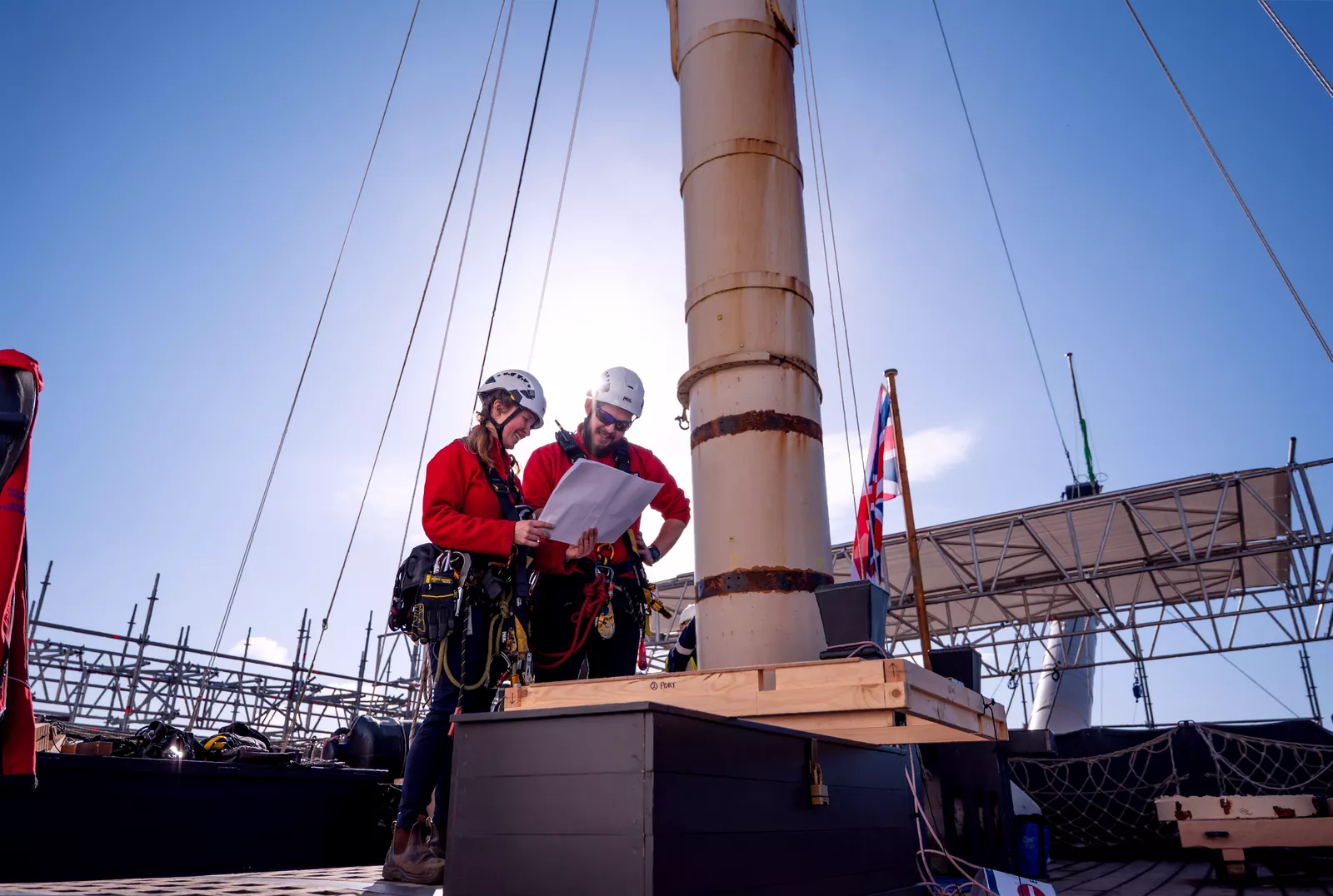
Andrew Baines, executive director of museum operations for the NMRN, described the moment as a key milestone. “This is the first time Victory will have been without all her masts since the early 1890s,” he said. “Our team has planned this step in meticulous detail, but we still have to work around factors like the weather. That’s why we will carry out the lifts overnight, so we can work safely and without interruption for several hours at a time.” The crane will be rigged on site for a week, and the team has drawn heavily on lessons learned from the 2021 removal of the main lower mast. NMRN lead rigger Stuart Sheldon added: “HMS Victory matters to people in a way few objects do. That brings real pressure, and it should. This lift is complex and it needs absolute precision. Putting the plan into action on the night will be a career highlight for the whole team.”
The Big Repair project: scope and timeline
Once all masts are removed, a scaffolding structure will be erected around the ship to facilitate the decade-long conservation work, which is scheduled to continue until 2033. The Big Repair is one of the largest conservation projects in the UK, employing groundbreaking technology and specialist skills. The aim is to preserve the world’s oldest commissioned warship for at least the next 50 years through a programme of planned maintenance after the major work is complete.
The conservation effort has revealed the extent of deterioration hidden beneath the ship’s surface. Some timbers were found to be in a condition described as “potting compost”, prompting a greater scope of work than initially anticipated. On the starboard side alone, approximately 150 futtocks — the curved wooden ribs that form the hull’s framework — need to be replaced. Rotting planking is being removed and replaced with new oak, and the ship’s structural framework is being repaired. Key milestones already achieved include the completion of the cover structure and visitor scaffold in July 2022, and the removal of the lower mast for analysis and conservation in early 2022. The replanking of the hull is scheduled to begin in early 2026.
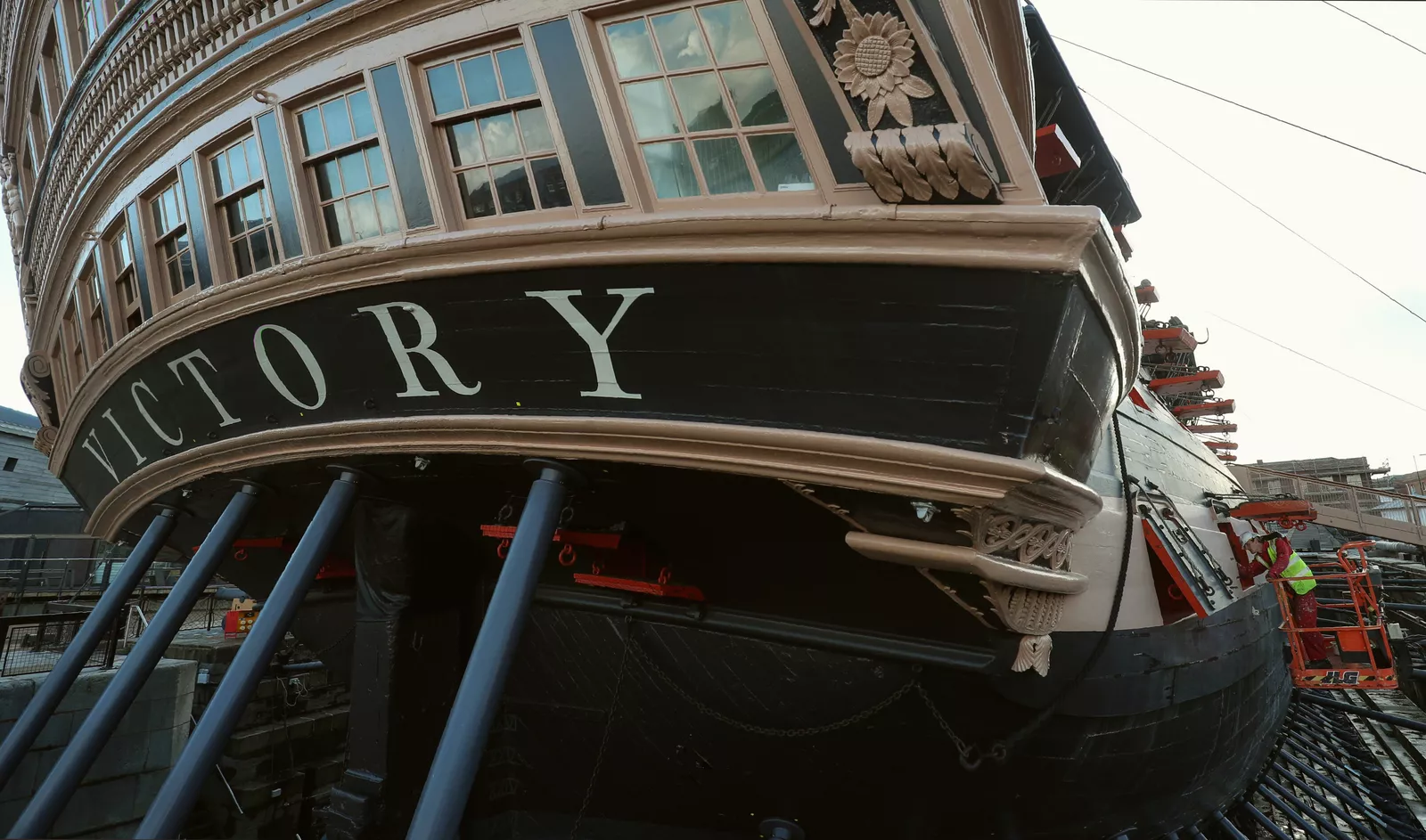
Water ingress is considered the ship’s biggest enemy, and the project also has to contend with pests such as the “Death Watch” beetle. Throughout the conservation, visitors have been given unprecedented access to the restoration process. New viewing platforms and museum displays have been introduced, along with immersive demonstrations of traditional shipbuilding skills, allowing the public to witness the work firsthand while the ship remains open.
Historical significance
HMS Victory is the world’s oldest commissioned warship and served as Vice-Admiral Lord Nelson’s flagship at the Battle of Trafalgar in 1805. It was on her quarterdeck that Nelson was fatally shot by a French sniper on 21 October 1805. The ship was first floated out at Chatham in 1765 and later saw action in the American War of Independence and the French Revolutionary War. By the 1920s she was in poor condition and was moved to dry dock in Portsmouth, Hampshire, in 1922. The current conservation project, managed by the NMRN, represents the most extensive repair undertaken since that move, ensuring the vessel remains a centrepiece of naval heritage for generations to come.