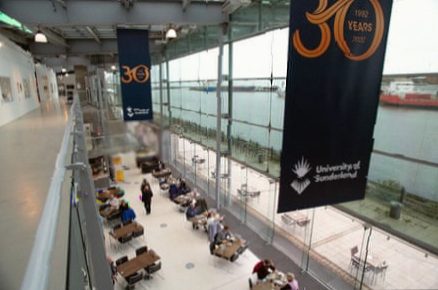
In the heart of Sunderland, a cultural landmark synonymous with the city’s centuries-old identity faces the wrecking ball. The National Glass Centre, a striking building of concrete and glass that has drawn visitors to the Wearside waterfront since 1998, is scheduled to close to the public in July 2026. Its custodian, the University of Sunderland, insists that structural repairs costing between £14 million and £45 million are unaffordable, leaving demolition as the only viable option. This decision has ignited a fierce battle for survival, with campaigners decrying it as a symbol of surrender to decline and accusing the university of grossly inflating the figures to pave the way for land development.
A Heritage Forged in Glass
The controversy strikes at the core of Sunderland’s history. Glassmaking in the area began in the seventh century, when Saint Benedict Biscop brought glassmakers to a monastery beside the River Wear. This legacy was industrialised with the rise of factories like James A. Jobling & Co. Ltd., which from 1921 produced the famous Pyrex glass for the British Empire. That factory, opened more than a century earlier, finally closed in 2007, with production moved to France. The National Glass Centre was conceived as a monument to this rich past, a National Lottery-funded project opened in 1998 to revitalise the area and celebrate what campaigner Tom Mulholland calls “the starting point for glassmaking in the UK.”
Today, the centre remains a hive of activity. On a rainy weekday morning, its cafe is full, the shop busy, and visitors pack the tiered seating to watch glass-blowing demonstrations. Within its studios, artists like Brian Jones, who started as a 15-year-old apprentice at the Pyrex factory, now create work commissioned for galleries. “The different things we’ve made here, it’s been unbelievable,” he said. Yet this vibrant scene is under threat, and many believe the university has engineered its decline. Glass artist Carolyn Basing, who has a studio in the building, alleges a deliberate policy since 2018 to run the place down. “Yes, we had a pandemic,” she said. “But certainly from 2018 onwards, that decline was very marked.”
The Multi-Million Pound Dispute
The University of Sunderland, which took over the centre’s running in 2010, states that a building survey in 2022 identified significant structural issues. A spokesperson said nobody has presented a feasible plan to cover the capital works, estimated at £14m to £45m, or the annual £800,000 subsidy the university provides for running costs. With nearly 90% of its income coming from student tuition fees, the institution insists it must prioritise core academic purposes. “It cannot afford the ongoing liability of maintaining and operating a building that does not have a sustainable future,” the spokesperson added.
This assessment is fiercely contested. Roger Clubley, a chartered town planner involved with the now-defunct Tyne and Wear Development Corporation that helped establish the centre, dismissed the £45m estimate as “total bullshit”. He argues the building, constructed with public money, was designed to generate a surplus and should be earning revenue. Nigel Taylor, a member of the Institution of Civil Engineers with decades of experience on major projects, has analysed the university’s reports. He disputes the figures, suggesting that by stripping out what he calls over-the-top costs and removing VAT, the repair bill could be around £8.3m, with work phased over time. “Why does it all have to be done now?” he asked.
Campaigners allege the university failed to maintain the structure and is now exaggerating the repair costs to justify demolition and sell the valuable riverside land. Their fight has garnered widespread support, with tens of thousands signing petitions. The proposed alternative—to move operations across the river—has been criticised as “utterly impractical” due to its proximity to residential properties. Meanwhile, Sunderland City Council and the charity Sunderland Culture are working on plans for a new “Glassworks” facility, with £5 million in government funding. Critics contend this would be a “massive downgrade”, unable to preserve the expertise and heritage of the current centre. The university has also explored relocating functions to other sites like “Culture House”.
Political Flashpoint and Community Heart
The battle has escalated into a potent political issue. The Liberal Democrats have adopted the cause, with local councillors challenging the university’s figures. The campaign’s breadth was illustrated when one person connected to the university noted marchers carrying placards that read both “Save the glass centre” and “Deport the immigrants”. Labour initially faced internal discord; councillor Denny Wilson temporarily lost the whip last year after breaking ranks to support the campaign. He has called the potential demolition “the scam of the century”. With the Reform party expected to make gains in May’s local elections, Labour’s group on the council recently came out against demolition, calling for a review of the decision-making process and exploration of alternatives.
At its core, the fight is about more than bricks and mortar; it is about cultural access and local pride. Former teacher Anne Loadman, who used to bring children from old mining communities on trips to the centre, stressed its educational power. Watching “the whole process from this burning globule of glass to become a vase, a plate” gave children a powerful connection to their history, she said. For many in Sunderland, the National Glass Centre is one of the city’s few cultural assets, a living link to a global industrial story. As the university stands by its cost projections and campaigners demand transparency, the future of this iconic building remains suspended, much like the molten glass it was built to honour.