A unique manuscript offering a direct glimpse into Wolfgang Amadeus Mozart’s creative process will go on public display in London next year, showcasing the profound and lasting influence George Frideric Handel exerted on the younger composer.
The centrepiece of a new exhibition, “Handel through Mozart’s eyes,” is an unfinished sheet of music in Mozart’s own hand. Dated to 1782–83, when Mozart was 26, it contains his transcription of the opening 20 bars of a fugue originally composed for harpsichord by Handel over sixty years earlier. Mozart was in the process of transforming the Baroque keyboard work into a string quartet arrangement, a task he left incomplete, leaving a tantalising snapshot of musical translation in progress.
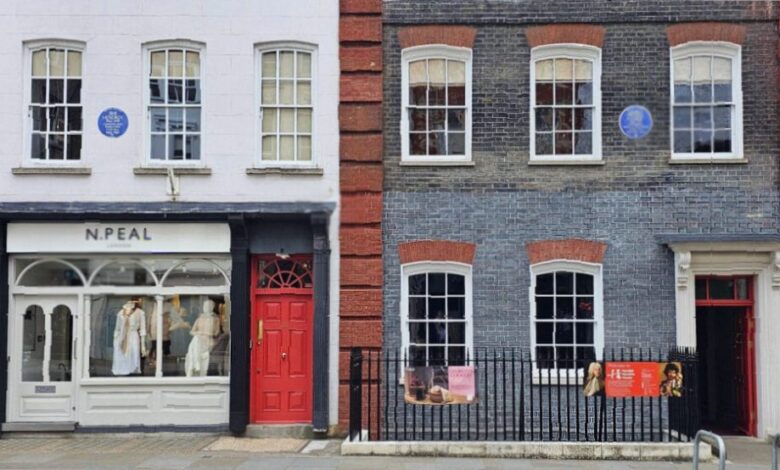
The exhibition will be hosted from 25 February to 13 September 2026 at Handel Hendrix House on Brook Street in Mayfair, a venue of deep historical resonance. The museum preserves the home where Handel lived from 1723 until his death in 1759, and where, centuries later, Jimi Hendrix resided next door.
A Lifelong Artistic Dialogue
The manuscript crystallises a musical conversation that began in Mozart’s childhood. During his family’s European tour in 1764–65, the eight-year-old prodigy performed in London, taking part in concerts featuring Handel’s works like *Acis and Galatea* and *Alexander’s Feast* at venues such as Hanover Square and Vauxhall Gardens.
This early exposure left an indelible mark. Mozart’s mature engagement with Handel’s work intensified in the early 1780s, influenced by Baron Gottfried van Swieten, who introduced him to the manuscripts of Bach and Handel. Mozart reportedly considered Handel one of the greatest composers, even stating that if he had to be born as another composer, he would choose Handel. He once wrote that “Handel understands effect better than any of us… when he chooses, he strikes like a thunderbolt.”
The fugue form, a complex contrapuntal style where a musical subject is passed between voices, reached its zenith in the Baroque era with composers like Handel. While less common as a standalone form in Mozart’s Classical period, he and others like Beethoven incorporated fugal passages to add drama and architectural complexity to their works.
Exhibition Highlights and Historical Context
Alongside the rare manuscript, visitors will see an early printed score of Handel’s *Messiah* as re-orchestrated by Mozart in 1789. This arrangement, known as K572, reveals Mozart’s inventive yet respectful approach: he introduced significant wind instrumentation—including clarinets, horns, flutes, oboes, and bassoons—absent from Handel’s original, and adapted choral sections for soloists.
The display will also feature 18th-century concert tickets and engravings of the London venues where the young Mozart performed, alongside a copy of an influential 1760 biography of Handel by John Mainwaring, a volume Mozart himself owned, studied, and recommended.
Museum admission, which includes the display, is priced at £14.50 for adults, £5.00 for children aged 13-17, and £10.50 for students. Children aged 12 and under, carers, National Art Pass or Historic Houses members, and Blue Badge Tourist Guides with advance notice enter free. The house is open from Wednesday to Sunday, 10:00 AM to 5:00 PM, with last entry at 4:00 PM.
Related events weaving through the exhibition period include “Baroque and Roll” live music performances on historical instruments, weekly Thursday talks by Assistant Curators on Handel’s life in Brook Street, and a family-friendly “Count the Composers” activity. The museum’s broader programme also features “Jimi Sessions” in Hendrix’s flat and a Hendrix Summer School in 2026 for young musicians.