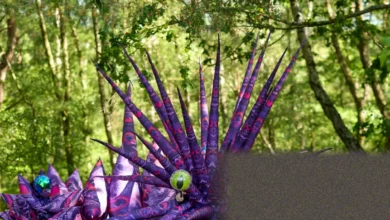
Natural History Museum exhibit lets visitors handle fossilised faeces from Jurassic sea monsters

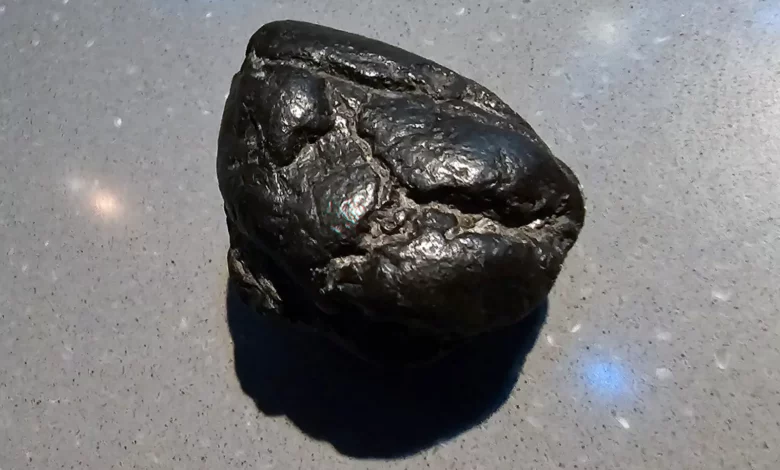
Visitors can touch ancient poo stones at a new Jurassic exhibition, the Natural History Museum has confirmed. The fossilised faeces – known scientifically as coprolites (COP-roh-lite) – are part of a hands-on display that invites guests to handle specimens from the deep past, including a mosasaur tooth estimated to be nearly 70 million years old, a dinosaur claw, shark skin, fish scales, belemnite ink sacs and a previously squishy squid.
Hands-on with history
The tactile experience is central to Jurassic Oceans: Monsters of the Deep, which runs until 20th September 2026. The museum says the coprolites offer insights into the diet and behaviour of ancient marine creatures – a link first identified by pioneering fossil hunter Mary Anning more than two centuries ago. Anning, who was born in 1799 and worked along the Jurassic Coast in Lyme Regis, was among the first to recognise fossilised faeces for what they were, alongside belemnite ink sacs. Her discoveries helped overturn established views of Earth’s history, even though she faced financial hardship and, as a woman, was excluded from scientific societies such as the Geological Society of London.
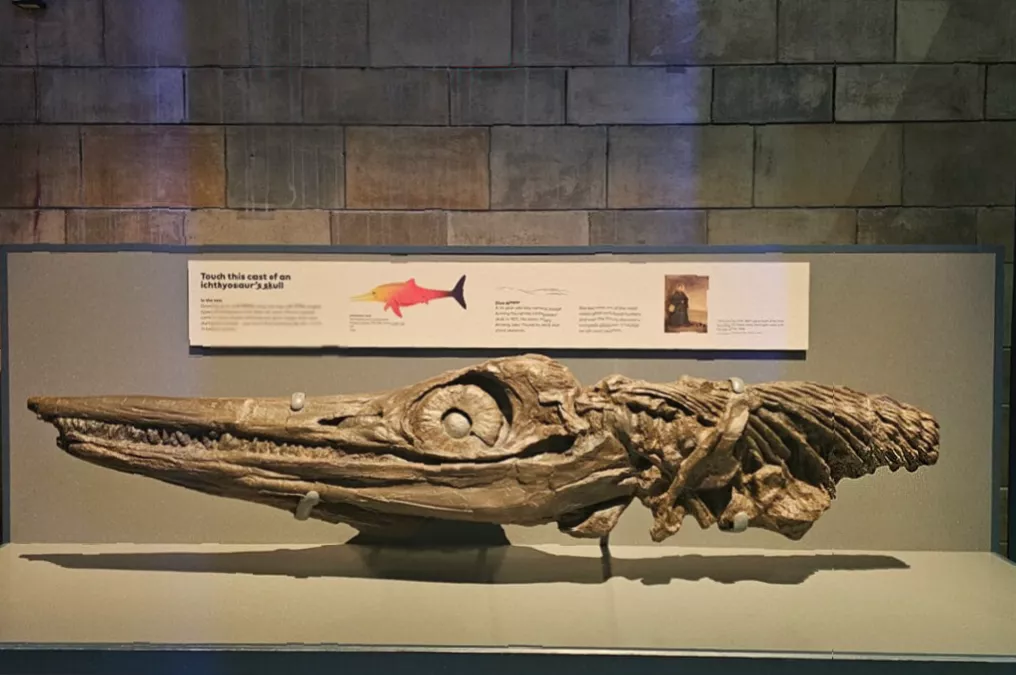
Other touchable items include a cast of an ichthyosaur skull, an ammonite and a mosasaur tooth. The ammonite specimen also illustrates a little-known detail: the creature itself occupied only the front segment of its shell, dragging the rest behind it.
Monsters of the deep
The exhibition proper opens with a cast of an ichthyosaur (ICK-thee-oh-sore) discovered by Joseph Anning in 1811 – a find that spurred his sister Mary to become one of the leading fossil hunters of the early 19th century. Ichthyosaurs were dolphin-like predators that could reach up to 25 metres in length, comparable to the museum’s own Dippy the Diplodocus, and had large eyes adapted for deep hunting and a keen sense of smell.
The largest skeleton on display is that of a plesiosaur (PLEASE-ee-oh-sore), a long-necked marine reptile that lived around 200 million years ago. This specimen measures 23ft from head to tail. Plesiosaurs had four flippers and a distinctive swimming style; some related species, called pliosaurs, had short necks and massive heads, acting as apex predators. At the other end of the scale, the smallest items in the exhibition are mounds of fossilised algae.
The museum has taken care to explain the often-complicated scientific names used on information boards, providing easy-to-follow pronunciations throughout. The full list includes:
- Ammonite (A-mon-ites)
- Belemnites (BEL-em-nites)
- Coprolite (COP-roh-lite)
- Crinoids (CRY-noyds)
- Hybodus (hy-BOW-das)
- Ichthyosaur (ICK-thee-oh-sore)
- Leedsichthys (leed-SIK-thees)
- Mosasaurus (MOH-sah-sore)
- Phytoplankton (FIE-toe-plank-tun)
- Plesiosaur (PLEASE-ee-oh-sore)
- Pterosaur (TERRO-sore)
- Thalattosaur (tha-LAT-o-sore)
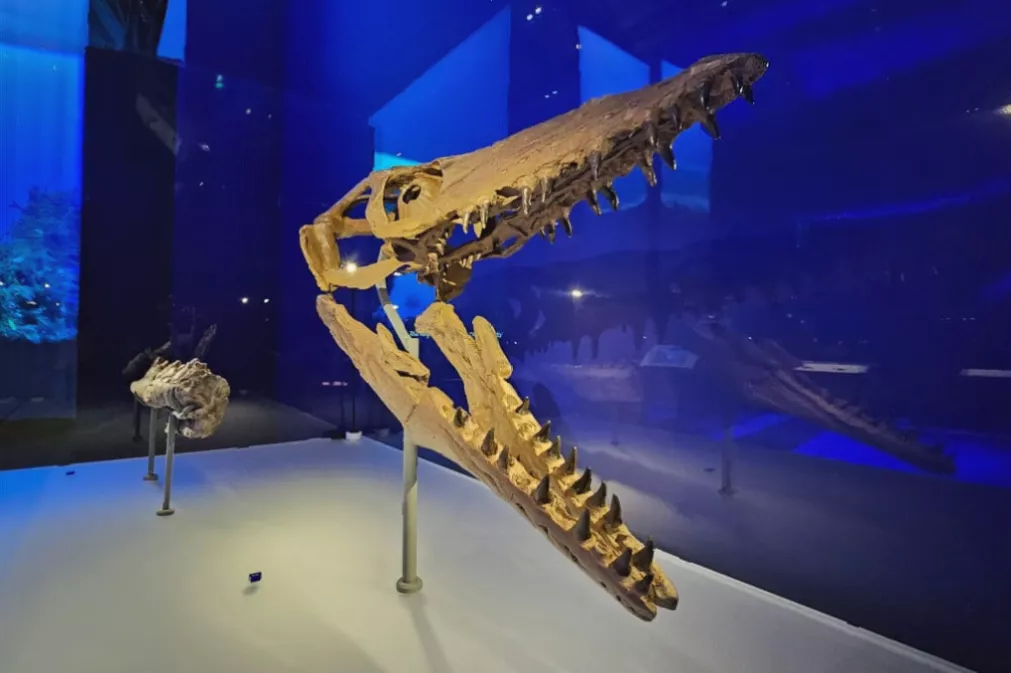
Among the featured fossils is the tail of Leedsichthys, a giant ancient fish, alongside preserved ammonites and crinoids. The mosasaurus, often dubbed the “T. rex of the sea,” was a formidable predator from the Cretaceous period with powerful jaws and sharp teeth.
Visitors are also invited to reflect on the “ugly” appearance of many of the reptiles. The museum notes that this perception is largely human prejudice – an instinctive preference for warm-blooded mammals over scaly, cold-blooded creatures – but it makes the exhibition feel like stepping into an alien world, separated from us by millions of years and fathoms of water.
Ancient worlds, modern lessons
The exhibition does not stop at the Jurassic. Towards the end, two massive skulls sit side by side: a killer whale and a crocodile. The comparison is designed to surprise – the crocodile jaw is significantly larger than many visitors expect, challenging common perceptions of the modern predators. The display also draws parallels between the warmer, wetter Jurassic world, which had higher carbon dioxide levels, and today’s changing climate. Studying ancient marine ecosystems, the museum argues, can inform our understanding of future ocean health and the ways species evolve and adapt. One of the evolutionary shifts highlighted is how sharks moved from being middle predators to dominant hunters over time.
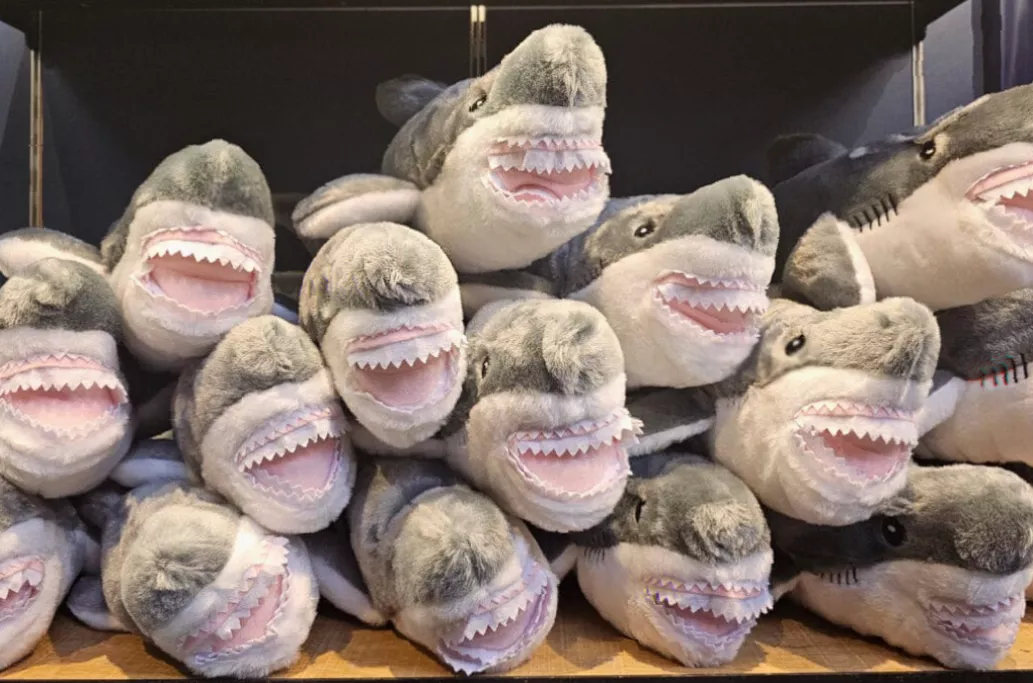
After exploring the exhibition, guests can collect a cuddly mosasaurus from the gift shop. The Natural History Museum, named the UK’s most popular tourist attraction in 2025, offers the exhibition daily from 10am to 5:50pm (last entry 4:30pm). Tickets cost £17.50 for adults, £8.75 for children aged 4–17, £14.00 for concessions, with discounted rates for Art Fund members. Advance booking is recommended. Standard adult tickets are £17.50 peak and £15.00 off-peak; museum members enter free. The exhibition is recommended for visitors aged eight and above, though all are welcome.