President Donald Trump has declared that he will be the American leader to order military intervention in Cuba, saying previous administrations have considered the move for decades but that it now falls to him to act. “Other presidents have looked at this for 50, 60 years, doing something,” Trump told reporters during an environmental event in the Oval Office. “And, it looks like I’ll be the one that does it. So, I would be happy to do it.”
The president’s explicit threat comes amid a coordinated campaign by his administration that combines new criminal charges against Cuba’s former leader, fresh economic sanctions, and a significant naval deployment in the Caribbean. Trump has been raising the prospect of military action since the capture of Venezuelan President Nicolás Maduro by US forces in January, a operation he has repeatedly cited as a model for dealing with Havana.
Rubio’s national security justification
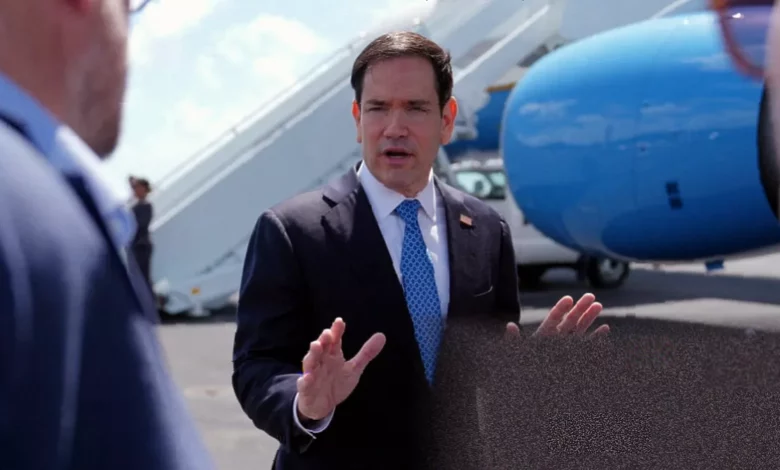
Secretary of State Marco Rubio, the son of Cuban immigrants who has long taken a hard line against the island’s socialist leadership, provided the administration’s detailed rationale for the escalating pressure. Speaking in Miami before departing for a Nato meeting in Sweden and a subsequent visit to India, Rubio argued that Cuba poses a “serious national security threat” to the United States because of its close security and intelligence ties with China and Russia, as well as its friendly relations with US adversaries across Latin America.
Rubio stressed that the Trump administration’s preference remains a peaceful, negotiated settlement but made clear he sees little chance of that with the current Cuban government. “I’m just being honest with you, you know, the likelihood of that happening, given who we’re dealing with right now, is not high,” he said. Top Trump aides — including Rubio, CIA chief John Ratcliffe and other senior national security officials — have met with Cuban officials in recent months to explore possible improvements in relations, but the US side came away unimpressed, leading to even more sanctions imposed in the past week.
Over the years, Rubio argued, Cuba has grown accustomed to “buying time and waiting us out.” He vowed that approach would no longer work. “They’re not going to be able to wait us out or buy time. We’re very serious, we’re very focused.”
When asked whether the US would use force to change Cuba’s political system, Rubio repeated that a diplomatic settlement is preferred but noted that “the president always has the option to do whatever it takes to support and protect the national interest.” He pushed back on a reporter’s suggestion that this sounded like “nation-building,” insisting the administration is responding to a concrete national security risk — not attempting to remake Cuban society.
Rubio also highlighted a new enforcement action targeting the families of Cuban military elites. He announced that the sister of the executive president of Grupo de Administración Empresarial SA (Gaesa) — a business conglomerate controlled by the Cuban Revolutionary Armed Forces that is estimated to control 40–70% of the Cuban economy — had her green card revoked and was arrested, now in ICE custody. “Past administrations have permitted the families of Cuban military elites, Iranian terrorists and other reprehensible organisations to enjoy lavish lifestyles in our country funded by stolen blood-money, while the people they repress at home suffer in increasingly dire circumstances. No longer,” he said.
The Castro indictment and the playbook from Venezuela
Federal prosecutors on Wednesday unveiled an indictment accusing former Cuban leader Raúl Castro of ordering the shooting down in 1996 of two civilian planes flown by Miami-based exiles from the group Brothers to the Rescue. The charges, secretly filed by a grand jury in April and unsealed in Miami, include murder and destruction of an airplane. Raúl Castro, who was Cuba’s defence minister at the time of the incident and is now 94, is accused of authorising the use of deadly force against unarmed aircraft. The indictment alleges that Cuban intelligence officers infiltrated the exile group and provided flight details to Havana, and that Castro orchestrated training missions for pilots to intercept such aircraft.
The timing and nature of the indictment have led many observers to conclude that the Trump administration is following the same playbook it used against Maduro, who was captured in a US military operation in January and now faces federal drug trafficking charges in the United States. Maduro has pleaded not guilty. The US military announced the arrival of the USS Nimitz aircraft carrier and accompanying ships in the Caribbean Sea on the same day the charges against Castro were made public. US Southern Command said the ships were taking part in maritime exercises with Latin American partners that began in March, a deployment described as a demonstration of American “readiness and presence.” The Nimitz was on a final transit before decommissioning but its deployment was extended.
Cuban President Miguel Díaz-Canel condemned the indictment as a “political stunt” designed solely to “justify the folly of a military aggression against Cuba.” He also insisted that Cuba poses no threat to any country.
Rubio would not discuss how the US might move to implement the indictment against Castro, who turns 95 next month. The Trump administration’s broader pressure on Havana also includes an energy blockade that has choked off fuel shipments, leading to severe blackouts, food shortages and an economic collapse across the island. Leaked documents suggest that Gaesa, the military-run conglomerate, holds substantial financial reserves in excess of $18 billion while the population suffers worsening hardship.
On May 1, Trump signed Executive Order 14404 imposing new sanctions on individuals and entities linked to the Cuban regime, including Gaesa. The order includes secondary sanctions that can penalise non-US companies engaging in transactions with sanctioned Cuban entities. China opposes US sanctions and pressure on Cuba, a Chinese foreign ministry spokesperson, Guo Jiakun, said on Thursday. “China firmly supports Cuba in safeguarding its national sovereignty and national dignity and opposes external interference,” Guo added.