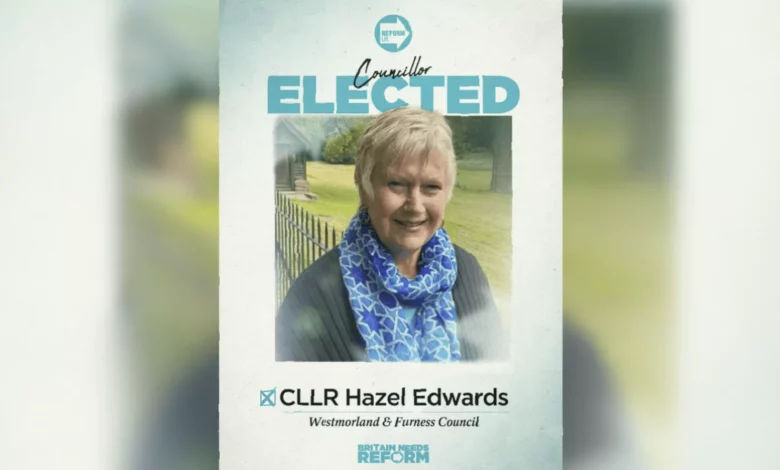
Reform UK has secured its first unitary authority councillor in Cumbria after Hazel Edwards swept to a double by-election victory in Barrow-in-Furness, winning seats on both Westmorland and Furness Council and Barrow Town Council.
Electoral landslide in Hawcoat and Newbarns
Ms Edwards, a former Conservative mayor of Barrow who served as an independent councillor for more than 30 years before joining Reform UK, took the Hawcoat and Newbarns ward on Westmorland and Furness Council with 1,139 votes. She simultaneously won the Hawcoat ward on Barrow Town Council, securing 656 votes. The by-elections were triggered after the resignation of Conservative councillor Niyall Phillips, who left both seats to work for BAE Systems in Australia.
Reform UK’s vote share in the unitary authority contest stood at 48.4 per cent. Labour candidate Mike Leach finished second with 576 votes, or 24.5 per cent of the ballot. The Conservative candidate, Marco Fawcett, saw his party’s previous 41 per cent share halved to just 19 per cent, with 447 votes. The Green Party took five per cent (121 votes), while Liberal Democrat Stephen Pickthall came last with 69 votes, equivalent to 2.9 per cent. Turnout for the Westmorland and Furness Council by-election was 27.16 per cent, a drop of 14 percentage points from the equivalent contests in 2022. The Barrow Town Council by-election recorded a turnout of 30.16 per cent.
Mr Fawcett said he was “proud” of his team and described Ms Edwards’s victory as a “testament to the experience” of the career politician. However, he added that Reform UK’s record at a local level across Britain was not “particularly impressive”, arguing that “voters are turning to Reform because they don’t have a record in Government they can be judged on.”
Liberal Democrat MP Tim Farron, whose Westmorland constituency includes the council area, described the result as proof that Reform UK is now a “real electoral threat in Cumbria”. He noted that only the Liberal Democrats and Reform UK are winning by-elections in the region, while support for both Labour and the Conservatives is collapsing. “There are only two parties winning by-elections in Cumbria – the Lib Dems and Reform UK,” Mr Farron said. “The Lib Dems are best placed to stop Reform UK next May – and I am determined that we will.”
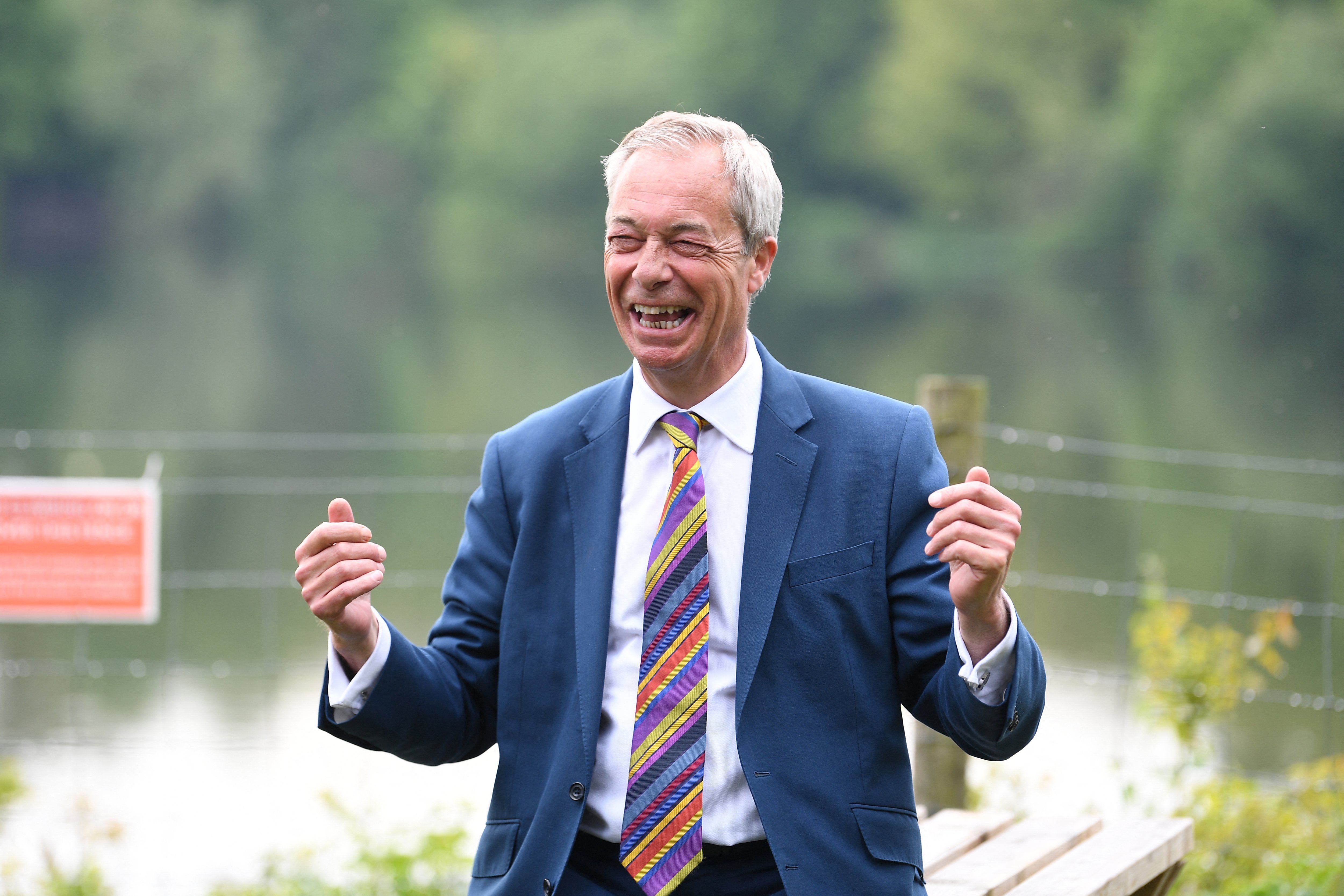
Reform UK’s regional manager in Cumbria, Matthew Moody, characterised the outcome as a “seismic political shift”, suggesting voters are now making deliberate choices rather than casting protest votes. Nationally, party leader Nigel Farage has set ambitious targets for the next round of local elections, aiming for “four-figure” seat gains across England, Wales and Scotland. The party has been compared to Italy’s Five Star Movement and has invested heavily in data and technology for campaigning.
The result also reflects deeper local dynamics. Barrow-in-Furness is dominated by BAE Systems, a major employer with plans to recruit thousands more staff for defence programmes including Dreadnought and AUKUS. A £200 million Barrow transformation fund has been established to invest in community infrastructure, though concerns persist that the benefits of investment have not flowed evenly across the town, which has experienced deprivation. The parliamentary constituency of Barrow and Furness elected a Conservative MP for the first time in nearly 30 years at the last general election as part of the “red wall” shift, but recent polling suggests a potential reversion towards Reform UK.
Campaign controversy over AI-altered images
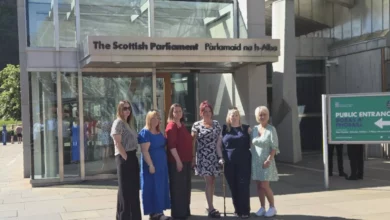
The campaign trail was overshadowed by accusations that Ms Edwards had used AI-altered photographs to promote her candidacy. Images posted online appeared to show genuine photos of Ms Edwards and campaigners superimposed onto different backgrounds. A Reform UK election agent acknowledged that backgrounds had been removed, explaining that the originals “showed a business premises” where the businesses did not like being “politically involved”.
Labour’s Mike Leach criticised the practice, saying it demonstrated a lack of trustworthiness. The controversy is not isolated within Reform UK. AI-manipulated images have been a recurring issue for the party, with instances of altered campaign photos detected by Google’s AI watermarking technology. In one previous case, a Reform UK candidate’s image was altered to make him appear thinner and younger.
After her victory was announced, Ms Edwards reportedly refused to speak to a BBC journalist. Tim Farron used the controversy to attack the divisiveness of Nigel Farage’s politics, stating: “We cannot let Nigel Farage’s divisive politics win at the local elections here next May.”