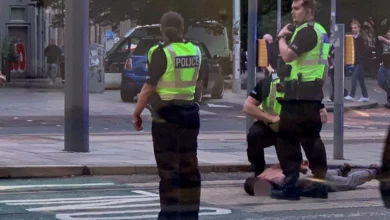
Central London car meets see drivers carry out tyre-spinning, circular skids and other hazardous stunts

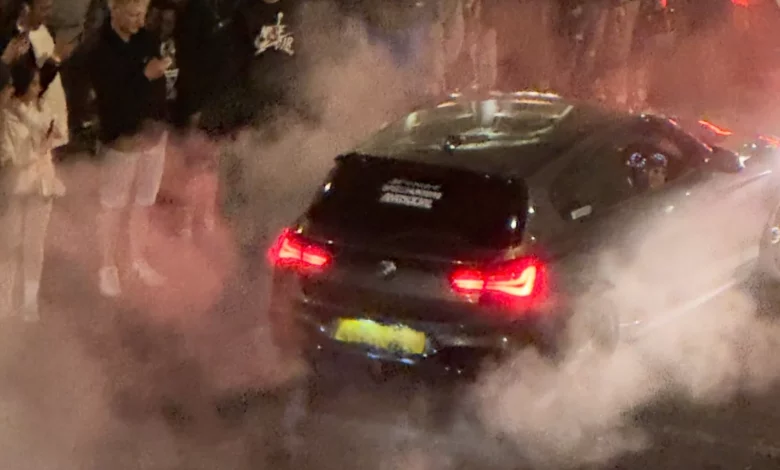
Central London drivers now face court bans for stunts and meets after Westminster City Council secured a High Court injunction targeting the dangerous behaviour that has blighted some of the capital’s most famous streets. The legal order, which came into effect following a hearing on 19 June 2026, makes it a contempt of court to race, perform stunts such as burnouts and doughnuts, or organise and promote car meets in known hot spots including Knightsbridge, Belgravia, St James’s, Hyde Park and the West End.
The injunction and banned activities
The council said the injunction prohibits drivers from carrying out a range of anti-social activities that have drawn large crowds of spectators filming on their phones, often late at night. Specifically banned are any form of racing, the execution of stunts like burnouts and doughnuts (where tyres are spun to produce smoke), and the organising or promoting of car meets in the designated areas. The order also targets excessive revving of engines and dangerous driving between the hours of 6pm and 7am – a time window that reflects the pattern of gatherings reported by residents.
Notorious locations for these gatherings include Exhibition Road, Pall Mall and parts of Soho, where the council said regular meet-ups have led to persistent complaints about noise and dangerous stunts involving modified cars. Westminster City Council had applied for a borough-wide injunction, a move supported by neighbouring Kensington and Chelsea Council, in order to give enforcement officers stronger powers than the existing £100 fixed penalty fines. The clamping down on such behaviour follows years of disruption; a specific incident on Pall Mall on 6 December 2020 saw a large gathering of drivers performing burnouts and causing traffic jams.
Anyone who breaches the injunction faces significant penalties: large fines or the seizure of assets. The council made clear that the order applies to anyone driving dangerously or revving engines excessively during the restricted night-time hours. The areas covered by the injunction are among the most prestigious in London, and the problem has been described by local politicians as a “blight” on the streets.
Enforcement and previous measures
This latest legal action builds on a series of earlier enforcement efforts. Over the past year, the council expanded a Public Space Protection Order (PSPO) across the West End, which resulted in 370 fixed penalty notices being issued in hot spots. A separate PSPO for Nuisance Vehicles, approved in December 2021 and renewed in December 2024 for a further three years, covers St James’s ward, Knightsbridge and Belgravia. That order enables the council and the Metropolitan Police to issue fines for activities including performing stunts, playing loud music or using threatening behaviour between 12pm and 6am. In recent weeks, 28 vehicle owners were fined under that PSPO.
The Metropolitan Police have also been running targeted operations in known hot spots. Since the start of 2026, officers have issued 36 Traffic Offence Reports (TORs) as part of these efforts. A major crackdown last August saw police seize 72 luxury vehicles worth more than £6 million, including Ferraris, Lamborghinis and Bentleys. The Metropolitan Police said those cars were either unroadworthy or being driven illegally, with offences ranging from driving without insurance or a licence to disqualification, false documentation and fraudulent number plates. In one case, a driver had only been in the country for two hours before their car was impounded. That operation, launched after complaints from residents, businesses and visitors about high-value cars causing disruption in and around Hyde Park, Kensington and Chelsea, involved officers working with the Motor Insurers’ Bureau to issue tickets.
In addition to legal measures, Westminster City Council is installing physical deterrents – anti-skid road surfaces – in popular gathering spots such as Exhibition Road to discourage stunts. The council’s deputy leader and Cabinet member for enforcement, Caroline Sargent, said: “Anti-social driving is incredibly dangerous, and we do not want it in Westminster. This ruling is a fantastic result for the council and its partners which will make our streets safer whilst offering residents respite from the excessive noise. We have a zero tolerance for this sort of behaviour, so if you are looking to meet up and drive like this, our streets are not the place for it.” Sargent was appointed as the first-ever Cabinet Member for Enforcement at the council, a role created to provide leadership on enforcement powers and to work with police and criminal justice partners.
Rachael Robathan, councillor for Knightsbridge and Belgravia, has been a vocal advocate for stronger action against illegal car meets and reportedly urged the council for over a year. She expressed disappointment at the perceived slowness of action but welcomed the application for an injunction. Special Chief Officer James Deller of the Metropolitan Police’s Special Constabulary highlighted the force’s commitment to tackling anti-social behaviour and responding to community concerns about high-value vehicles causing nuisance. The problem is not unique to Westminster: Enfield Council has also successfully implemented and upheld a borough-wide injunction banning illegal car cruising, reflecting a wider trend of local authorities seeking stronger legal powers.
The persistent gatherings have been driven in part by a summer influx of foreign supercars in areas like Knightsbridge and Kensington, often linked to visiting motorists unfamiliar with UK insurance laws. Complaints from residents and businesses about noise, dangerous stunts and general disruption have been the primary catalyst for the enforcement actions, with the nuisance described as a “blight” on the streets. Westminster City Council has been actively gathering evidence for its borough-wide injunction application, and the High Court ruling now gives it the legal teeth to take on those who treat central London’s roads as a racetrack.