A hotel worker has told jurors that he refused to film a friend’s plan to set fire to a car linked to the prime minister, describing the scheme as “stupid” and warning that it amounted to a serious crime.
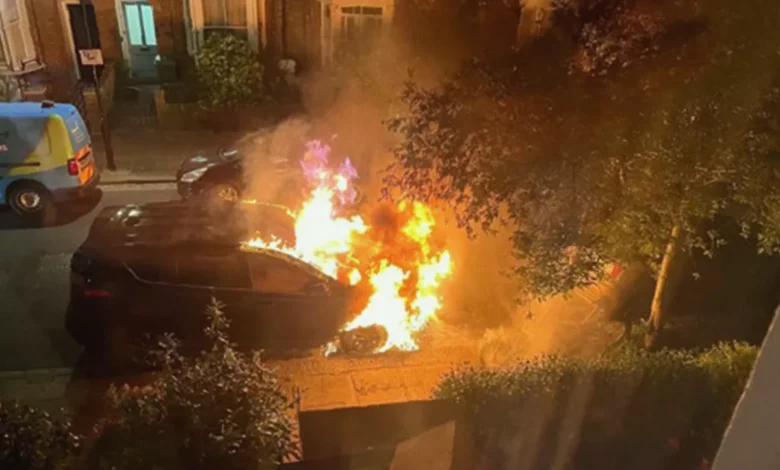
Stanislav Carpiuc, 27, a Romanian national, said his co-defendant Roman Lavrynovych, 22, had begged him to record the arson of a Toyota Rav4 that once belonged to Sir Keir Starmer. The vehicle was burnt out in Kentish Town in the early hours of 8 May last year. “My reaction was immediate,” Carpiuc told the Old Bailey on Wednesday. “I told him that he should stop thinking about that and obviously shouldn’t do something like that.”
Carpiuc said Lavrynovych had asked him “on many occasions” to make a video, first of setting the car alight and then, after being rebuffed, of simply breaking a window. “He was asking me, begging me, to help me to make this video,” Carpiuc said. “I rejected him, I didn’t want to have anything to do with this, I told him I don’t want to go there, I don’t want to make a video and you shouldn’t be doing that either.” He added that he had explained to Lavrynovych that “walking around in the streets of the city setting fire to cars is a very serious crime”.
Carpiuc told the court he knew Lavrynovych was expecting to be paid by a shadowy contact using the pseudonym “El Money”. The money was needed, he said, to cover Lavrynovych’s father’s medical treatment.
The Three Attacks
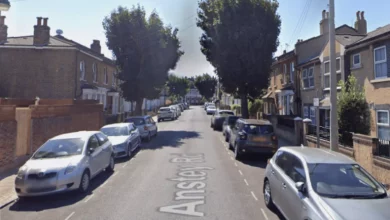
The May car fire was initially treated as an isolated incident, but detectives later linked it to two further arson attacks on north London houses connected to Sir Keir Starmer. On 11 May, a fire was set at the front door of a property in Islington managed by a company of which the prime minister had previously been a director and shareholder. The occupant of a top-floor flat was woken by the smell of smoke and escaped to the roof. The following day, another house on Countess Road in Kentish Town was deliberately set alight. That property still belonged to Sir Keir Starmer and was occupied by his sister-in-law and her nine-year-old daughter, who were reportedly very frightened.
Carpiuc, of Romford, east London, is accused alongside Lavrynovych and Petro Pochynok, 35, of Islington, north London, of conspiracy to damage property by fire. Prosecutors allege the three men carried out the attacks on the orders of “El Money”, a Russian-speaking contact who communicated with them via the Telegram messaging app. Over 320 messages dating back to September 2024 were recovered between Lavrynovych and the contact, indicating what prosecutors described as a “good working relationship” over seven months.
Threats and Payment
Lavrynovych, a Ukrainian national, has admitted setting the car alight but claims he acted under duress. He told the court he felt threatened by “El Money”, who he said was “powerful” and knew where he lived, implying danger to himself and his family if he did not comply. He described the contact as a “terrorist” and said he viewed Vladimir Putin as a “terrorist” for invading Ukraine. Lavrynovych also maintained he had never heard of Keir Starmer and held no grudges against the UK government.
According to the prosecution, “El Money” promised payment in cryptocurrency for the successful completion of the attacks. Lavrynovych reportedly claimed he was offered £2,000 or £3,000 for setting the car alight. The prosecution has argued that the motivation for the attacks was financial, not political or ideological, and jurors have been instructed not to consider the identity or motivations of “El Money”.
Evidence presented to the court includes CCTV footage that allegedly shows Lavrynovych purchasing white spirit — an accelerant — at a B&Q store in south-east London two days before the car was set on fire. He was also allegedly videoed by Pochynok after the vehicle was alight. Following Lavrynovych’s arrest, police seized a pair of trainers, a petrol can and a bottle of white spirit from his home, all of which were found to have his DNA on them. Phone data further tied him to the locations of the attacks.
Carpiuc testified that he recruited Pochynok to help Lavrynovych with the first fire, while he himself oversaw planning and the receipt of payment. The investigation was led by counter-terrorism detectives because of the high-profile nature of the targets. British security officials were reportedly investigating potential Russian involvement, though this has not been formally confirmed in court.
Defendants’ Pleas
All three men deny conspiracy to damage property by fire. Lavrynovych additionally denies two charges of damaging property by fire with intent to endanger life, or being reckless as to whether life was endangered. The trial at the Old Bailey continues and is expected to run until the end of May.