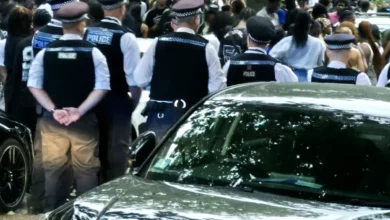
Ballot papers become legally fixed once the deadline for candidate nominations has passed, meaning no party can alter the ballot even if its own candidate is later suspended or expelled. The rule — set out in electoral law and party procedures — applies regardless of the grounds for disciplinary action, and any candidate who is subsequently stripped of party membership would, if elected, sit as an independent.
The consequence is that voters in a ward may find themselves choosing a candidate who no longer holds the party affiliation listed beside their name. Because the nomination window is closed, returning officers have no power to redraw the ballot. The result of the election stands, and the winning candidate takes their seat without a party whip if their former party has withdrawn membership.
Green Party candidate under investigation
The practical implications of this rule are now under scrutiny after Ben Hakimi, the Green Party candidate for Camden’s Haverstock ward, was accused of sharing antisemitic content and conspiracy theories on social media. The party has confirmed it is investigating the allegations but has not formally suspended his membership. The nomination deadline for the local elections has already passed, so Hakimi will still appear on the ballot as the Green Party candidate regardless of the outcome of the party’s internal inquiry. If he is elected, the Green group leader on the council is expected to remove the party whip immediately, a move that would require him to sit as an independent.
The Metropolitan Police are treating two recent attacks in Golders Green, north London, as antisemitic. On 29 April 2026, two Jewish men — aged 34 and 76 — were stabbed. The suspect, 45-year-old Essa Suleiman, a British national born in Somalia, has been charged with attempted murder, and police are treating the incident as terrorism. Suleiman was referred to the government’s Prevent programme in 2020. An Iran-linked group, Harakat Ashab al-Yamin al-Islamia, claimed responsibility, though investigators believe the claim may have been opportunistic. Detectives are examining potential links between the stabbing and Iran.
That attack followed an arson on 23 March 2026, when four ambulances belonging to Hatzola, a volunteer-led Jewish ambulance service, were set on fire in Golders Green. Police are treating the arson as an antisemitic hate crime. Several arrests have been made, and some individuals have been charged with arson.
The allegations against Hakimi, who is also known as Behnam Hakimi, include social media posts that blamed “Zionists” for the 9/11 attacks, shared a video that allegedly claimed Jewish people are commanded in the Old Testament to kill children, and reposted an article suggesting the Hatzola arson was a “false flag” operation orchestrated by Israel. He also reportedly posted “stay strong Hamas” in 2018 and shared other content critical of Israel. The Green Party has not made a finding of fact against him.
The “false flag” narrative around the Golders Green arson has been widely condemned as antisemitic, with critics pointing to a pattern of such claims being made when Jewish communities are targeted. The Community Security Trust, a charity that monitors antisemitism, has reported a surge in antisemitic attacks following the October 7 attacks and the subsequent Gaza war.
Prime Minister Keir Starmer has pledged to tackle antisemitism and to increase security for the Jewish community, but has also faced criticism for linking pro-Palestine marches to antisemitic violence. Green Party leader Zack Polanski, who is Jewish, has spoken out against the use of antisemitism as a political tool.
Hakimi is not the only Green Party candidate to face scrutiny over alleged antisemitic social media posts. Tope Olawoyin suggested the Golders Green ambulance attack was a false flag, and Mark Adderley was suspended for sharing posts that compared Israel to Nazi Germany and blamed Israel for violence against Jews. The party’s disciplinary procedures allow for sanctions including suspension or termination of membership, but once the nomination deadline has passed, the ballot paper cannot be amended — a rule that applies equally to all candidates, regardless of the gravity of the allegations against them.