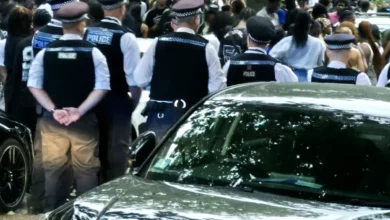
A man’s drunken rage on a Ryanair flight led to a pilot aborting a landing, forcing a go-around and triggering a major security alert at Bristol Airport. The incident resulted in a 10-month prison sentence for the passenger involved, 61-year-old Stephen Blofield from Haverfordwest.
As the Ryanair aircraft from Krakow made its final approach on 11 November 2025, the flight deck was compelled to take critical safety action. The British pilot had to execute a missed approach and abandon the landing attempt because Blofield refused to sit down and fasten his seatbelt. This failure to follow basic crew instructions during a critical phase of flight created an immediate and unacceptable risk.
The Unruly Passenger
The court heard that Blofield’s disruption began long before the aborted landing. He had been drinking double measures of alcohol at Krakow airport, claiming it was to calm his nerves, and continued to consume drink on board. His behaviour deteriorated rapidly, becoming abusive towards the Polish cabin crew. According to prosecuting counsel Ian Fenny, Blofield screamed statements including “I’m savage, I drink JD” and told staff “You can’t tell me what to do, I’m English.”
Upon landing, police found him drunk, aggressive and confrontational. His conduct was so severe that the arresting officer described the abuse as the worst he had endured in 20 years of service. During his arrest in the confined fuselage, Blofield struck out, narrowly missing a passenger seated to his left.
Safety Protocols and Passenger Impact
The consequences of Blofield’s actions extended far beyond his own seat. His behaviour and his position in the aircraft made a normal, orderly disembarkation impossible. Passengers were effectively marooned on board as police and cabin crew worked to evacuate the plane safely around him. This prolonged their exposure to what officers termed his “vile verbal aggression.”
The situation necessitated extreme measures for his removal. Due to concerns he might lash out and inflame the situation further, Blofield had to be taken off the aircraft using an ambulift—a piece of equipment normally reserved for passengers with mobility issues, underscoring the exceptional and dangerous nature of the incident.
Blofield later pleaded guilty at Bristol Crown Court to four offences: being drunk on an aircraft, using threatening or abusive language to cabin crew, failing to comply with the pilot’s instructions, and an offence under the Public Order Act 1986 for using threatening or abusive words or behaviour likely to cause harassment, alarm or distress.
In defence, solicitor Sam Louwers said Blofield had lost his medication for back pain, depression and anxiety before his trip to Poland to trace family roots. He claimed Blofield suffered withdrawal in his hotel room, returned to the UK early, and then foolishly used alcohol to cope with a fear of flying. Blofield said he had no memory of the events but was distressed by videos of his behaviour he later saw online.
Legal and Aviation Context
Sentencing Blofield, who is on benefits and has a lengthy criminal record, Judge Euan Ambrose stated that only immediate custody was justified. “You were drunk when you got on board and you continued to drink whilst on board,” Judge Ambrose told him. “You caused great concern and fear amongst fellow passengers and also fear and alarm to the crew.”
The sentence reflects the serious view the courts take of such offences. Being drunk on an aircraft alone can carry a penalty of up to two years imprisonment and a £5,000 fine. Endangering an aircraft can lead to up to five years in prison, and airlines can pursue disruptive passengers for substantial civil damages to cover costs such as flight diversions, which can reach tens of thousands of pounds.
Ryanair operates a strict zero-tolerance policy on unruly behaviour. The airline reserves the right to refuse carriage to anyone whose state, including intoxication, presents a risk and pursues ejected passengers for costs. Its CEO, Michael O’Leary, has previously called for a two-drink limit at airports.
The case also highlights the amplified effects of alcohol consumption during flights. Studies suggest alcohol can more severely impact heart rate and blood oxygen levels at altitude, impairing judgement and reaction time in the pressurised cabin environment—a factor the Federal Aviation Administration warns can severely impact cognitive and psychomotor functions.
Stephen Blofield was jailed for 10 months and must also pay a victim surcharge of £187.