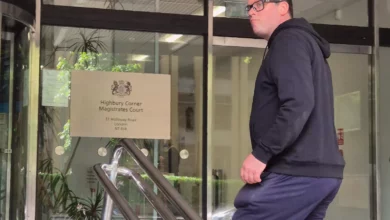
A retired judge has described proposals to ban the Sikh kirpan as “irrational”, arguing that such a move would be as illogical as banning kitchen knives or other bladed items routinely carried in British society. Hugh Howard, a former judge who advised a faith school on a similar dispute, said singling out the religious article for prohibition made no sense when objects such as cricket bats, kitchen knives and the sgian-dubh worn with Highland dress were all permitted — and had all been used as weapons.
Personal experience of a judge
Writing in his capacity as a retired judge, Mr Howard revealed that he had previously devised a scenario for a judicial appointments commission recruitment exercise in which candidates were asked to adjudicate between a Sikh boy who wished to wear the kirpan and his Church of England faith school that wanted to exclude it. The scenario was based on his own real-world advice to a school that sought to ban the kirpan outright.
Mr Howard explained that when he pointed out to the school that it already permitted cricket bats and balls as well as pointed dividers — all of which had been used as weapons — a compromise was reached. Under that arrangement, pupils were allowed to wear a swaddled kirpan under their clothing. He stressed that a Sikh would “no more think of using it as a weapon than other faith group would think of using their religious symbols as weapons”.
The judge also recalled his own experience of being a victim of knife crime. “It is irrational to seek to ban the kirpan much in the same way as it would be irrational to ban the sale of kitchen knives, like the one that virtually severed my right thumb from my hand during a robbery,” he said.
Schools and the kirpan: a delicate balance
The judge’s account reflects an established pattern in British schools, where headteachers have long navigated the intersection of religious freedoms, health and safety law, and anti-discrimination protections. Under the Equality Act 2010, schools must consider reasonable accommodations before imposing a ban on the kirpan. Policies that disproportionately disadvantage Sikhs by restricting the wearing of the kirpan could constitute indirect discrimination.
Health and safety legislation also requires schools to satisfy themselves that wearing a kirpan does not present a risk. This has often led to policies requiring the kirpan to be worn under clothing, sheathed, and sometimes padded. Some school policies suggest a blade not exceeding three inches and a total length of no more than six inches, although Sikh authorities generally recommend a kirpan size ranging from five to eight inches including the blade.
The kirpan is one of the Five Ks — Kesh, Kangha, Kara, Kachera and Kirpan — that are mandatory articles of faith for initiated Sikhs (Amritdhari Sikhs). Schools may expect students to remove the kirpan if they are not wearing all five Ks. During physical education, it is common for pupils to hand the kirpan to a teacher or place it in a secure location; some policies also suggest wearing a sweatband over it during physical activities. The Sikh Council UK has been involved in resolving such issues, working with schools to ensure clarity and avoid misunderstandings.
Any school that adopts a ban without proper consultation risks challenge at the Equality and Human Rights Commission.
An irrational comparison: the kirpan and other permitted blades
Mr Howard’s core argument — that it is irrational to ban the kirpan while permitting other bladed or pointed items — is given weight by the legal treatment of items such as the sgian-dubh, the small knife worn as part of Scottish Highland dress. Under UK law, carrying a bladed article in public is generally prohibited by Section 139 of the Criminal Justice Act 1988. However, a specific defence exists for those who can prove they are carrying the article for “religious reasons”. This exemption is also present for carrying bladed articles on school grounds under Section 139A.
Carrying a sgian-dubh falls under the same regulations. While it is generally illegal to carry a knife in public without “good reason”, wearing a sgian-dubh as part of national costume is often considered a valid reason, particularly in Scotland. If the blade is longer than three inches, a reasonable excuse or lawful authority is required. The sgian-dubh must not be brandished in a violent manner, and it is prohibited in aircraft cabins, requiring it to be placed in checked baggage. The legal framework for the sgian-dubh is frequently cited as a direct parallel to that of the kirpan: both are permitted under certain conditions relating to religious or national costume.
Mr Howard himself highlighted this comparison, noting that any review of the kirpan would “presumably have to include the wearing of the sgian-dubh, which I wear when kilted, the swords worn by serving and retired military personnel at service events, or the short sword I wore when dressed as a Roman soldier at a Christian festival”.
The argument extends further under the Offensive Weapons Act 2019, which clarified and strengthened protections for the kirpan. Section 47 of the Act provides defences for articles like the kirpan, enabling possession in private for religious reasons and for them to be presented. Crucially, the Act excludes from its ban curved swords made specifically for religious ceremonies, meaning a kirpan forged for religious use is not prohibited regardless of blade length.
Legal experts emphasise that the exemption applies to possession for religious reasons, not to use as a weapon. If a kirpan is used to harm someone, it is treated as a weapon regardless of its religious significance.
Recent context: the murder of Henry Nowak
The debate over the kirpan was reignited by the murder of 18-year-old Henry Nowak in Southampton. The perpetrator, Vickrum Digwa, was convicted of murder, and it was noted that he was carrying both a kirpan and another bladed weapon, with the latter being used in the fatal attack. In response, Reform UK has pledged to repeal the legal exemption for kirpans, arguing that no one other than law enforcement should carry bladed weapons. This stance has been opposed by some Labour MPs, who argue that the actions of one individual should not lead to restrictions on an entire faith community.
Sikh organisations have unanimously condemned the murder, stressing that Digwa’s actions were contrary to Sikh teachings and values. They have rejected calls to ban the kirpan, emphasising that it is a sacred article of faith and not a weapon. They have also warned of potential backlash and abuse against the wider Sikh community following the incident, expressing concern about misinformation on social media that could incite hostility.
Allegations of “two-tier policing” — suggesting that ethnic minorities are protected at the expense of the white majority — have also surfaced in the discourse surrounding the kirpan.
Historical and legal foundations
The legal status of the kirpan in the UK rests on a series of judgments and statutes. The landmark House of Lords ruling in Mandla v Dowell Lee (1983) established Sikhs as an ethnic group for the purposes of the Race Relations Act, safeguarding the right to wear the turban and legally establishing that Sikh religious practices had protected status in British law. In the 19th century, British colonial policies in India — such as the Indian Arms Act — had imposed restrictions on the length of the kirpan, as it could be classified as a sword.
Today, the group Sikhs in Law provides legal information and assistance regarding kirpan queries, underscoring the legal framework that permits its possession and wearing in the UK.
Mr Howard concluded his letter with a blunt assessment: “It is irrational to seek to ban the kirpan much in the same way as it would be irrational to ban the sale of kitchen knives.”