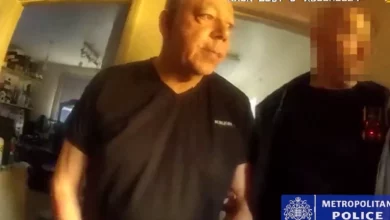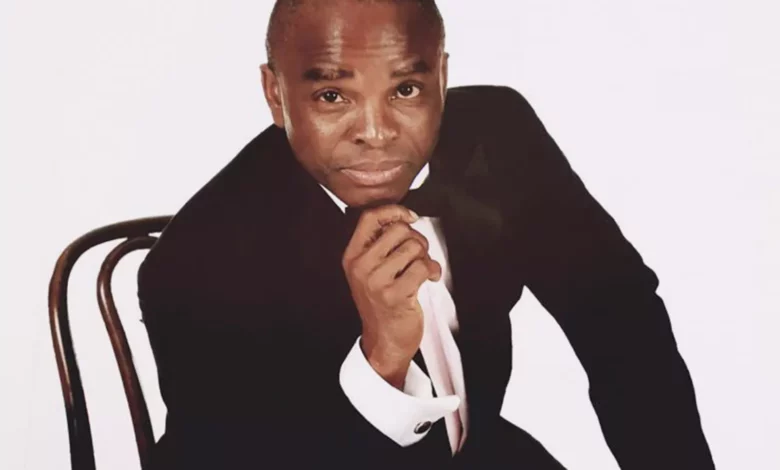
A man jailed for abducting his five-year-old son may have fled to Spain after being wrongly released from a London prison, the High Court has heard, after prison staff took three days to notify police of the blunder.
Ifedayo Adeyeye, 58, was freed from HMP Pentonville on April 21 — the day after he was sentenced to a further 12 months in prison for contempt of court. He was also due to be extradited to France upon completion of his sentence. Instead, he was allowed to walk out of the jail. Prison staff did not realise the mistake until April 23, and the Metropolitan Police were not told until around 1pm on April 24.
Mr Justice Hayden, who is overseeing the case, said the delay meant Adeyeye had time to move money, enjoy a pub dinner and drinks, and travel abroad. “If the police had been contacted immediately, this could perhaps, almost certainly perhaps, have been prevented,” the judge said. “The public is entitled to expect far better than this.”
Police told the court they believe Adeyeye “may have entered Spain” on April 22, the day after his release. Spanish authorities have been notified. The Metropolitan Police said they were using “all reasonable lines of enquiry” to locate and arrest him, and recognised “how traumatic the present situation must be for both Ms N’Djosse and her son”.
The three-day gap between Adeyeye’s release and the police being informed has drawn sharp criticism from the judge and from lawyers for the mother of the abducted boy, Claire N’Djosse. “Not only has the state failed her by the release of the father, but the state has failed her by not informing the Metropolitan Police promptly when quite clearly he could have been picked up,” said Chris Bryden, representing Ms N’Djosse.
During the period before police were alerted, Adeyeye “strolled about” the London area, had “a very nice dinner (and) had quite a lot of drink” at a local pub, and transferred thousands of pounds out of a bank account, Mr Justice Hayden said. The judge described the Prison Service’s explanation for the error — that it was a “communication failure” with the court — as “an entirely groundless suggestion”.
The abduction case
The underlying case involves the abduction of Laurys N’Djosse Adeyeye, who was five years old when his father took him from France in July 2024. Laurys was born in France and had lived with his mother, Claire N’Djosse, since birth. On July 27 2024, the first time Laurys was due to stay overnight with his father under a progressive visiting arrangement ordered by a French court, Adeyeye took him to the UK and then to Nigeria without the mother’s consent.

Ms N’Djosse has not seen her son for almost two years and has been pursuing his return through the English courts. In a legal first, Mr Justice Hayden ruled in June 2025 that the High Court had the power to order Adeyeye to return Laurys to his mother, even though the boy did not live in the UK. After Adeyeye failed to comply, he was arrested on his return to the UK and jailed for six months in January 2026 for contempt of court. The day before he was due to be released from that sentence, on April 20 2026, he was given a further 12 months for additional contempt offences — but was mistakenly freed the next day.
Mr Justice Hayden has described the abduction as “an act of cruelty that even this court rarely sees” and called Adeyeye “arrogant and manipulative”, and “cold and calculated”. The judge previously noted that Adeyeye’s detention was “the best, perhaps the only, hope of reunification of this boy with his mother”.
Broader failures and national context
The blunder at HMP Pentonville is not an isolated incident. An inspection of the prison in July 2025 revealed that many inmates had been held illegally past their release dates due to inaccurate sentence calculations, and that ten prisoners had been released early “in error” between July 2024 and June 2025. The prison was described as overcrowded, chaotic and unsafe, with a widespread infestation of mice and cockroaches.
Nationally, data published by the Ministry of Justice (MoJ) last month showed that 179 inmates were wrongly released in England and Wales between April 2025 and March 2026. That figure represents a 31% decrease from the previous year, when 262 prisoners were released in error — a 128% increase on the year before. The MoJ has said that releases in error are infrequent, with more than 99% of releases completed successfully.
The issue was thrown into sharp focus after the mistaken release of Hadush Kebatu, who was jailed for sexually assaulting a 14-year-old girl in Epping, Essex, which prompted a series of protests last year. The MoJ has previously said it is investing up to £82 million to drive down accidental releases, and that it inherited “a prison system in crisis after years of underinvestment, which has resulted in unacceptable rises in release errors”. An independent review led by Dame Lynne Owens identified the blunders as a “symptom of a broken system” caused by underinvestment and overcrowding. Justice Secretary David Lammy has announced plans for a digital overhaul of what he called an “archaic” paper-based system.
The Metropolitan Police have said the Prison Service told them that Adeyeye’s release was due to a “communication failure” with the court — a claim Mr Justice Hayden rejected. The judge allowed reporting of the issue on May 1, saying the state had “failed” and that there was an “alarming lack of urgency” from prison staff. At a hearing on Monday, he repeated his criticism and noted that Adeyeye’s detention had been “the best, perhaps the only, hope of reunification”.