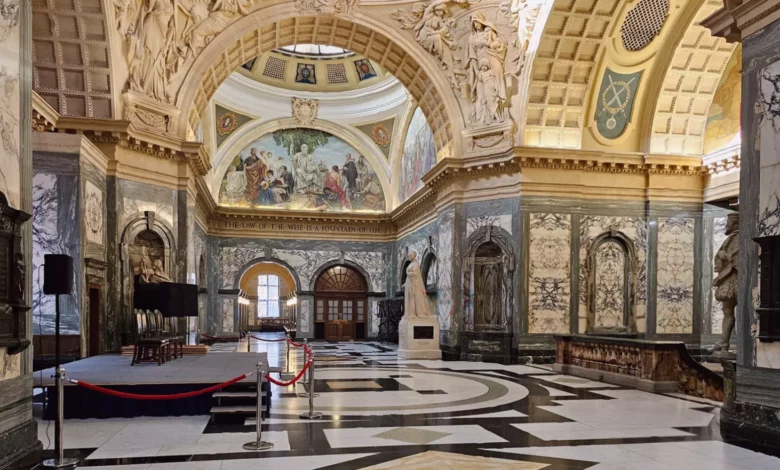
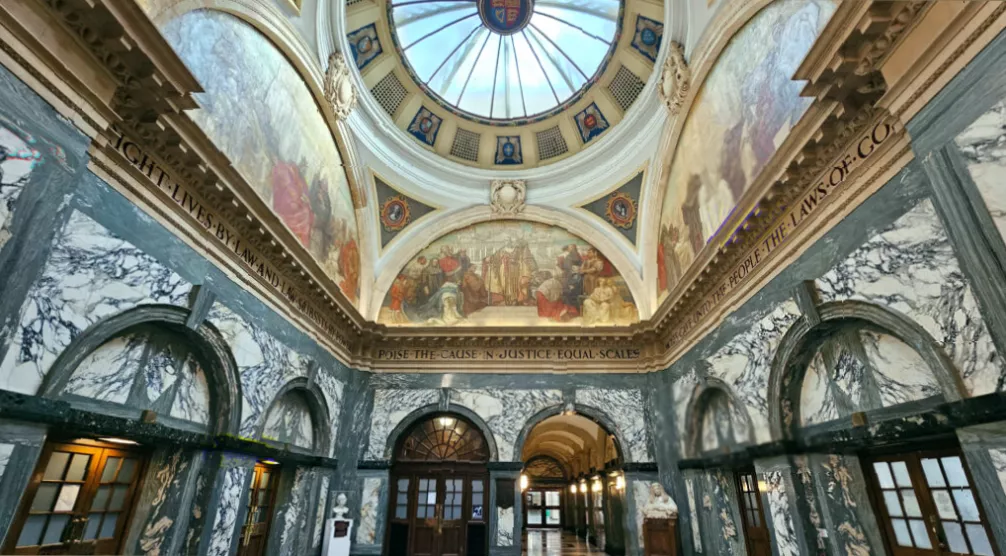
Weekend tours now offer access to the Old Bailey, the historic Central Criminal Court of England and Wales, giving visitors the chance to explore its grand interiors when the building is not hearing cases. The semi-regular Saturday tours, priced at £30.50 per person, allow members of the public to wander through courtrooms, sumptuously decorated central corridors and other areas normally closed to casual visitors when the court is in session.
Tour Availability and Booking
The tours take place on Saturdays, a day when the courts are typically shut, meaning visitors see the building without the usual crowds of lawyers, defendants and court staff. Booking is essential; tickets can be obtained via the court’s official booking page, through Eventbrite, or by emailing [email protected] or calling 07866690618. Tours often run at multiple times throughout the day, with some starting between 9am and 10.30am and meeting at The Viaduct Tavern opposite the Old Bailey. Alternative tour packages, such as the Old Bailey Insight Tour, are available for £20 per head or £15 for concessions, offering a talk at the pub, a visit to an original Newgate prison cell in the cellar, and a guide to the day’s cases.
Strict Security and Access Restrictions
Because the Old Bailey remains a working criminal court, even on a Saturday, security is far tighter than at most tourist attractions. Every visitor must pass through a security check upon arrival, similar to airport-style screening. Photo identification is mandatory — a passport, driving licence or similar official document — and from 1 June 2026, access to public galleries will require officially recognised photographic ID and proof of residence. Children under 14 are not admitted under any circumstances, and security may request proof of age. Young people aged 14 and 15 must be accompanied by an adult.
Bags are strictly controlled. Large bags or rucksacks are prohibited; only handbags are acceptable. Mobile phones are generally allowed on tours but must be switched off inside courtrooms. Photography is banned in all courtrooms, in the cells, and in the Judges’ Dining Room, but is permitted in the main corridors provided that no other individuals appear in the shot — a measure intended to protect court witnesses and other participants. Limited accessibility is available in the older parts of the building; visitors with mobility needs are advised to contact the court in advance to arrange assistance, and a portable hearing enhancement system can be provided if booked ahead.
For those who prefer a free experience, the public can attend real court cases during the week, Monday to Friday, without charge. Court sessions typically run from around 10am to 12.40pm and then 2pm to 3.40pm, with a lunch break. Entry to the public galleries is on a first-come, first-served basis; seats cannot be reserved, and visitors must be over 14 years of age. However, attending a case does not allow a wander around the building — you must sit in the gallery and watch proceedings.
A Glimpse into History
The tour offers rare access to the building’s architecture, which is widely admired. The central corridors have been compared to the grand rooms of the V&A Museum — known for its free daily tours of art and design — and are richly decorated in an Edwardian Baroque style. The current building, designed by Edward William Mountford, was completed in 1907; a new South block was added between 1968 and 1972. Above the dome sits the iconic golden statue of Justice, holding a sword and scales. Notably, she is not blindfolded, a detail that some interpret as symbolising justice administered with open eyes.
The Old Bailey stands on the site of the former Newgate Prison, established in 1188 and notorious for holding inmates until its demolition in 1904. Public executions took place outside the prison until 1868, and a surviving wall of Newgate can still be seen around the corner on Amen Court. A darker piece of modern history is also preserved inside the building: a shard of glass from an IRA car bomb that exploded on 8 March 1973, injuring more than 200 people, is kept as a historical reminder.