Tax-free reserve service is promised as part of Conservative plans to boost the number of personnel in Britain’s armed forces. The party has pledged to remove income tax on up to 30 days of reserve service per year, a move it expects to help recruit an extra 18,000 reservists and bring the total size of the reserves to 50,000.
Under the proposal, reservists could save hundreds of pounds depending on their rank, with the cost of the tax cut estimated at up to £152 million. The policy is also intended to encourage more existing reservists to complete their minimum number of training days — a target that fewer than half currently meet, according to the Conservatives.
Ministry of Defence figures from April this year put the number of people serving in the UK’s volunteer reserve at 32,030. While that figure has risen slightly over the past twelve months, it remains lower than the 32,420 recorded in April 2024, just before Labour took office.
Funding the plan: the two-child benefit cap
The Conservatives plan to fund the tax-free reserve pledge and wider defence spending by reintroducing the two-child benefit cap, a policy originally brought in by the previous Conservative government in 2017 and removed by Labour earlier this year. The cap restricts the child element of Universal Credit and Child Tax Credit to a family’s first two children born after April 2017.
Labour Chancellor Rachel Reeves removed the limit from April 2026 as part of the Autumn Budget 2025, a move the government said would lift 450,000 children out of poverty at a cost of £3.2 billion. The Conservatives argue that reinstating the cap would save the same amount — £3.2 billion — and allow them to increase the size of both the regular army and the reserves.
Reintroducing the cap is estimated to affect 0.7 million households and 1.0 million children by 2029-30, and is projected to increase absolute child poverty rates. Reform UK has also stated its intention to reintroduce the policy.
Shadow defence secretary James Cartlidge said Britain should emulate its Nato allies, who are also increasing their reserve forces. “Whilst other countries have used conscription, we remain committed to a professional, volunteer armed forces – and that means we need to make reserve service financially worthwhile,” he said. “For those who already have full-time jobs and want to serve their country, the last thing we should want is for them to be clobbered by the taxman for giving up their evenings and weekends.”
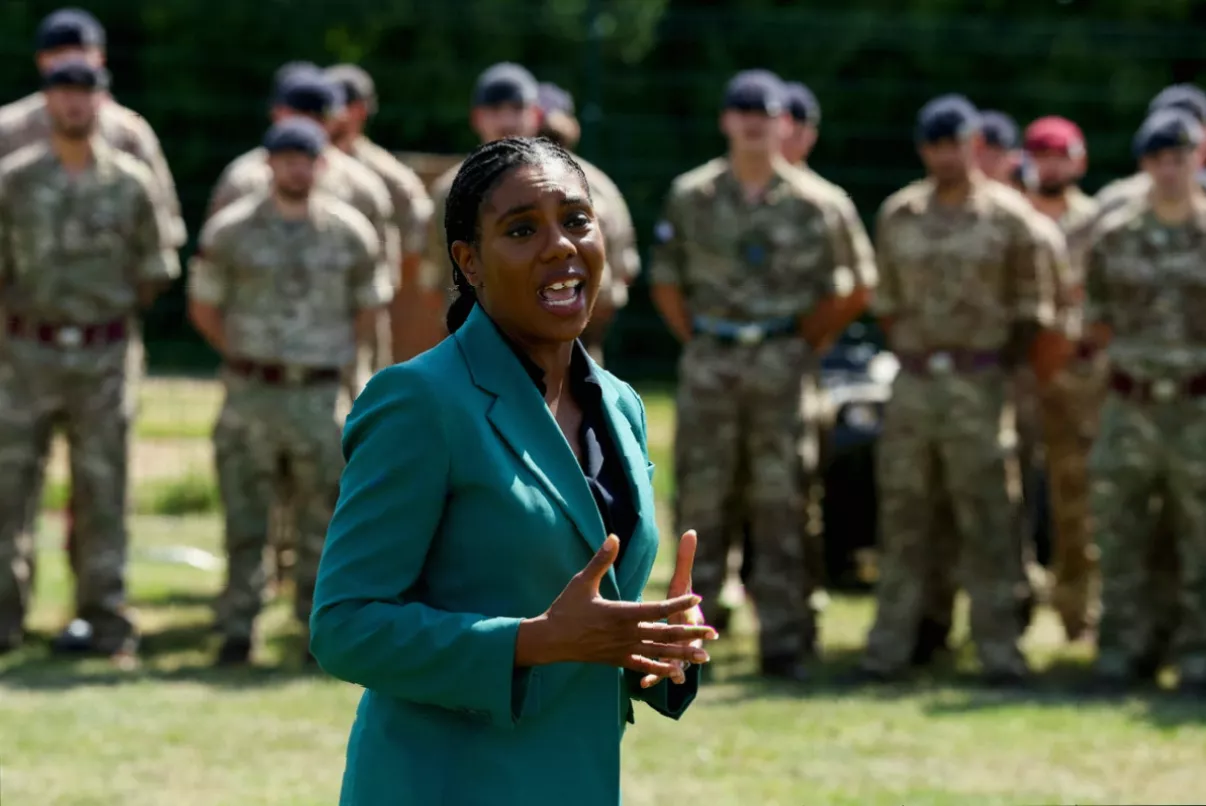
The party said the money saved from the benefit cap would also fund the recruitment of an extra 6,000 regular soldiers, in what it described as the largest uplift in British troop numbers since 1945. The pledge is made in the context of what Conservative leader Kemi Badenoch called “Russian aggression”. She said: “To fund our defence, Britain has to cut its welfare bill. That is why the Conservatives will restore the two-child benefit cap and use the money saved on defence.”
Labour’s response
The Conservative announcement comes amid a deepening row over defence spending inside the Labour government. The long-delayed Defence Investment Plan — intended to provide the financial backing for the 2025 Strategic Defence Review — has yet to be published, despite the impending change of prime minister. Arguments over funding for the plan prompted the resignation of Defence Secretary John Healey on June 11, who said the Treasury had not offered enough money to keep Britain safe. Healey described the proposed settlement as “backloaded”, arguing that crucial support was being delayed while immediate readiness was needed.
Chancellor Rachel Reeves has vowed that the plan will “meet the moment” and has committed to raising defence spending to 2.5% of GDP by 2027, with an ambition to reach 3% in the next parliament. Nato allies have agreed on a target of 3.5% of GDP by 2035, while Labour has set out plans to increase national security spending to 5% of GDP by that date.
Defence minister Luke Pollard said: “The Tories can’t rewrite history. After 14 years in government they cut the British Army to the smallest size since Napoleon, with recruitment and retention in crisis. This Labour Government is now rebuilding our military, including through increasing the size of our strategic reserves and giving them more opportunities to work with their regular counterparts. Labour is giving our armed forces the backing they deserve.”
The UK armed forces are facing a severe recruitment and retention crisis. In 2023-24, the Army recruited only 64% of its target, the Royal Navy 60% and the RAF 70%. Over 60% of the 14,590 personnel who left the UK Armed Forces in 2024-25 did so voluntarily, citing family pressures, better civilian career opportunities and general dissatisfaction with military life. Army recruit numbers have fallen by 38% since 2019, and completion rates for Phase 2 training remain well below pre-2020 levels.