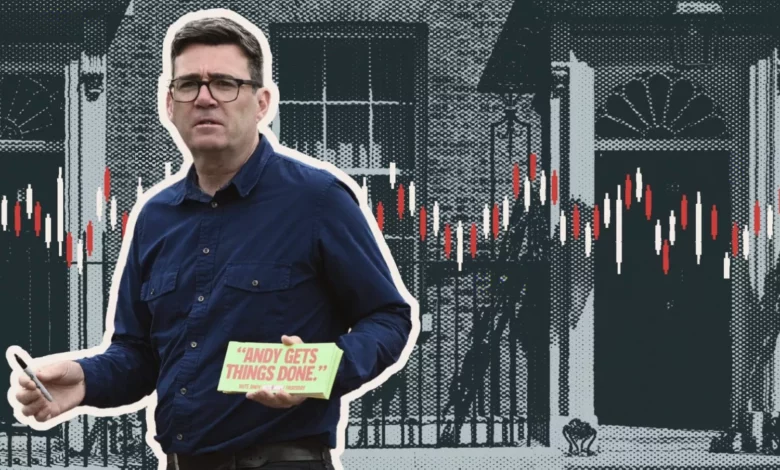
Andy Burnham faces a looming financial crisis upon becoming prime minister, with the UK’s fiscal position deteriorating at a pace that would test any incoming government. The Mayor of Greater Manchester is the overwhelming favourite to succeed Keir Starmer, who resigned on 22 June 2026 after a decline in popularity that followed his landslide victory in July 2024. Nominations for the Labour leadership opened on 9 July and closed on 16 July, and if Burnham is the sole candidate he could move into Downing Street as early as 17 July. Even if a contest is forced, a new leader is due to be elected by 29 August. Either way, Burnham is widely expected to become the next prime minister before the end of the summer.
Wes Streeting, a former rival, has endorsed Burnham, and Darren Jones, the Chief Secretary to the Treasury, has said he will not challenge Burnham because he has received reassurance about the front-runner’s economic plans. Burnham, who identifies as a socialist and has previously served as Health Secretary under Gordon Brown, is making his third attempt at the Labour leadership after standing in 2010 and 2015. His supporters argue that he is a better communicator than Starmer, untainted by the failures of the last two years, and able to make a fresh start. There is speculation that he could replace Rachel Reeves as chancellor; Reeves herself has indicated she has “unfinished business” in the role and is pitching for a place in Burnham’s potential cabinet, though the final decision rests with him.
Economic warning signs
Whoever occupies Number 10 will inherit an economy that the Office for Budget Responsibility (OBR) and other official bodies have been warning about for months. In May 2026, UK public sector net borrowing reached £23.3 billion — a 30.4 per cent increase compared with May 2025 and well above the OBR’s forecast of £17.7 billion. Borrowing for the financial year to May totalled £46.3 billion, £8.9 billion higher than the same period in 2025 and £7.7 billion above the OBR’s forecast. Public sector net debt now stands at a provisional 95.1 per cent of gross domestic product, its highest level since the early 1960s.
Central government spending in May was £95.7 billion, up 7.1 per cent year on year, driven largely by soaring debt interest payments and higher costs for public services resulting from inflation. Central government debt interest payable in May alone reached £11.7 billion, a jump of 54.4 per cent and the highest amount recorded for any May on record. The increase is attributed to rising Retail Prices Index inflation affecting index-linked gilts and broader market reactions to geopolitical events, particularly the Middle East conflict described by officials as an “Iran war”.
Total tax receipts for April and May came to £153.7 billion, up £9.8 billion year on year. Income tax receipts rose 9.2 per cent and corporation tax receipts increased 5.4 per cent, partly because of the freeze on income tax thresholds that will now extend until 2031 — a policy that pulls more people into higher tax brackets, a phenomenon known as fiscal drag. Even with those record increases, tax receipts are growing at about half the rate of government spending, according to the latest official data.
Economic growth remains weak. Real GDP increased by 0.6 per cent in the first quarter of 2026, accelerating from 0.2 per cent in the previous quarter, but the OBR forecasts that growth will weaken to just 0.9 per cent for the full year. Meanwhile, inflation is expected to climb to 3.5 per cent by the end of 2026, driven by higher energy prices from the Middle East conflict. The unemployment rate rose unexpectedly to 5 per cent in the three months to March 2026, up from 4.9 per cent, and the Bank of England forecasts it will reach 5.5 per cent by the summer of 2027. Youth unemployment is particularly severe: 16.2 per cent of 16-to-24-year-olds were out of work in February to April 2026, compared with 14.3 per cent a year earlier, and some regions report rates as high as 18.6 per cent. The number of working-age people on benefits has now passed four million.
Burnham’s spending pledges and the funding gap
Against this backdrop, Andy Burnham’s economic programme is the subject of intense scrutiny. He has made a series of specific spending commitments, but has so far provided little detail on how they would be paid for, raising questions about whether he can square his ambitions with the fiscal realities he will face.
His most prominent pledge is to launch the “biggest programme of council house building since the Second World War”. He has proposed diverting the existing £39 billion affordable housing programme towards social rent homes and has previously called for an end to the Right to Buy policy. As mayor, he promised to build 10,000 council homes in Greater Manchester by 2028. No budget or funding mechanism has been attached to the national version of this plan.
Burnham has also promised to cut business rates for small companies, including a 20 per cent reduction for pubs, clubs and music venues, and a higher threshold for small independent hospitality, leisure and retail businesses. He says these cuts would be funded by increasing levies on large online warehouses and taxing empty high street properties, and by raising £500 million through tackling tax evasion. In addition, he has indicated a willingness to reconsider the increase in employers’ National Insurance Contributions introduced in the 2024 budget. He has supported replacing council tax and potentially stamp duty with a land value tax — a levy based on property value paid by homeowners — but has not detailed how such a sweeping reform would be implemented.
Celebrity chef Tom Kerridge has publicly backed Burnham because of his promise to reduce the rate of VAT on hospitality businesses to 10 per cent — another pledge that the incoming prime minister has not funded. More broadly, Burnham has said he wants to bring utilities under greater state control, but has offered no estimate of the cost or how it would be met. He has said almost nothing about controlling public spending, especially the soaring welfare bill, and has not set out any plan to boost economic growth or attract business investment. Britain’s major corporate leaders have remained silent on his candidacy, and there is no sign of a wave of investment to welcome a new administration.
Market pressure and the shadow of Truss
The combination of rising debt, high interest payments and unfunded spending promises is likely to attract the attention of bond markets very quickly. The UK now pays an estimated £125 billion a year in interest on the national debt, a figure that eats up a growing share of tax revenues. Traders will want to know whether a Burnham government is willing to cut welfare spending or raise taxes further to keep paying those bills. If the answer is no, gilts could be sold off, driving borrowing costs even higher.
The last prime minister to take over from an elected predecessor with a large majority was Liz Truss in 2022. Her mini-budget triggered a bond market crisis that ended her premiership — famously, her time in office was shorter than the shelf life of a lettuce. Burnham faces a different set of challenges: he is unlikely to attempt anything as risky as unfunded tax cuts on the scale of Truss’s package. But the underlying condition of the British economy is far worse than it was in 2022. Debts are higher, the bond markets already view the UK with suspicion, and the combination of geopolitical shocks, rising unemployment and stubborn inflation leaves little room for error. The new prime minister will soon face the heat — and the question is whether his economic programme can withstand it. Darren Jones has said he is reassured, but the financial arithmetic suggests that reassurance will be tested within weeks of Burnham taking office.