
The City of London Corporation’s historic wholesale food markets at Smithfield and Billingsgate are expected to vacate their centuries-old sites and open a combined operation in the Royal Docks by the end of 2029, a move that will sever a legal obligation the Corporation has held since the Middle Ages. The target date emerged during a parliamentary committee hearing this week, as a Private Bill to end that obligation—and enable the relocation—continues its passage through the House of Commons.
Move to Albert Island by 2029
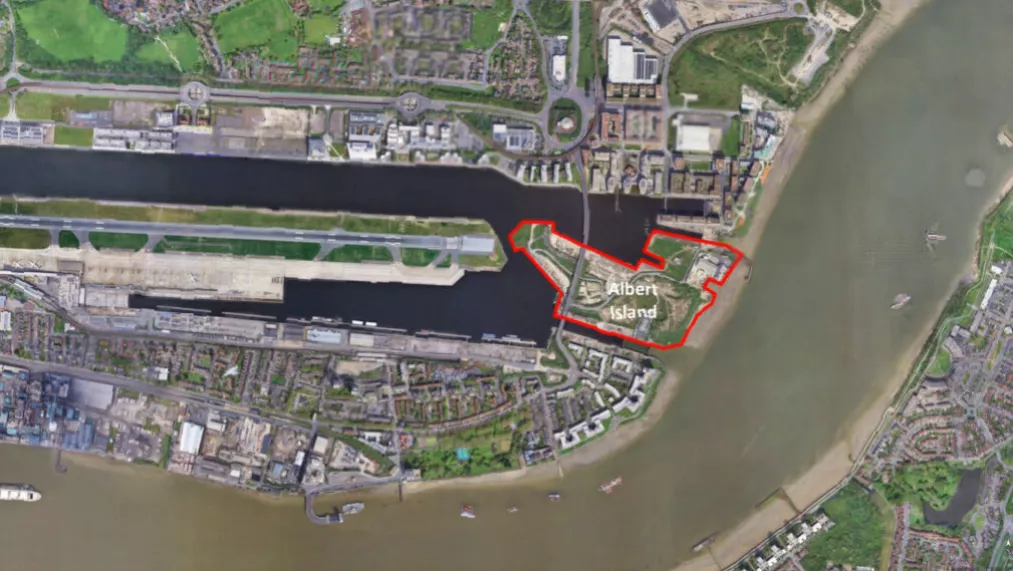
The new market will occupy a 25-acre site at Albert Island, adjacent to London City Airport in the Royal Docks area. The Corporation had previously pursued a site at Dagenham Docks, but that plan was abandoned in November 2024 after estimated costs spiralled to around £1 billion. Albert Island was announced as the preferred alternative on 3 December 2025. Traders are expected to continue operating at their current locations until at least 2028, with the fit-out and handover of the new facility scheduled for completion by the end of 2029. The City of London Corporation hopes the enabling legislation will receive Royal Assent by mid-2027, allowing construction and fitting‑out to proceed on schedule.
The bill: severing a centuries‑old obligation
The Corporation’s legal duty to operate food markets in London derives from ancient charters, some dating back 775 years, and can be discharged only by an Act of Parliament. A Private Bill to achieve that was deposited in Parliament in November 2024 and has already had its first reading. It is now moving through the House of Commons, with a committee stage underway. At a hearing of the opposed bill committee this week, the Corporation’s representative, Richard Turney KC, explained that both Smithfield and Billingsgate are no longer fit for purpose. Their central London locations cannot accommodate the large lorries required for modern deliveries, and they are physically constrained, preventing expansion for new traders. Greg Lawrence, chairman of the Smithfield Market Tenants’ Association, added that road closures and the congestion charge create chronic access problems for deliveries.
The bill is largely supported by Smithfield traders, but one petition was filed by a Billingsgate fish market trader, triggering the full opposed bill hearing. Zahaab Amjad of PM Prime Fish voiced fears that Billingsgate could be closed before the replacement at Albert Island is ready, and questioned whether the new market would ever be built. He described the transition as carrying “a real, unaccounted-for risk” for fishmongers. The committee chair, Matt Turmaine MP, secured an undertaking from the Corporation’s representative that fish traders would be supported if there is a delay in opening the Albert Island site. Chris Bonner, the Corporation’s Director of Regeneration and Development, has said the parties involved are committed to discussing how to proceed if such a delay occurs.
A second petition was submitted by the food poverty charity Bags of Taste on behalf of traders and customers at Ridley Road Market in Hackney, who rely on Billingsgate for supplies. They have warned that without a suitable replacement market, their businesses could close and they would have no option but to claim benefits.
How the legal severance works
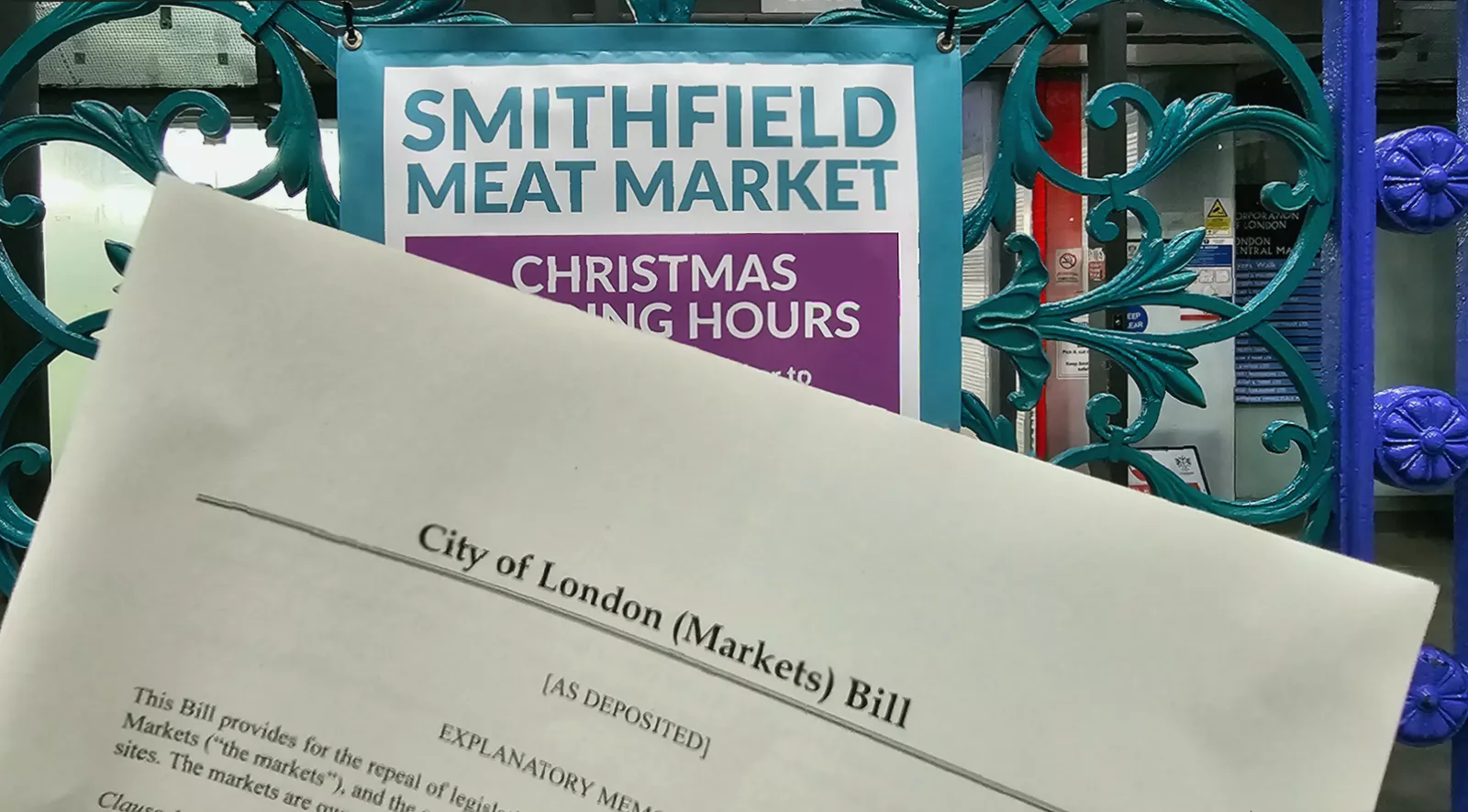
The bill, if passed by both the House of Commons and the House of Lords, will receive Royal Assent in a formal ceremony in the House of Lords. At that point a clerk, bowing, announces to the House “soit fait comme il est desire” — Norman French for “let it be as it is desired” — marking the King’s enactment of the bill. The resulting Private Act will be printed and stored in the parliamentary archives. Until 1956 such printing was done on vellum; today archival paper is used. The bill is now at the report stage. If it proceeds unopposed from here, the City of London Corporation will legally be freed from its centuries-old duty to run food markets in the capital.
Market operations and future of existing sites
Once the bill is passed and the new market built, the Smithfield site will be repurposed as an international cultural and commercial destination. The Grade II* listed buildings will be restored to complement the new Museum of London, which is moving next door. The development is expected to attract 1.4 million visitors annually and create 600 direct jobs. The Billingsgate site, which the market moved to from its original City location in 1982, is earmarked for housing, with plans for up to 4,000 homes and a new pedestrian and cycle bridge across Aspen Way to connect Poplar and Canary Wharf.
At the new Albert Island market, the traders themselves will run the facility rather than the City of London Corporation. The site will include modern, fit‑for‑purpose infrastructure and a food school for training butchers, fishmongers and fruiterers. The project is part of the wider Royal Docks regeneration — London’s largest regeneration scheme — and is projected to deliver an estimated £750 million in local expenditure, more than 2,200 jobs and £130 million gross value added to the borough of Newham, with further benefits to the UK economy over 30 years. The traditional Smithfield Christmas Eve auction is expected to continue at the new location.