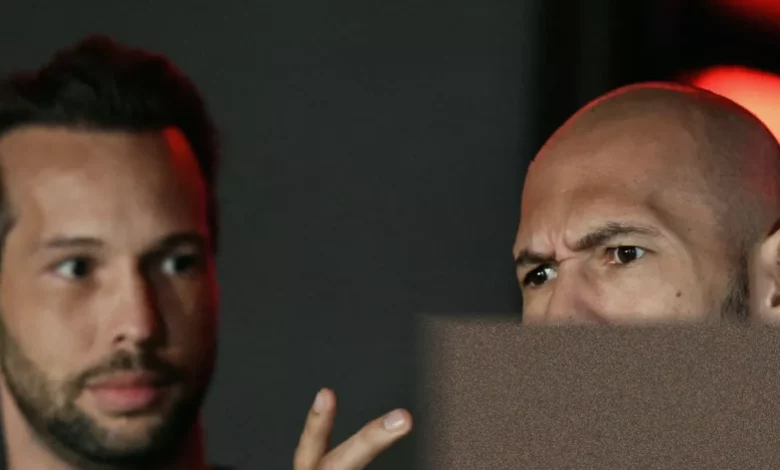
A High Court judge has dismissed a legal challenge by Andrew and Tristan Tate against the Crown Prosecution Service, rejecting the brothers’ claim that the CPS acted unlawfully by refusing to disclose the names of their alleged victims in UK criminal proceedings before they return to Britain.
Mr Justice Chamberlain ruled on Friday that the “time-limited” decision to withhold the identities was “coherent and rational” and found the challenge was not “arguable”. The judge said the Tates would be provided with the complainants’ names only if and when they are surrendered to and prosecuted in the UK – the point at which a defendant typically needs such information to prepare a defence.
The brothers, who are 39 and 37 respectively and hold dual UK and US citizenship, face a combined 21 charges in the UK, including rape, actual bodily harm and human trafficking, relating to alleged offences committed between 2012 and 2016. They deny all wrongdoing. They are currently subject to separate legal proceedings in Romania, where they live, and their extradition to the UK is pending the conclusion of those Romanian cases. In Romania, the Tates face charges including rape, human trafficking and forming an organised crime group to sexually exploit women, allegations they also deny.
CPS case for withholding names
At a hearing in London on Tuesday, lawyers for the Tates argued that the CPS had breached the brothers’ right to a fair trial under human rights law by refusing to disclose the names until their return to the UK. The Tates’ legal team claimed the CPS had failed to take account of the brothers’ “good character” and that withholding the names prejudiced their ability to mount a defence.
Barristers representing the CPS countered that the decision was “time-limited” and driven by specific concerns about the Tates’ online influence. Stephen Parkinson, the director of public prosecutions for England and Wales, noted that Andrew Tate has more than 10 million followers alone on his X account. The CPS said there were fears that, with such a large social media following, the Tates could identify the alleged victims online and potentially harass them before any UK proceedings begin.
The CPS’s decision not to disclose the names at this stage was described by the prosecution as a necessary protective step, not a permanent withholding of information. The barristers emphasised that the identities would be disclosed at the appropriate time – when the brothers are physically in the UK and subject to the full jurisdiction of the courts.
The case also marks the latest chapter in a broader legal history. In 2019, the CPS decided not to prosecute Andrew Tate over allegations of sexual violence and physical abuse reported by four women. Those alleged victims later turned to crowdfunding to cover legal costs for a civil case against him. In May 2025, the CPS confirmed that 21 charges had been authorised against both brothers following a file of evidence from Bedfordshire Police. A European arrest warrant had been issued in England in 2024, leading Romanian courts to order their extradition to the UK after domestic legal matters are concluded.
Earlier developments include British police obtaining an arrest warrant for the brothers in March 2024, and a civil case concerning alleged tax evasion beginning in July 2024 against them and a third person in the UK. In Romania, authorities have raided properties owned by Andrew Tate and expanded their investigation to include allegations of trafficking minors, sex with a minor, money laundering and attempting to influence a witness.
Judge’s ruling
Mr Justice Chamberlain, reading a summary of his ruling on Friday, said: “The decision taken in this case was coherent and rational.” He dismissed the challenge, finding it was not “arguable” as a breach of human rights. The judge noted that the Tates will be told the names of the complainants if and when they are surrendered to and prosecuted in the UK, which is generally when an accused person needs such information to prepare their defence.