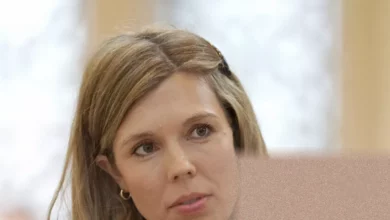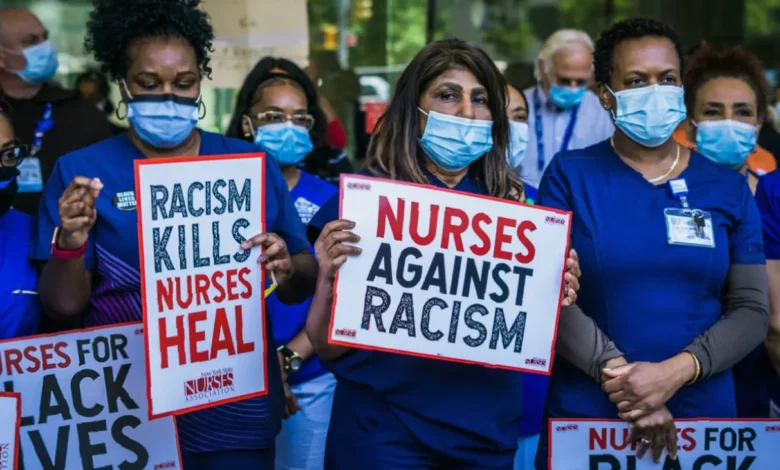
Faridat Ibidun, a nurse working on the Isle of Man, was refused service by a patient who objected to her accent before she could finish introducing herself. The incident, which she described as a clear act of racial discrimination, has placed a spotlight on the escalating levels of abuse faced by healthcare professionals from ethnic minority backgrounds across the United Kingdom and Crown Dependencies.
Ibidun, who is black, recalled the moment earlier this year: “I picked up the phone to call a patient… I said hello, I gave my name, and before I could even say one more word, he said, ‘you have the foreign accent. I don’t want to speak to you’.” She added that racism in a healthcare setting can take many forms, from tone of voice and looks to a patient directly requesting a different nurse. Since the incident, Ibidun has channelled her experience into supporting colleagues. In August 2025 she was accredited as the Isle of Man’s first Royal College of Nursing Learning Representative, a role in which she represents nurses and support workers across the island, offering guidance on training and development. Along with other nurses from Manx Care – the island’s equivalent of the NHS, employing around 3,000 staff – she has represented the Isle of Man at the RCN Congress, the largest gathering of nursing professionals in the UK and Crown Dependencies. Her dedication earned her a place at the RCN UK Representatives Conference.
Scale of the problem
Ibidun’s experience is not an isolated incident. The Royal College of Nursing has reported an 86% rise in racist abuse against NHS nurses in the last few years. Figures obtained by the RCN show that nursing staff reported over 21,000 incidents of racism at work between 2022 and 2025 – a 78% increase over that period. In 2025 alone, nursing staff reported 6,812 incidents of racial abuse, a significant jump from 3,652 in 2022. That equates to a new report of racist abuse every 77 minutes across the UK. Yet the RCN warns that these figures are likely only the “tip of the iceberg”. Many incidents go unreported because staff lack confidence that employers will take action, fear retaliation, or have come to see racist behaviour as normal. Some NHS trusts and health boards hold no data, provide implausibly low figures, or refuse to supply information. The RCN estimates the true figure could exceed 40,000 incidents over the last four years if all NHS Trusts in England had robust reporting systems.
The abuse ranges widely: nurses have been called a monkey and told to “go back to the zoo”, subjected to the N-word, and had patients refuse care from those of a specific ethnicity. Others have faced Islamophobia while observing Ramadan or been punched in the eye.
Root causes and systemic failures
The RCN attributes the rise in part to the “normalisation of extreme views in politics and the media”. Professor Nicola Ranger, the RCN’s General Secretary, suggested it reflects a “further breakdown in societal norms”. The union has also warned that anti-migrant rhetoric from politicians emboldens racist behaviour and accused the UK government of “scapegoating” migrant nursing staff. Beyond individual incidents, the British Medical Association highlights that structural racism is a key factor in racial inequality within the healthcare system, leading to disparities in treatment, experiences, and development for ethnic minority healthcare workers. Racism is described as a “culture that permeated daily practice” within the health and social care sector, not just a matter of isolated events.
Impact on healthcare professionals
The consequences for staff are profound. Racist abuse has significant impacts on well-being, including self-reported depression, anxiety about work, and insomnia. The psychological toll can lead to feelings of isolation, distress, undermined self-esteem, decreased job satisfaction, and compromised mental health. Some experience what researchers term “racial battle fatigue”. The cumulative effect of racial microaggressions creates additional stressors that affect performance and contribute to burnout. A significant percentage of healthcare workers have left a job due to racial discrimination.
Studies indicate that patients of colour may receive medical care inferior to that received by white patients, with racial and ethnic biases potentially affecting care decisions, particularly in emergency settings. BAME healthcare staff also experience higher rates of harassment, bullying, or abuse from other NHS staff compared to their white colleagues, and face disparities in career progression, being underrepresented in leadership roles and less likely to be appointed from shortlisting. The disproportionate impact of the COVID-19 pandemic further exposed these inequalities: 85% of doctors who died from COVID-19 in the UK were from ethnic minority backgrounds – a figure that socioeconomic factors alone cannot explain.
Efforts to address the crisis
The RCN is calling for more robust and transparent protocols for reporting racial abuse and is developing a UK-wide programme to build staff confidence in tackling racism, including training, guidance, and support with reporting incidents. Calls to the RCN advice line from ethnic minority nursing staff seeking help after experiencing racism or discrimination rose by 70% between 2022 and 2025. NHS England has planned to introduce a national reporting system to monitor the problem and has set out targeted actions for local organisations, including reviewing disciplinary processes and providing psychological support. It has also partnered with the NHS Confederation and the Nursing and Midwifery Council to produce a resource supporting nursing and midwifery professionals to combat racism. From October 2025, under the Employment Rights Act 2025, NHS employers will be legally liable for harassment of their staff by patients or their families, unless they can demonstrate they have taken all reasonable steps to prevent it. The NHS Race and Health Observatory works to identify and tackle ethnic inequalities in health and care through research, policy recommendations, and transformational change.
For Faridat Ibidun, the personal toll of the phone call lingers, but she remains committed to supporting her colleagues on the Isle of Man. Racism, she said, can show itself in subtle ways – a tone, a look, a request for a different nurse – and it is a reality she and many others continue to navigate every day.