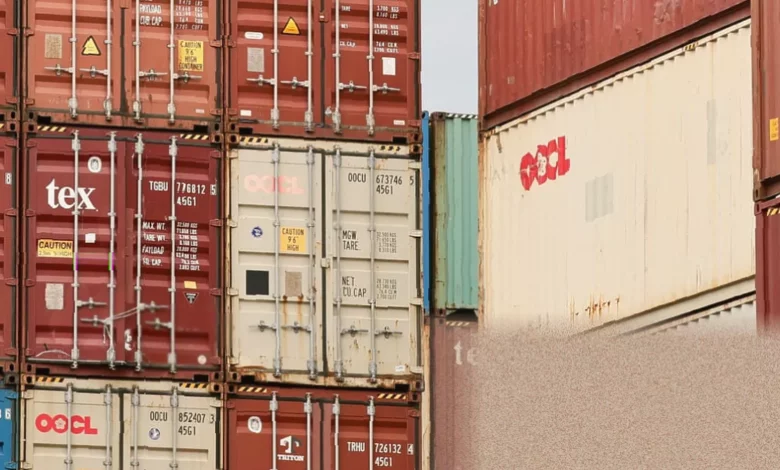
The European Parliament has finally agreed to implement the bloc’s trade deal with the United States, following more than five hours of overnight negotiations between lawmakers and member states, in a bid to avert further tariffs threatened by Donald Trump. The agreement, struck last July at the US president’s Turnberry golf course in Scotland, will now enter into force, removing import duties on most US goods entering the EU and capping US tariffs on most European exports at 15%.
European Commission President Ursula von der Leyen welcomed the pact, stating: “A deal is a deal, and the EU honours its commitments.” She added that the agreement would “ensure stable, predictable, balanced and mutually beneficial transatlantic trade.” Trade Commissioner Maroš Šefčovič described the talks, which concluded at about 2am in Brussels, as a “collective effort. Strong result. Meaningful work,” emphasising that the EU had shown it was “a reliable trading partner, while standing firm in defending the interests of European stakeholders.” He noted the deal brings “renewed stability and opens the door to strategic collaboration.”
The agreement puts the bloc on track to meet Trump’s 4 July deadline for ratification, a deadline the US president had set with threats of significantly higher tariffs if missed. The deal, which has already been implemented in the US, replaces previous higher tariffs — including the 27.5% levy on cars and car parts — with a uniform 15% ceiling for sectors such as cars, semiconductors and pharmaceuticals. In return, the EU committed to eliminating remaining customs duties on US industrial goods and providing preferential market access for certain US agricultural and seafood products. A second regulation extends the suspension of duties on lobster imports, including processed products. The agreement also includes commitments by the EU to increase energy cooperation, including substantial purchases of US LNG, oil and nuclear fuels valued at $750 billion through 2028, as well as cooperation on economic security, critical minerals and addressing global steel overcapacity.
MEPs force safety clauses after months of protest
The ratification process had been frozen twice by MEPs in protest at Trump’s threats — first his threat of higher tariffs in January, and later his demand to take control of Greenland. In a significant victory, lawmakers forced the insertion of a series of safeguards designed to protect European interests against potential US trade policy shifts.
The most prominent is a suspension clause that empowers the European Commission to suspend the regulation if the US fails to meet its commitments, disrupts trade and investment with the EU, or engages in discriminatory measures against EU economic operators. This clause can also be triggered if the US imposes tariffs above the 15% ceiling on steel and aluminium derivatives by the end of 2026. Under the final text, the EU may reinstall tariffs on American products such as motorbikes if the US does not drop tariffs on steel derivatives — products involving an element of steel — by the end of the year. Bernd Lange, the chair of the parliamentary trade committee, described this as a “tricky” part of the negotiations that extended talks with the commission from midnight to 2am. He said the commission was “a little bit nervous about this issue,” an apparent reference to the fear of retaliation by Trump.
The deal also includes a sunset clause, setting the main regulation to expire at the end of May 2029 unless renewed — a year later than the March 2028 deadline originally demanded by MEPs. Lange noted that the expiry would coincide with a new presidential administration. He said the parliament would not hesitate to trigger the suspension clause if Trump breached his side of the deal before that date. The sunset clause, he added, was an important addition that would help small and medium-sized businesses, as there had been no impact assessment before the deal was struck in Scotland.
A safeguard mechanism was also secured, allowing the EU to act if a significant rise in imports from the US threatens to cause serious injury to domestic producers, with suspension again a possible outcome. MEPs had initially demanded a “sunrise clause” that would have made the EU’s tariff reductions conditional on the US fulfilling its commitments first, but this was removed from the final agreement. The parliament also agreed to scale back some demands: the US now has until the end of 2026 to reduce its 50% tariff on steel to 15%, rather than it being a precondition for the deal.
Lange played down the concessions extracted from lawmakers, declaring: “Parliament has prevailed with its demands for a comprehensive safety net.” However, he also expressed concerns that the deal might tilt too far in Washington’s favour and undermine World Trade Organization rules. Anna Cavazzini, of the EU’s Greens, voiced reservations, stating the deal “puts the EU at a disadvantage” while conceding it “can secure a certain degree of economic stability.” She argued that the EU should not reward “Trump’s bullying with a blank cheque” and said “one can only hope that the agreement on the tariff deal will now calm the situation, so that other major issues in the EU-US relationship can be addressed.”
Implications for transatlantic trade and the vote ahead
Bar any further hiccups, the European Parliament will vote on the deal on 16 or 17 June, according to Lange. Although the US Supreme Court has already ruled that Trump’s imposition of 15% tariffs on most EU exports was illegal, EU chiefs took the decision to honour the deal in an effort to stabilise the trading environment for businesses, including the car industry, which had been hit with 27.5% tariffs. The transatlantic relationship is the EU’s most significant, worth more than €1.8tn in 2025, with bilateral trade in goods and services reaching approximately €1.7tn that year.
The deal significantly impacts the automotive sector, reducing tariffs on cars and car parts from 27.5% to 15%, though concerns remain about regulatory alignment on safety and emissions standards. Negotiations were described as “tough” and “contentious,” with Lange raising concerns about the lack of a formal mandate and sufficient parliamentary input, emphasising the need for democratic oversight.