The real perpetrator of a brutal rape in Salford has been convicted, two decades after an innocent man was sent to prison for the crime.
Andrew Malkinson, who served 17 years for an attack he did not commit, responded to the verdict by stating he was a “handy patsy” for police. “I am content that the right result has finally been achieved for the victim, myself and the public,” he said. “But the truth is that if the police had acted as they should have done, Paul Quinn could have been caught a long time ago. Instead, they wanted a quick conviction and I was a handy patsy forced to spend over 17 years in prison for his horrific crime.”
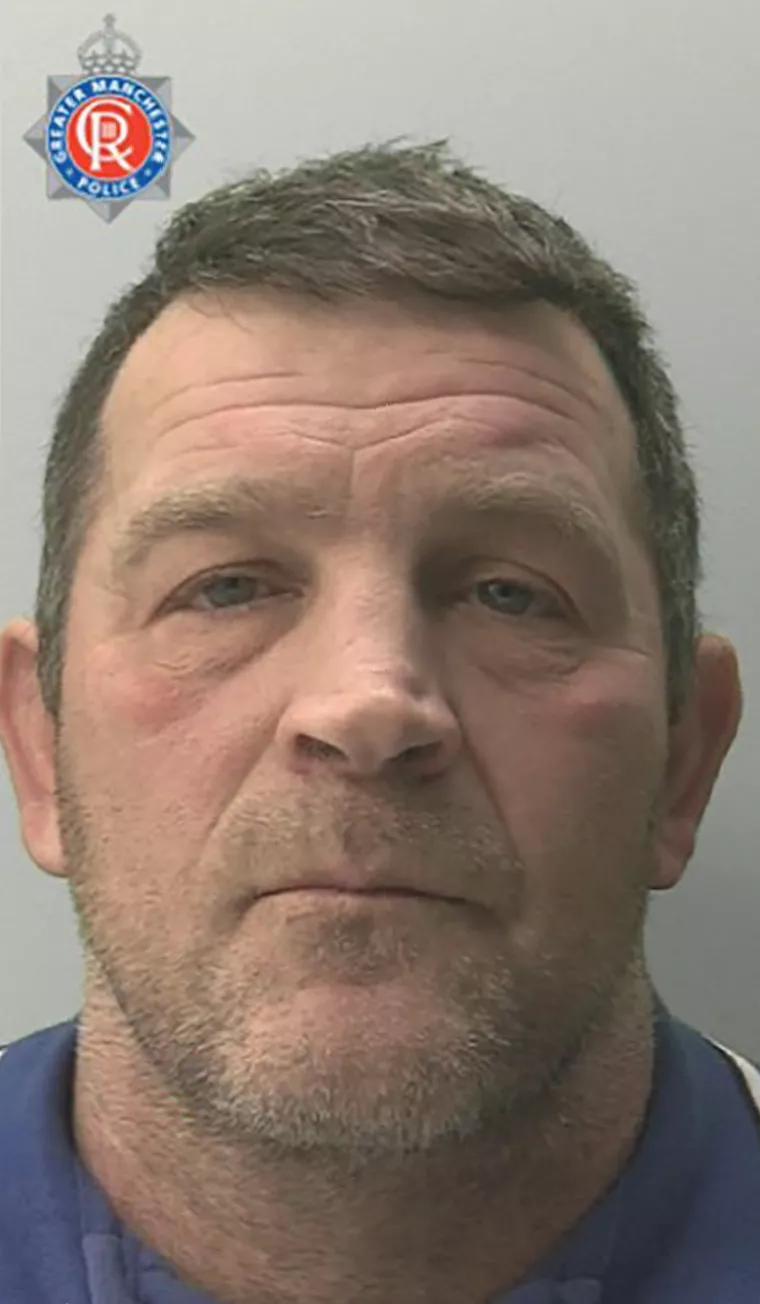
Paul Quinn, 52, was found guilty at Manchester Crown Court on Friday of a vicious assault on a young mother in Little Hulton in the early hours of 19 July 2003. The court heard he stalked the woman, dragged her down a motorway embankment, fractured her cheekbone, strangled her unconscious, and raped her twice. During the attack, he bit her left nipple, almost severing it.
The Flawed Conviction
Andrew Malkinson, then working as a security guard, was convicted in February 2004 largely on identification evidence, despite significant discrepancies. The victim had described her attacker as clean-shaven with no chest hair or tattoos; Malkinson had a goatee, chest hair, and prominent tattoos. He also had no scratch on his face, a feature the victim had recalled.
No forensic evidence linked him to the scene. During the trial, the victim expressed doubts about her identification, but, according to the court, police dismissed this as “just trial nerves”. He was sentenced to life imprisonment and served 17 years before being released on licence in December 2020. His conviction was finally quashed by the Court of Appeal in July 2023.
The DNA Breakthrough
The key to unlocking the two-decade-old case was a persistent DNA profile and the relentless advance of forensic technology. In 2007, a review known as Operation Cube identified a male DNA profile, labelled “Unknown Male 1”, from saliva on the victim’s vest top. This profile definitively excluded Andrew Malkinson.
Despite this, the Crown Prosecution Service advised against further examination in 2009. It was not until 2022, with more sensitive DNA analysis available, that this crime scene sample was checked against the national police database. It produced a match with a probability of a billion-to-one: Paul Quinn.
Quinn’s DNA was on the database because in 2012, as part of a national operation targeting known sex offenders, police had visited him to take a sample. He had a history of sexual offending beginning aged 12 with a caution for indecent assault, and a conviction at 16 for two counts of under-age sex. He also had convictions for burglary, actual bodily harm, and arson.

When news of the DNA match broke publicly in August 2022, Quinn’s internet search history showed a “profound” shift, the trial heard. He began searching for information on the Malkinson case, Googling “How long is DNA kept in database” and “wrongful convictions”. He told the jury these searches were a “complete coincidence”.
A Cascade of Failings
The conviction of Quinn has thrown a harsh light on systemic failures that kept an innocent man in prison. A public inquiry, chaired by HHJ Sarah Munro KC, is now examining the handling of the case by Greater Manchester Police, the CPS, and the Criminal Cases Review Commission.
The Criminal Cases Review Commission twice refused to refer Malkinson’s case for appeal, in 2012 and again in 2020, despite the existence of the unknown DNA profile. A review by Chris Henley KC found a “catalogue of failures” by the CCRC, noting that an internal report in 2013 had recommended reviewing cases like Malkinson’s where DNA opportunities were missed, but this was ignored. The chair and chief executive of the CCRC have since resigned.
Greater Manchester Police is also under intense scrutiny. The Independent Office for Police Conduct is investigating five former GMP officers for potential gross misconduct, with one also under criminal investigation for misconduct in public office and perverting the course of justice. A sixth, currently serving officer is under investigation for misconduct. Alleged failings include the destruction of the victim’s clothing despite a preservation order, and a failure to disclose the criminal histories of two key prosecution witnesses at Malkinson’s original trial.

Assistant Chief Constable Steph Parker of GMP apologised “sincerely and unreservedly” to both the victim and Andrew Malkinson outside court, calling Quinn a “dangerous man” whose “cowardice… is unforgivable.”
The victim, in her own statement, said the verdict brought justice but could not undo the damage. “It has robbed Mr Malkinson of 17 years in prison, and robbed me of the life I wanted to have,” she said. “The impact of what happened that day stayed with me, and will stay for life.”
Quinn, a father-of-six who had moved to Exeter and worked as a delivery driver, was convicted of two counts of rape, grievous bodily harm and attempting to choke or strangle. Detectives say they are now investigating whether he may be responsible for other unsolved offences. He will be sentenced on 5 June.