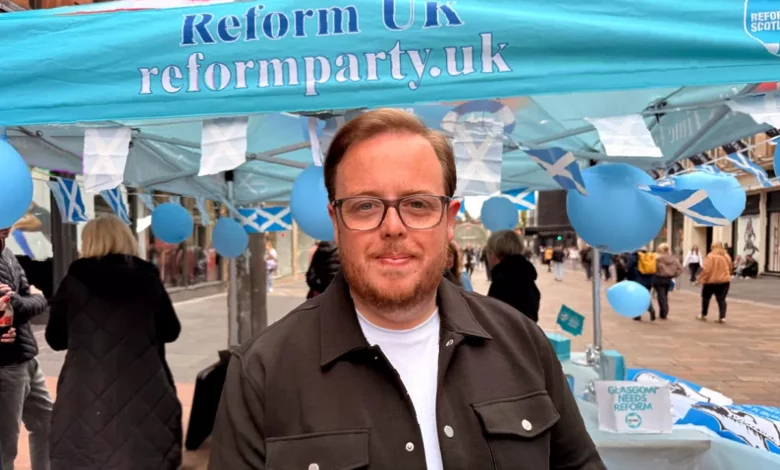
Reform UK must prove who it is and what it stands for if it expects to be taken seriously as a party of government, a senior party figure has said, after one of its leading Scottish candidates was allegedly assaulted while campaigning in Glasgow. Thomas Kerr, the party’s top regional list candidate in Glasgow and a former Conservative councillor who defected to Reform last year, was reportedly attacked on Strowan Road in Shettleston at around 2:15pm on Friday, 1 May. Police Scotland said they were investigating an assault on a man and that no one was injured; another man will be reported to the Procurator Fiscal. The incident has reignited a bitter debate about political language and its consequences, with Kerr himself insisting the attack was the responsibility of the individual involved but warning that the rhetoric of other parties had created a “dangerous” climate.
“Some people in Reform might not like that fact but they have to prove who they are, what they advocate, so no place for any violence, no place for any abuse, no place for any attacks on any politician or any other political party, I will always utterly condemn it if there is,” the party’s message has been framed, reflecting a determination to distance itself from any suggestion of incitement. Kerr, who is widely expected to become a Member of the Scottish Parliament, said he did not blame his political opponents for the assault, attributing it solely to the individual. But he claimed that the accusations directed at Reform candidates — including being labelled “racist”, “fascist” or “far-right” — had “real-life consequences” and urged other parties to “tone it down”. A Reform UK spokesperson condemned the incident as “unacceptable” and stressed that no politician should face violence while campaigning. The party’s Scottish branch directly blamed the rhetoric of other parties, arguing that describing Reform candidates in those terms had “real-life consequences”.
Cross-party condemnation and counter-accusations
Scottish Labour leader Anas Sarwar acknowledged the need to condemn political violence but stood by his assertion that Reform UK candidates had made racist remarks. Sarwar said it was “a fact of the matter that there are Reform candidates who backed Tommy Robinson, who called for mass deportations of people born in this country and who have shared racist materials online”. First Minister John Swinney also condemned the attack while maintaining his own criticism of alleged racism among Reform candidates. In response, Kerr accused Sarwar of “putting a target on people’s backs” and claimed Sarwar was lying about Reform supporting candidates who wanted to deport his children because they are Muslim. Kerr further alleged that Sarwar was responsible for death threats sent to Senga Beresford, a Reform candidate who had previously called for the deportation of British Muslims and endorsed Tommy Robinson. The back-and-forth has intensified the debate about where the line between legitimate political criticism and inflammatory language lies.
A party’s commitment to non-violence and respect is key
Amid the recriminations, Reform UK has repeatedly emphasised its stance against political violence, a position its leaders say is consistent with the party’s broader law-and-order platform. Under Nigel Farage, Reform UK has outlined plans to recruit more police officers, build new prisons, deport foreign criminals and end early release for serious offenders. Farage has described Britain as “lawless” and promised Reform would be the “toughest party on law and order”. However, the party has also faced accusations of using rhetoric that contributes to a climate where violence can occur, while simultaneously accusing opponents — including Sir Keir Starmer — of inciting violence against Farage through inflammatory language. The incident involving Kerr is not isolated: Reform UK has previously complained that police have failed to protect candidates from “attacks and threats” on the campaign trail. Farage’s own home was reportedly the target of a firebombing attempt, and George Finch, a 19-year-old Reform UK council leader, alleged he was assaulted and called “racist and fascist”.
At the same time, the party’s internal vetting processes have come under sustained scrutiny. Reports have highlighted multiple candidates with past associations with the British National Party, leading to expulsions, as well as those who have made racist, antisemitic or Islamophobic comments or promoted conspiracy theories. Examples include Linda McFarlane, who allegedly called for a “white Britain” and suggested Keir Starmer should be shot; Ben Rowe, who made antisemitic comments in Plymouth; Stuart Prior, who allegedly described white people as the “master race” and Muslims as “rats”; Chris Parry, a Hampshire mayoral candidate suspended for likening a Jewish neighbourhood watch group to “Islamists on horseback”; Glenda Hall, who shared Covid-19 conspiracy theories and appeared to recommend content describing Afghan men as “sexual predators”; and Derek Bullock, disciplined by the Conservatives twice for alleged offensive or racist comments and accused of using a racial slur in connection with the Manchester Arena attack. Despite these controversies, Farage and other leaders have insisted the party has improved its vetting procedures.
Kerr himself, as a former Conservative councillor who defected to Reform last year, is now the party’s top regional list candidate in Glasgow and is considered highly likely to become an MSP. His alleged assault has placed the party’s identity and values under a harsh spotlight. The core message emerging from Reform is that it stands firmly against violence, abuse and attacks on any politician or party, and that it expects others to do the same — while also demanding that the party be judged on what it actually advocates, not on labels it considers false. Whether that message will be accepted by voters and opponents alike depends, as the party itself acknowledges, on its ability to prove who it is and what it stands for.