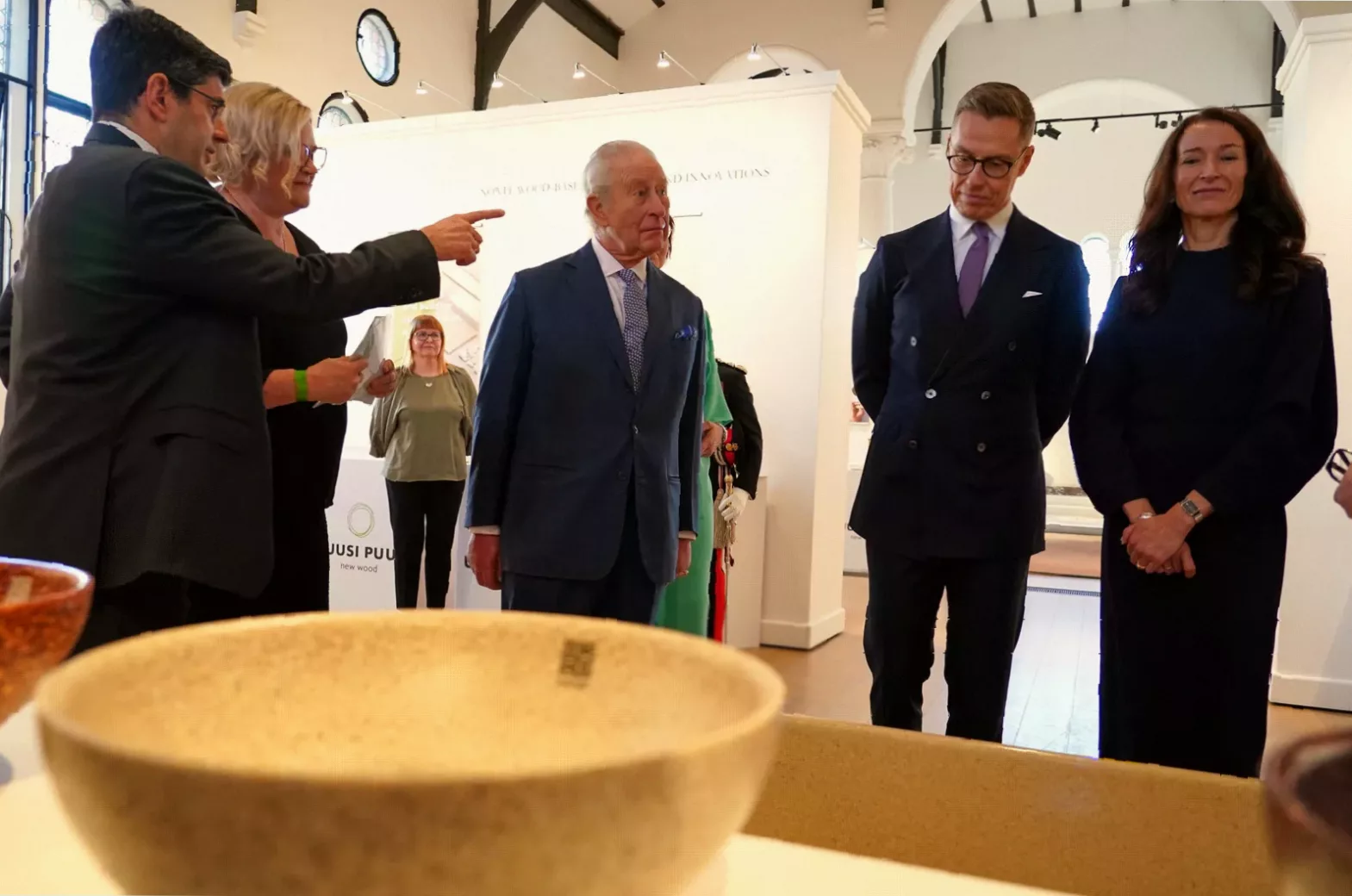
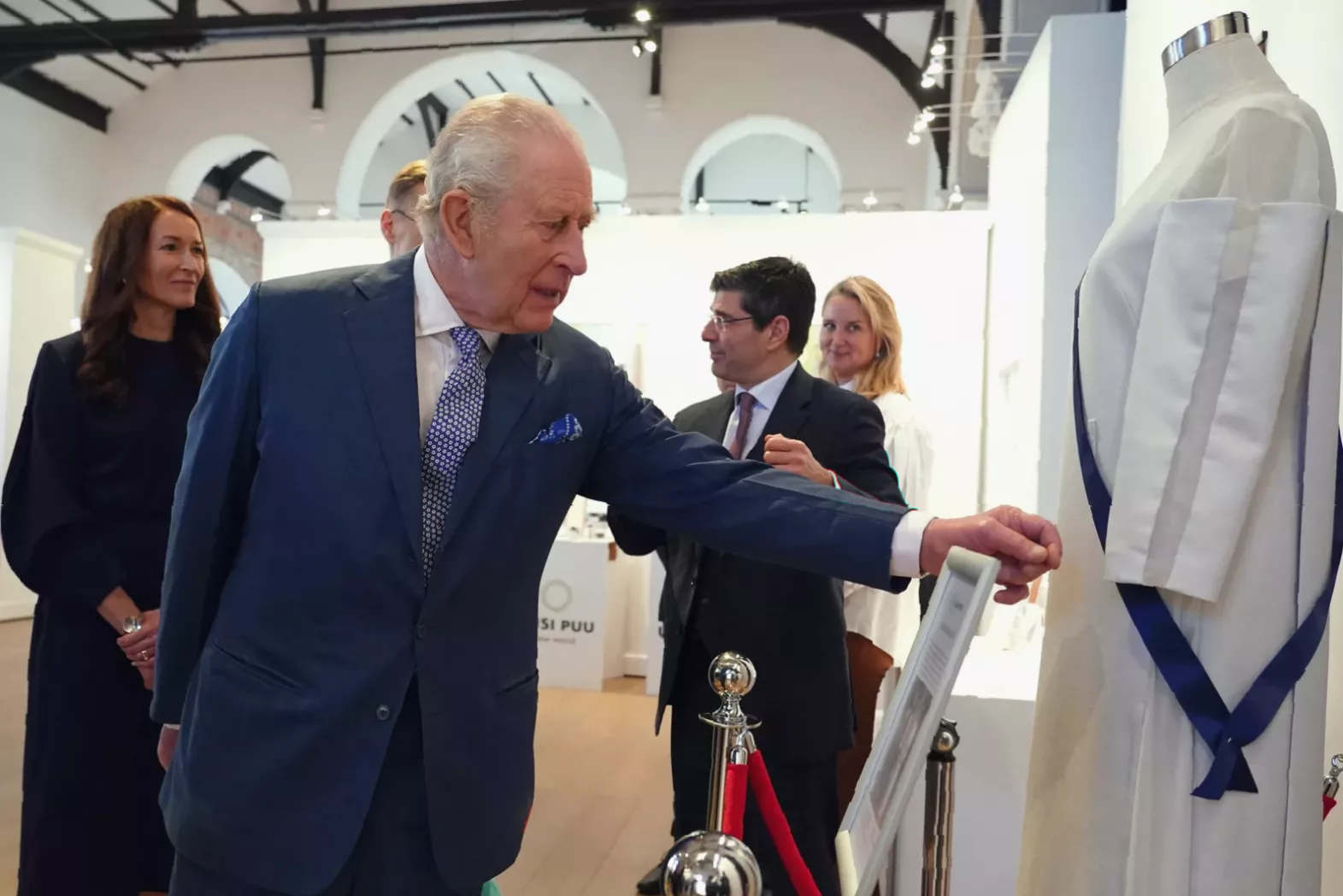
In a quiet corner of Chelsea, within the walls of a repurposed Victorian chapel, King Charles III this week surveyed what advocates believe is a tangible blueprint for a post-fossil fuel future. The “New Wood: Building a bio-based future” exhibition, a collaboration between Finnish innovators and two of the King’s own organisations, presented a vision where everything from luggage to medical casts is crafted from the world’s oldest construction material: wood.
A Royal Showcase for Sustainable Innovation
The event, held at the Grade II-listed Garrison Chapel, brought together a significant diplomatic and environmental alliance. The King was joined by the President of Finland, Alexander Stubb, and his wife, Suzanne Innes-Stubb, whose two-day visit to London focused on strengthening European cooperation on sustainability and new technologies. Finland’s Minister of Agriculture and Forestry, Sari Essayah, was also present.
The Garrison Chapel itself, built in 1859 for the Chelsea Barracks and now a venue for The King’s Foundation, provided a fitting backdrop. The exhibition was a joint initiative by the Finnish Forest Association, the King’s Foundation, and the Circular Bioeconomy Alliance (CBA)—the latter a platform founded by Charles to accelerate the transition to a “nature-first” economy.
Marc Palahí, Chief Executive Officer of the CBA, framed the display as a direct challenge to the status quo. “For the last 100 years, we have been living under a fossil based economy – energy, fertiliser, pesticides, everything is made from petroleum,” he said. “Here what we are showing is that a new world, a new economy is possible, relying on the power of nature.”
From Birch Dresses to ‘Fantastic’ Bathtubs
The range of products on display demonstrated wood’s surprising versatility. Alongside a dress made from birch-based fibres, visitors saw a prototype wheelie luggage case constructed from cellulose, food packaging based on wood pulp, and casts for broken limbs derived from wood and a biodegradable polymer.
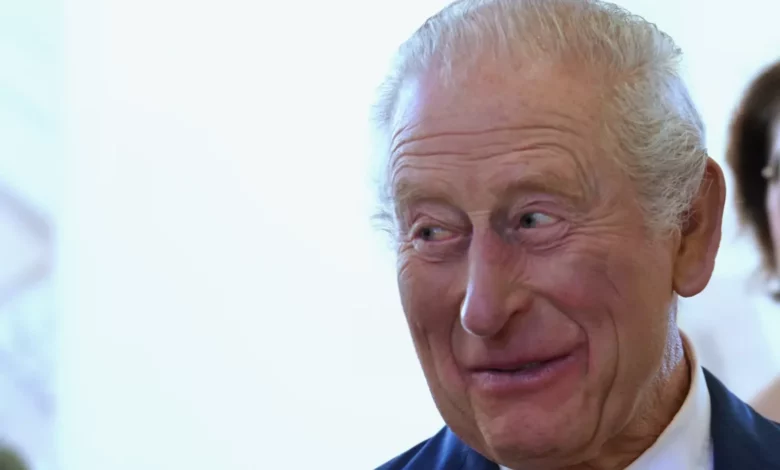
Yet it was a bathtub that captured the King’s particular attention. The product, created by the Finnish company Woodio, is made from chips of wood bound with resin. Charles chatted with Woodio’s chairman, Matti Lehtipuu, a veteran of the forest industry with over 20 years of international experience, and was seen tapping the bath’s surface. After a few minutes of inspection, the King pronounced it “fantastic,” adding, “if you look at it, it could be ceramic.”
President Stubb, demonstrating his familiarity with the exhibits alongside his wife—a British-Finnish attorney and academic fluent in five languages—joked to the monarch: “I’m sure they could send you a special one.”
The Science and Sustainability Behind the Scenes
Woodio, founded in 2016, is known for developing what it calls the world’s first 100% waterproof solid wood composite. The company’s mission is to fight climate change by offering bio-based alternatives to materials like ceramic, which has a high carbon footprint due to the energy-intensive firing process. According to the firm, its products can reduce associated CO2 emissions by up to 80%.
Its manufacturing process is designed to be energy-efficient, using no high temperatures and minimal water, while sourcing wood chips locally from side streams of the Finnish forest industry. At the end of their life, the products can be incinerated for energy or returned to be used in cement production, aiming for zero landfill waste. The company states it is on track to be carbon neutral this year and carbon negative by 2025.
The use of wood chips as a material aligns with broader principles of a circular bioeconomy. They are a biodegradable, renewable resource that repurposes waste. When burned for energy, the carbon released is largely offset by what the tree absorbed during growth, leading to a net-zero impact on greenhouse gases compared to fossil fuels. However, their sustainability is nuanced; decomposition can temporarily deplete soil nitrogen, and energy is still used in their production and transport.
Blending British Craft and Global Vision
The exhibition also highlighted homegrown talent through The King’s Foundation. The monarch’s cousin, the Earl of Snowdon—who is Vice-President of the Foundation—greeted Charles with a kiss on both cheeks. Students from his Snowdon School of Furniture, based at the Highgrove estate, exhibited pieces made from traditional British woods like oak and ash.
The school, which runs courses and intensive masterclasses, emphasises timber as a sustainable material and teaches the entire lifecycle of wood. This focus on craftsmanship complements the high-tech Finnish innovations, together painting a picture of a bio-based future that values both advanced technology and traditional skill.
The Finnish Forest Association, which co-organised the event, works to promote the sustainable use of forests through cooperation and communication, advocating for the sector’s role in sustainable development. The exhibition served as a potent symbol of international partnership in this field, showcasing Finland’s leadership in forestry and sustainable material science alongside the King’s long-standing environmental advocacy.
As President Stubb’s visit underscored broader themes of European cooperation amid geopolitical tensions, the display in the Garrison Chapel presented a concrete pathway for collaboration: leveraging nature’s own materials to build a more resilient and less polluting economy.