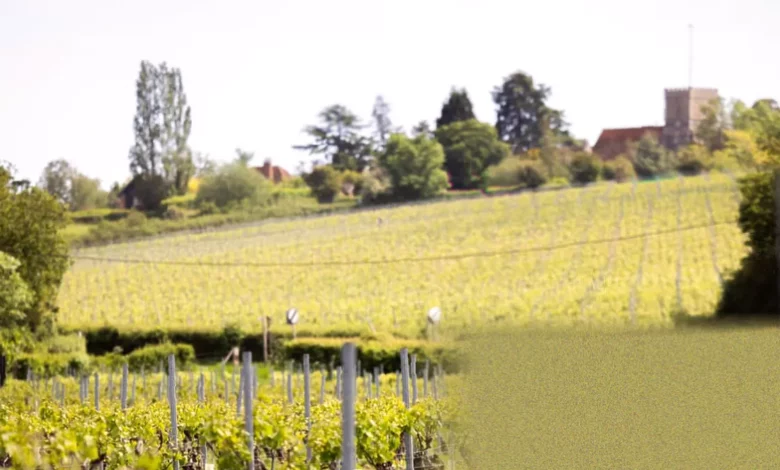
English wines have won more gold medals than ever before, claiming 25 prizes at the International Wine Challenge this week, up from 10 in the previous year. The haul represents the highest gold medal strike rate for English entries, with 16 per cent of all submissions awarded gold, according to the competition organisers. Sam Caporn, a Master of Wine who co-chairs the challenge, singled out one area as an emerging hotspot: the Crouch Valley in Essex.
That location — a cluster of quiet villages a 20-minute drive from Chelmsford — may come as a surprise to anyone who associates Essex with reality television rather than viticulture. Yet the Crouch Valley is now the most densely planted area of vines in the United Kingdom, home to nearly 30 growers and a growing reputation for still wines in particular. “People drive past and go: ‘What is this?’ We forget that people don’t even know we exist,” said Andy Hares, 50, vineyard and estate manager at New Hall Wine Estate, the valley’s founding vineyard.
Why Crouch Valley’s microclimate is perfect for grapes
The secret lies in a combination of geography, geology and weather that researchers describe as one of England’s most distinctive and promising terroirs. The valley benefits from a uniquely warm, dry and low-frost climate, shaped by the North Sea and sheltered by south-facing slopes. The River Crouch and the Blackwater Estuary play a crucial role: they moderate temperatures, extend the growing season and steer rain clouds away, making this the warmest and driest wine-growing region in England.
Rainfall through the summer is very low, which allows fruit to ripen for longer than in vineyards further north or south. The area is also fairly frost resistant — a critical advantage because a late frost can wipe out 60 to 70 per cent of a year’s crop in a matter of minutes, as Hares noted. “We’ve heard stories of people losing 60% to 70% of their crop,” he said.
The soil is predominantly London Clay, known for its water retention, but it is balanced by ancient river terraces and gravel deposits that provide drainage and warmth. This creates an exceptional environment for premium still and sparkling wines, particularly Chardonnay and Pinot Noir. Hares, who previously worked in Bordeaux, said the microclimate is “absolutely perfect” for still wines. “England’s been making wines for hundreds of years but traditionally it wasn’t particularly good,” he added. He blames that on trying to copy French or German styles, but “over the last 10 to 20 years, we’ve developed our own style” — aromatic, young and fruit-focused.
From a saucepan to 250,000 bottles a year
New Hall Wine Estate was established in 1969 by Bill and Sheila Greenwood, making it one of the oldest and largest commercial vineyards in the country. The earliest vines were planted that year; once harvested, the owners made their first wine in a saucepan. “We produce about 250,000 bottles a year,” said Becki Trembath, 35, the general manager and a member of the third generation of the family. The estate now has more than 120 acres under vine, with a modern winery upgraded in 2021.
The vineyard’s historical roots run even deeper. New Hall claims that wine made from grapes grown on its land — from vines near All Saints Church, which sits atop the vineyard — was drunk during the sealing of the Magna Carta. Historical records show that Purleigh Vineyard supplied wine to the Crown in the 12th century.
Business has exploded in recent years. “People know a lot more about English wines. Since Covid-19, people want to know where their products come from. They like to try and buy local,” Trembath said. The estate now draws international visitors. “We’ve had people come from Canada, America, New Zealand and Australia,” said Anna Vine, 42, cellar door manager. “People are suddenly starting to realise that we have vineyards in the UK.”
An industry on the rise
The wider English wine industry is experiencing remarkable growth. Vineyard acreage has doubled in the last decade. In 2025, British wine production grew by 55 per cent compared with 2024, reaching more than 16.5 million bottles, with white wine production up by over 131 per cent. The number of registered vineyards in the UK grew by 4.3 per cent to 1,158 in 2025, employing more than 10,000 people. The industry is now valued at approximately £14 billion.
International acclaim is building. At the 2024 International Wine Challenge, English wines secured 125 medals, including 13 Golds, and ranked second only to France for sparkling wines. This year’s 25 gold medals mark a significant leap. Sam Caporn attributed the success to the increasing maturity of vines, longer maturation periods and lessons learned from earlier pioneers.
The Crouch Valley is increasingly recognised as a still wine hotspot. Wine expert Jamie Goode named it a ‘hotspot’ for English wines in 2021. Wineries across Southern England use fruit from Essex for their still wines. Despite historical perceptions that its heavy clay soils were unsuitable, the dry, warm climate is proving advantageous.
French winemakers take notice
Interest from France is a clear sign of the region’s potential. Winemakers from Burgundy are scoping out land in the valley. Danbury Ridge Wine Estate has partnered with Domaine Duroché to create a limited-edition Pinot Noir, with Pierre Duroché collaborating on harvest and vinification. Alex Moreau of Domaine Bernard Moreau is working with Missing Gate Vineyard on a Chardonnay project.
Major Champagne houses have also invested in English vineyards — Taittinger put £17 million into Kent, launching Domaine Evremond, and Pommery planted vines in Hampshire — recognising the similar chalk soil geology and climate. From the United States, Jackson Family Wines launched its first English still wine, a Chardonnay from Crouch Valley fruit, in 2023.
Not without challenges
Despite the optimism, the industry faces serious pressures. Labour shortages, high production costs, taxes and paperwork all bite. Seasonal workers, vital for hand-harvesting, are affected by visa rules and recruitment costs. The cost of building international brand recognition is substantial. Pricing for English sparkling wine is often close to entry-level Champagne, with some buyers finding it 10 to 15 per cent more expensive. VAT, alcohol duty and other costs can account for nearly half the retail price of a bottle sold in Britain.
The rapid expansion of the industry, coupled with large harvests, can lead to oversupply unless new markets are established. “Sales are going up but it’s competitive out there,” Trembath said. Nearly 30 growers are now in the valley.
Climate change presents a double-edged sword: warming temperatures create new opportunities but also bring risks such as new pests, diseases and erratic production. The speed of change makes long-term vineyard planning difficult.
Wine tourism is a growing revenue stream, accounting for 25 per cent of total income for some vineyards, with visitor numbers increasing significantly. Sustainability is becoming an important market differentiator.
At New Hall, the winery produces red, white, rosé and sparkling wines, but the valley’s signature varieties are still wines from grapes such as Bacchus — which has become East Anglia’s signature variety, discovered at New Hall in the early 1980s — as well as Chardonnay and Pinot Noir. A tasting of three wines — a Bacchus white, a Bacchus Fumé aged in oak, and a sparkling Bacchus — demonstrated the range: the still wines were smooth, fruity and aromatic, while the sparkling version was described as crisp with fresh undertones of berry, like a “pimped-up prosecco”.
As the grapes flower ahead of a September harvest, the Crouch Valley remains a hidden gem for many. Hares summed it up: “People drive past and go: ‘What is this?’ We forget that people don’t even know we exist.”