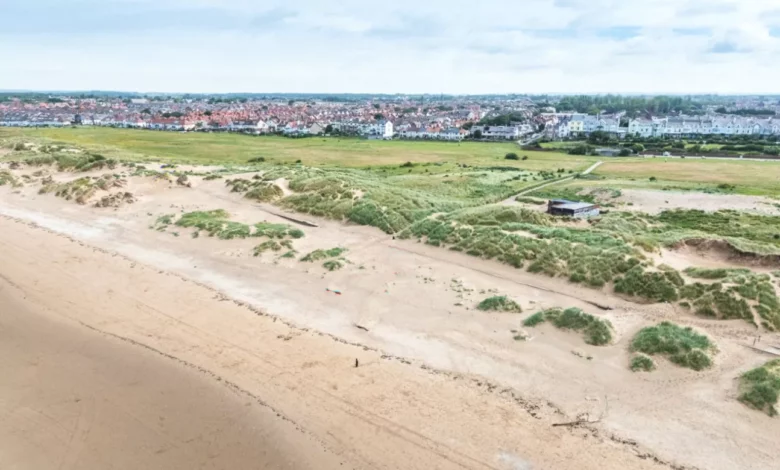
Bootle, Merseyside, has recorded the biggest jump in property asking prices of any seaside town in Britain, with values rising 11% in the year to May 2026 to an average of £141,680, according to new data from Rightmove.
The surge in the Merseyside town comes against a backdrop of subdued national activity. Across Britain, average asking prices were 0.3% lower compared with May 2025, and the Office for National Statistics put the average UK house price at £268,000 in March 2026 – unchanged on the year. In England, prices fell by 0.6% to £290,000 over the same period, while Wales saw a 2.9% increase to £213,000 and Scotland a 1.6% rise to £187,000. Zoopla reported a national average of £271,900 in April 2026, a 1.5% annual rise, with growth fastest in northern regions.
Fastest-growing seaside towns
Rightmove’s analysis of more than 100 coastal locations found that many are bucking the wider market trend. After Bootle, the highest growth was in neighbouring Crosby, where asking prices climbed 9% to £330,900. On the other side of the Mersey, Wallasey – home to the popular Marine Point seafront – rose 7% to £200,753. The Wirral coastal town has seen regeneration in New Brighton and growing residential demand, though localised data from Housemetric for the CH44 8 postcode indicates a 9.5% fall in house prices over the last year, highlighting how averages can mask fine-grained variation.
Five Welsh coastal towns made the top 10. Penarth, in the Vale of Glamorgan, saw asking prices jump 8% to £433,081, making it the most expensive town on the fastest-growth list and the only one to exceed the national average. Llantwit Major, also in South Glamorgan, recorded an 8% rise to £340,033. Llanelli in Carmarthenshire rose 7% to £201,570, Bangor in Gwynedd rose 7% to £220,622, and Porthcawl in Bridgend rose 6% to £359,412. Bangor, a university city with a compact market, has seen a 9.7% year-on-year increase according to Property Solvers, while official series for the wider Gwynedd area show a 37.9% rise over a decade.
In Cumbria, Barrow-in-Furness recorded a 6% increase to £185,169. The only Scottish town in the top 10 was Helensburgh in Dunbartonshire, where prices rose 6% to £247,953.
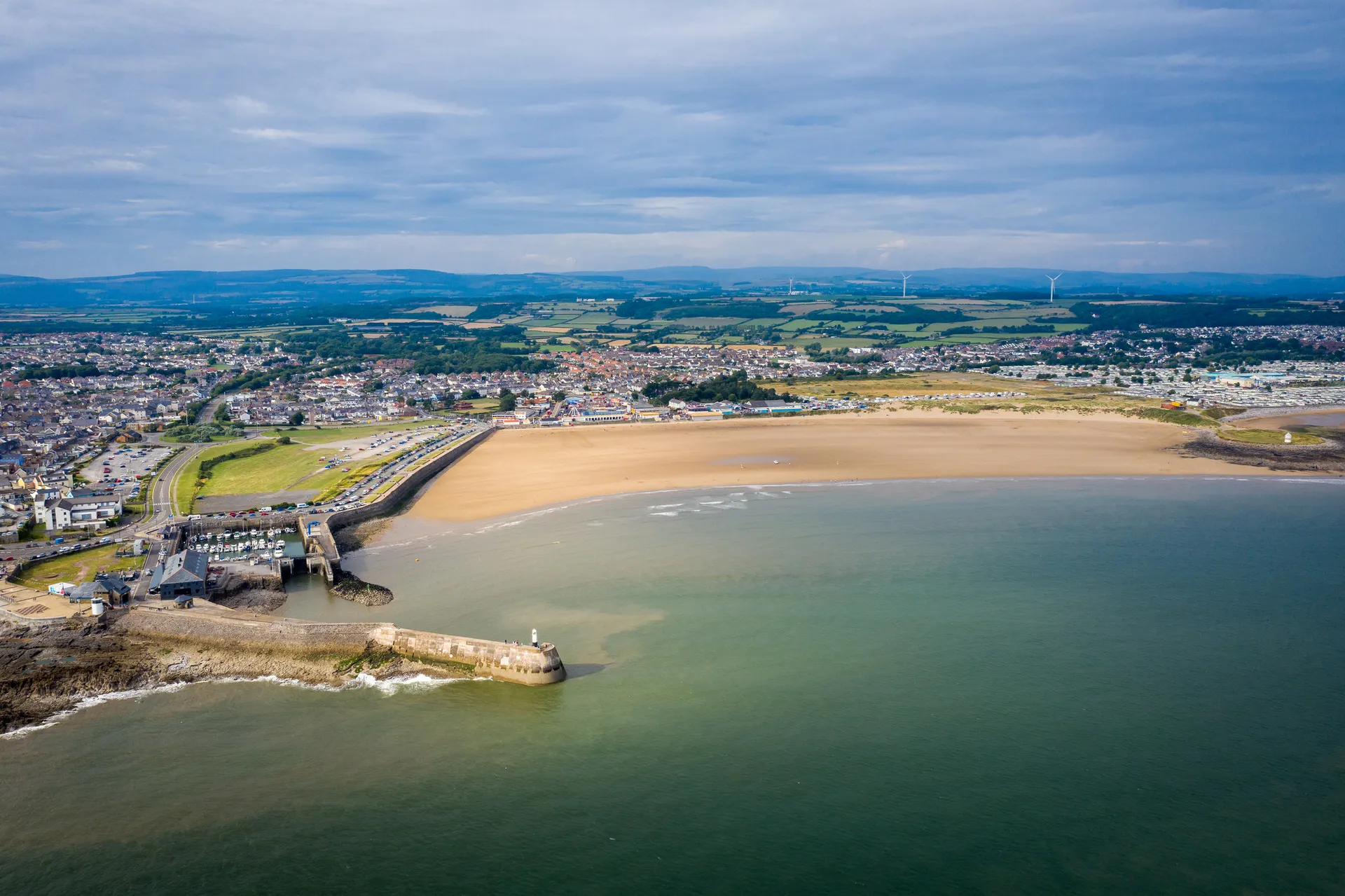
Why affordable coastal towns are in demand
The sustained interest in these markets is being driven by the shift to remote and hybrid working, which has enabled buyers to reassess where they want to live. Many are prioritising space, lifestyle and value over proximity to a city office. Mary-Lou Press, president of the trade body NAEA Propertymark, said: “Many of the fastest-growing seaside markets remain relatively affordable, especially in parts of the North West and Wales. For many buyers, these areas can offer a balance of lifestyle, space and value.
“We’re continuing to see demand driven by flexible working and buyers reassessing where they want to live, but consumers should look beyond headline price growth and also consider factors such as transport links, local jobs, flood risk and ongoing housing costs.”
Colleen Babcock, Rightmove’s property expert, noted that demand for coastal homes remains resilient even as overall UK price growth is more modest, and that realistic pricing attracts interest, particularly in areas with strong buyer appetite. The research shows that more than 80% of the seaside towns analysed have an average asking price below the national figure of £268,000, underlining the value proposition of coastal living for many households.
Cheapest seaside towns
Bootle, despite leading the growth table, is also one of the cheapest places to buy a home by the sea. Rightmove’s list of the 10 most affordable coastal towns is dominated by locations in northern England and Scotland, with average asking prices starting from just £120,657.
Peterlee in County Durham is the cheapest, at £120,657 – down 3% on the year. It is followed by Grimsby in Lincolnshire (£133,706, up 2%), and Ashington in Northumberland (£133,775, up 2%). Bootle itself is fourth at £141,680. Blackpool in Lancashire (£142,277, up 1%) is statistically among the most affordable when measured against local earnings, with the average home costing 6.98 times the average yearly salary, according to separate data. Fleetwood in Lancashire (£147,910, up 2%), Birkenhead on the Wirral (£148,942, up 4%), and Workington in Cumbria (£155,013, up 2%) also feature. Ayr in Ayrshire is the only Scottish entry, at £157,754 (up 1%), while Seaham in County Durham rounds out the list at £157,994 (down 1%).
Unbiased.co.uk, a separate data source, ranks Saltcoats in Ayrshire as the cheapest seaside location, with an average asking price of £122,208, and notes that South Shields in Tyne and Wear has an average of £121,730 – 57% below the national average.
Most expensive seaside towns
At the opposite end of the market, the 10 most expensive coastal towns are all in southern England. Sandbanks in Poole, Dorset, retains the top spot with an average asking price of £1,119,945, though this is down from £1,282,565 in 2025. Canford Cliffs, less than two miles up the Dorset coast, is second at £1,045,533 – up from £974,635 a year earlier.
Lymington in Hampshire averages £545,926 (down 1%), followed by Barton on Sea in Hampshire (£496,143, down 2%) and Lyme Regis in Dorset (£474,417, down 7%). St Ives in Cornwall stands at £461,959 (down 7%). Shoreham-by-Sea in West Sussex (£455,939, up 4%), Swanage in Dorset (£455,347, down 3%), Sidmouth in Devon (£450,971, down 6%) and Saltdean in East Sussex (£449,007, down 1%) complete the list.
Local market reports paint a nuanced picture. Sidmouth, described by agents as a steady market rather than frantic, has seen property prices hold up better than expected for well-presented homes, though postcode-level data from Housemetric for EX10 8 shows a 12.9% fall in the last year. St Ives has experienced a 3.86% decline over 12 months according to one source, while Housemetric data for the TR26 1 postcode indicates 2.7% growth, reflecting the patchy nature of local trends.