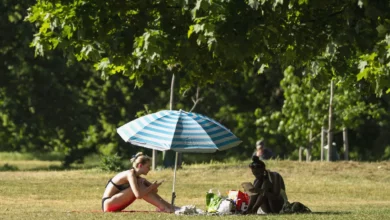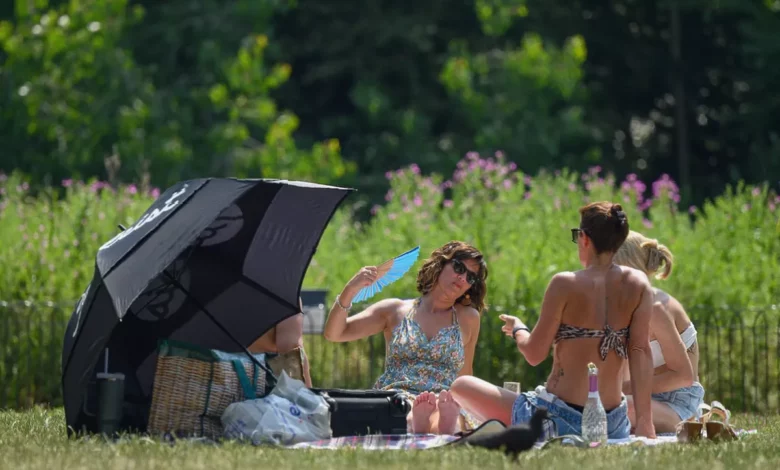
Londoners must adopt heat resilience strategies from hotter climates, experts warn, as the capital faces increasingly extreme summer temperatures that its infrastructure, economy and population are ill-equipped to handle. With recent heatwaves exceeding 40°C and projections suggesting 45°C could become possible by mid-century, the imperative to learn from regions accustomed to high heat has never been more urgent. One of the simplest and most effective measures, public health officials advise, is to keep windows and blinds shut during the middle of the day — a habit that runs counter to the British instinct to throw them open, but one that can make a significant difference indoors.
The need for such adaptation is stark. London experiences a pronounced Urban Heat Island effect, where the city centre can be up to 10°C warmer than surrounding rural areas. Roads, buildings and other surfaces absorb and trap heat, raising temperatures — particularly at night, when cooling is most needed. The hottest areas have the least vegetation, while cooler spots have more. This phenomenon amplifies the impact of every heatwave, and the consequences are already being felt across the capital.
During the July 2022 heatwave, the London Fire Brigade recorded its single busiest day since the Second World War as wildfires broke out across the city. Transport networks suffered: railways, built to withstand temperatures no higher than 30°C, buckled in the heat, causing delays and cancellations. Runways at airports were damaged, flights were grounded. The Hammersmith Bridge, which has a temperature control system to manage thermal stresses, had to be closed to vehicles in previous extreme heat events. Meanwhile, pressure on the power supply network created the risk of “brown outs” as demand for cooling surged.
The economic toll is substantial. The July 2022 heatwave caused a drop in visitors and workers in central London comparable to the effect of Covid-19 restrictions. Annual labour productivity losses due to heat are estimated at £577 million, a figure that could rise to £664 million without mitigation. The professional sector alone loses £336 million each year because workers are less productive in overheated offices. Vulnerable groups are hit hardest: Londoners aged 45-65 face nearly double the heat-related mortality risk of the rest of England, and homeless people are more likely to be hospitalised. Cardiovascular deaths rise by 2% for every 1°C increase, while suicide risk also increases. Financially insecure Londoners are more than twice as likely to be severely affected by extreme temperatures.
Against this backdrop, the simple advice to close windows and blinds during the hottest part of the day — typically 11am to 3pm — becomes a critical resilience strategy. Public health experts from the UK Health Security Agency (UKHSA) recommend keeping homes cool by closing blinds and curtains, and staying out of the sun during those peak hours. The reasoning is straightforward: by midday, the outside air is considerably hotter than the air inside a home that has been shaded and insulated overnight. Opening windows would allow that hot air to rush in, raising indoor temperatures rapidly. Blinds and curtains — particularly those with reflective coatings — block solar radiation from entering through windows, preventing the greenhouse effect that turns a room into a solar oven. Keeping both windows and blinds shut therefore conserves the cooler air that built up during the night and early morning, delaying the point at which indoor temperatures become uncomfortable or dangerous. This is a form of passive cooling, a principle that city planners are now embedding in new developments through requirements to maximise natural ventilation and use high-albedo (reflective) materials on roofs and surfaces.
The emphasis on passive measures is part of a broader set of resilience strategies being rolled out across London. Under the Mayor’s London Plan, new developments must include green roofs and walls where feasible, offering cooling benefits, biodiversity gains and flood mitigation. Since 2016, the Mayor has funded the planting of over 280,000 trees, with initiatives such as “Trees for Streets” encouraging public participation. Tree-planting cools the air through shade and evapotranspiration, and helps manage stormwater. Green vegetation barriers, walls and roofs also improve local microclimates.
Retrofitting existing buildings is a major challenge. Many homes were built for winter warmth, with insulation that can trap summer heat. Policies are being developed to adapt homes for summer, including the use of insulation that prevents overheating and the widespread adoption of “cool roofs”. Research indicates that if all London roofs were coated with light-coloured, reflective materials, the city could have been cooled by about 0.8°C on average during the summer of 2018, potentially preventing hundreds of heat-related deaths.
Transport for London (TfL) has a Climate Change Adaptation Plan to manage risks on the Underground and surface networks. The London Community Emergency Partnership (LCEP) supports charities and community groups in preparing for heatwaves, raising awareness and checking on those most affected. A “Cool Spaces” scheme provides an interactive map of public places where people can find relief from the heat, and heatwave kits — containing fans and cooling mats — are distributed to at-risk residents.
City Hall is developing a strategic London-wide plan for heat, building on recommendations from the independent London Climate Resilience Review, which focuses on adapting the city to more extreme weather. The UKHSA issues heat-health alerts (Green, Yellow and Amber) to warn health and social care services of impending risks. Public advice also includes checking on vulnerable individuals, planning physical activities for cooler times of day, and drinking plenty of fluids.
The scale of the challenge is immense. London’s existing buildings, infrastructure and social fabric were not designed for the climate now arriving. With hotter, drier summers and wetter winters expected, and heatwave temperatures potentially becoming the norm, the city has no choice but to learn — and urgently — the habits of places that have long known how to stay cool.