Energy bills are set to rise by £209 to £1,850 annually for a typical dual-fuel household from July, according to forecasts that have prompted the chancellor to unveil a series of cost of living measures this week. The 13% increase on the current £1,641 annual bill, expected to be confirmed by the energy regulator Ofgem, will deliver a direct hit to household disposable incomes and test Labour’s central political claim that the cost of living crisis is easing on its watch.
Government measures: a mini-budget with limited reach
Chancellor Rachel Reeves has announced a package of interventions designed to cushion the blow of rising inflation, particularly as the conflict in Iran drives up wholesale energy prices. The measures include a temporary reduction in VAT on summer attractions such as theme parks, soft-play centres, zoos, museums and children’s theatre and cinema tickets, cutting the rate from 20% to 5% between 25 June and 1 September 2026 as part of a £300 million “Great British Summer Savings” scheme. Free bus travel for children aged 5 to 15 in England during August has been backed by a £100 million government commitment. The government has also suspended import tariffs on more than 100 food products, including biscuits, chocolate, dried fruit and nuts, a move expected to save consumers over £150 million annually. Planned fuel duty increases originally scheduled for September and December have been postponed, alongside a 12-month vehicle tax holiday for lorry drivers and a one-third cut in duty on red diesel for farmers.
The cost of these measures is estimated at around £250 to £300 million. The government says they are intended to help families enjoy the summer and to cushion the inflationary impact of the Iran crisis. However, the chancellor has stopped short of offering an immediate winter energy bailout. The article argues that these are “mini-measures” — a mini-budget with the emphasis on the mini — that do not fundamentally alter the UK’s exposure to imported energy shocks. The inflationary impact of the Iran crisis, analysts warn, will be substantial. That is why Ms Reeves is moving into crisis-management mode with industrial resilience funds and thinly veiled threats to tax profiteers, but it is unlikely to be enough.
Energy crisis: Britain’s vulnerability to imported shocks
Britain’s inflation vulnerability stems from its deep dependence on energy from abroad. The country imports nearly half — 43.8% — of its net energy. In 2023 the UK imported 33,000 GWh of electricity compared to exports of 9,000 GWh, and overall it imports 40% of its energy supply. Norway is the primary supplier of energy imports, particularly for gas, while the United States is the largest source of crude oil imports. The UK also imports 45% of its gas supply. This reliance leaves the country acutely exposed to any disruption in global energy markets.
The escalating conflict involving Iran has sent shockwaves through those markets. Iran’s strategic location in a key energy corridor means any threat to production or shipping routes can push prices higher. The closure of the Strait of Hormuz is cited as the primary driver for the recent surge in wholesale energy prices. Wholesale markets have been highly volatile since the conflict began, with gas prices doubling earlier in 2026 and short-term gas futures nearly doubling in recent weeks. The International Monetary Fund has predicted that the UK will face the biggest hit to economic growth from the consequences of the Iran war among G7 nations, partly due to its dependence on imported energy.
The situation is compounded by Britain’s shrinking refining capacity. The UK can now process only half as much petroleum as it could two decades ago. From 18 refineries in the late 1970s, the country has reduced to just seven, and more recently operates with only four following closures in Lincolnshire and Scotland. Factors behind the decline include increased international competition from Middle Eastern and Asian refineries, slow demand growth, stringent environmental standards, aging infrastructure, high energy costs and escalating carbon emission costs — UK refineries face carbon costs of up to £400 million annually. The consequence is that Britain is particularly exposed to jet fuel shortages, with its deficit twice that of any other European nation. Labour ministers have waived some Russian oil sanctions this week, allowing imports of diesel and jet fuel refined from Russian crude in third countries — a decision that reflects the UK’s shrinking refining capacity rather than any policy shift on Russia.
The British gov will put the blame on the White House. And sure, US President Trump's Iran war is the problem.
But the UK wouldn't be in its current predicament if sucessive Labour and Conservative govs have not ignored the closure of multiple oil refineries over 20 years. https://t.co/cH3ASyEBXm pic.twitter.com/tHPSgkRMmp
— Javier Blas (@JavierBlas) May 19, 2026
Small businesses, particularly those in rural areas reliant on heating oil, are bracing for their energy bills to more than double. Some have already begun rationing fuel use. While the summer rise is painful, the bigger concern is the potential impact in October when energy demand typically increases. Even if the conflict ends, physical damage to infrastructure and lingering supply disruption mean a return to April’s price cap levels in autumn is unlikely. If households absorb a summer rise in bills and then face costs rising again before winter, the government risks a return to the levels of financial anxiety felt after the Russian invasion of Ukraine.
Long-term solutions: the energy transition and resilience during the shift
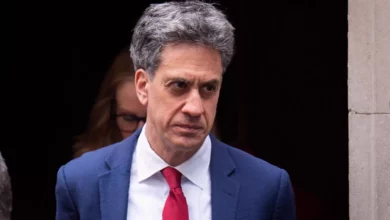
Ed Miliband, the energy secretary, argues that the safest long-term buffer is reducing fossil-fuel exposure itself rather than deepening gas dependence through new storage systems. He maintains that “the era of fossil fuel security is over” and that clean energy is the only route to financial, energy and national security. The UK aims for 95% carbon-free electricity by 2030, and in 2024 renewables generated 51% of the country’s electricity, with wind power becoming the largest source. The government’s strategy involves turbocharging private sector investment in clean power, expanding solar on public land, delinking gas and electricity prices, and encouraging households to switch to solar panels and electric vehicles. A £15 billion “Warm Homes Plan” aims to improve energy efficiency.
But electrification takes years. Britain’s energy system still faces winter usage spikes, and even in a green power future the UK would still have to import some materials and technology. Despite the push towards renewables, the UK will still rely on unabated gas for 15% of electricity generation in 2030, and remains on track to miss its ambitious 2030, 2035 and 2050 climate commitments, with buildings and transport identified as key areas needing more action. Miliband has been urged to restart North Sea drilling but insists that clean energy, not doubling down on fossil fuels, is the solution. He points out that gas and oil extraction from the North Sea will not cut domestic energy bills because prices are set on international markets. However, some reports suggest increasing domestic production could unlock significant investment and boost supply.
The question of whether Britain can move away fast enough from carbon sources before the next series of external shocks — including that caused by the war in Iran — in the coming months remains open. The country clearly must radically accelerate the transition to clean power, but it also needs a form of buffering and resilience during the transition itself. The former prime minister Liz Truss demonstrated that political missteps can be punished: her energy subsidy, which froze the price cap at £2,500 per year for the average household and cost an estimated £50 billion, was criticised as a universal subsidy that disproportionately benefited higher-income households and left millions in fuel poverty. She guaranteed inflationary instability without a productive strategy — and paid for her mistakes.
Britain does not risk a pummelling from the markets because it may veer from Treasury orthodoxy. The UK’s financialised economy operates through expectations and institutional structures far more than through simple trade arithmetic alone. Britain is not a developing nation dependent on scarce dollar reserves accumulated through exports. What markets punish most severely is political incoherence and weakness. The UK has far more room for state-led transformation than economic orthodoxy admits. It could simultaneously insulate households from energy costs and build a green power base. But transitions must be politically and institutionally coherent enough to sustain confidence while restructuring occurs.