Labour’s plan to scrap the £320 million annual primary school PE and sport premium has ignited a fierce row, with school leaders warning the move amounts to a funding cut disguised as a modernisation drive and threatens the legacy of the 2012 Olympic Games.
The Department for Education (DfE) confirmed the existing grant, paid directly to primary schools to improve physical education and sport, will be abolished from spring 2027. In its place the government will introduce a “PE and school sport partnerships network” worth £580 million over three years, covering both primary and secondary schools. That works out at roughly £193 million a year — a reduction of about 22 per cent in annual operational funding compared with the current £320 million. The DfE disputed the scale of the cut, pointing to additional capital investment of nearly £200 million for improving sports facilities and a one-off transition payment of £100 million for primary schools in spring 2027.
The announcement, made hours before the England men’s World Cup football squad was named, marks the third time in two decades that school sport policy has been wrenched in a new direction. The last Labour government created a national sports network with 450 school sport coordinator roles, only to see that funding scrapped by the coalition in 2010. After the London 2012 Olympics, the coalition launched a £150 million annual grant to primary schools, which Prime Minister David Cameron said would “foster the aspirations of future Olympians and Paralympians”. That grant was later increased and became the premium Labour now intends to abolish.
What will the new scheme look like?
Under the new “sport partnerships network”, schools will no longer receive direct funding. Instead, the DfE will appoint a national “delivery partner” — likely to be a consortium of national governing bodies — to provide a “mixture of universal and targeted support”. The government says this will move away from what it calls a “one-size-fits-all model” and instead tailor provision to each school’s needs. Examples of targeted support include supplying new coaches, delivering top-up swimming lessons, expanding extracurricular opportunities, and offering online training for teachers.
The DfE argued that despite the cut in annual operational funding, the overall package includes significant capital investment: nearly £200 million earmarked for improving school sports facilities, including making them more accessible for pupils with special educational needs and disabilities (SEND) and purchasing additional equipment. The department also confirmed a one-off £100 million transition payment for primary schools in spring 2027 to help them adapt. Sport England’s chief executive, Simon Hayes, welcomed the commitment, saying the funding “has the potential to create lasting benefits for schools and communities by improving the places where children and young people can get active and enjoy sport, while helping tackle inequalities in access to physical activity”.
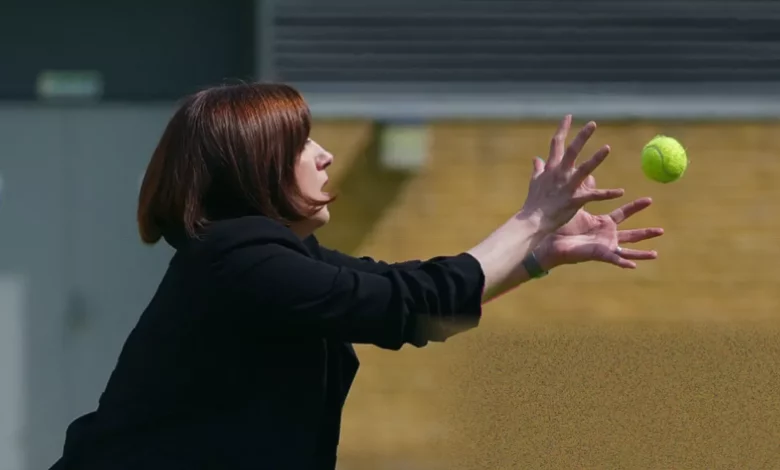
Education Secretary Bridget Phillipson defended the overhaul, stating: “Our new approach will see every child, across both primary and secondary, more physically active regardless of their circumstances, background, ability or where they go to school.” Sport Minister Stephanie Peacock added that the model would ensure children receive high-quality PE lessons by involving clubs, coaches and sporting bodies to integrate physical activity into their lives.
‘Complex and lacking clarity’ — the new network under scrutiny
The most sustained criticism, however, has been directed at the perceived complexity and lack of detail surrounding the partnerships network itself. Pepe Di’Iasio, general secretary of the Association of School and College Leaders (ASCL), said: “We are worried about the removal of an established funding stream to provide PE and sport in primary schools and its replacement with an initiative which — to put it mildly — is extremely complex and lacks clarity about how it will be delivered.” He added that it “appears to be a funding cut dressed up as an initiative to boost PE and sport in schools when it may actually have the opposite effect, certainly in primaries”.
Leora Cruddas, chief executive of the Confederation of School Trusts (CST), echoed the concern, describing the lack of clarity as “unhelpful for many schools that have already made plans for next year”. She urged the government to delay implementation until September 2027 — six months after the planned start — “so that this can be properly planned for”. She also pointed to the arithmetic challenge: “This would also help the sector understand how support can be extended to 3.6 million secondary school pupils at what looks like significantly reduced annual funding.”
The NAHT school leaders’ union called the move “deeply concerning”, warning that a well-established funding stream was being replaced by a structure that could introduce new layers of bureaucracy and leave headteachers uncertain whether the money would ever reach the frontline. The historical precedent adds to the unease: the previous school sport partnerships model, launched by Labour in the early 2000s and praised by Ofsted for improving access and school-club links, was dismantled in 2010 by the coalition government, a decision that prompted protests from teachers, pupils and athletes.
Expert reactions: disruption versus opportunity
Ali Oliver, chief executive of the Youth Sports Trust, offered a more measured response, acknowledging the difficulties but backing the new approach. “We recognise the shifts in investment may cause challenges in the short term. The period of change to a new era of PE and school sport will take time, and understandably cause disruption particularly to primary schools,” she said. “However, the protection of dedicated funding to support the physical, social and emotional development of children and young people must be welcomed and we all need to work together to manage a difficult transition.”
The DfE insisted that the new network would modernise the partnerships model that operated earlier this century, and that lessons had been learned from past instability. The department noted that less than half of young people currently meet recommended daily activity levels, despite more than a decade of the premium, and that the new approach would specifically target groups that have been left behind, including girls, pupils from disadvantaged backgrounds, ethnic minorities and those with SEND.
Internally, the announcement followed a battle between government departments over who should fund school sport. The Department of Health and Social Care had wanted to end its £60 million annual contribution, and the Guardian reported that the DfE itself also sought to cut £60 million from its own contribution. The resolution, as unveiled, preserves dedicated funding but in a radically different, less direct form.
Simon Hayes of Sport England, which will help deliver the investment, said the capital element in particular could create lasting benefits for school facilities and community access. The DfE has promised that the new network will be “fully up and running from spring 2027”. For now, though, headteachers and academy leaders remain sceptical, demanding far more detail on how a national delivery partner — appointed without a clear timetable for selection — will actually reach 4.5 million primary pupils and more than 3 million secondary students with a budget that has been cut by roughly a fifth in real terms.