MPs have declared they have no confidence in the leadership of South East Water, a damning verdict that has already prompted the resignation of the company’s chairman and forced its chief executive to announce his intention to step down. The Environment, Food and Rural Affairs (Efra) Committee concluded that the utility, which supplies millions of customers across Kent and Sussex, is “devoid of proper leadership, riddled with cultural problems” and that a change at the top is essential for any improvement.
David Hinton, who joined the board in 2013 and has been chief executive since 2020, said earlier this month that he would leave his post. He will remain in place over the summer to ensure an “orderly transition” while a successor is found. His plan to exit came just a week after the company’s chairman, Chris Train OBE, who became chair on 1 April 2022, resigned. Lisa Clement has been appointed as interim chair. Alistair Carmichael, the chair of the Efra Committee, has reiterated calls for Hinton to go, arguing that competent leadership is urgently needed.
MPs’ scathing report
The committee’s investigation focused on South East Water’s handling of multiple water supply interruptions between November and January, which left thousands of customers across Kent and Sussex without tap water, unable to shower or flush toilets. The report described “an exceptional failure of management and of corporate governance”, pointing to inadequate governance frameworks, a culture of unaccountability, and poor oversight. Among the specific failures identified were inadequate maintenance of infrastructure, a failure to monitor critical risks, and a tendency to blame external factors such as climate change and increased demand.
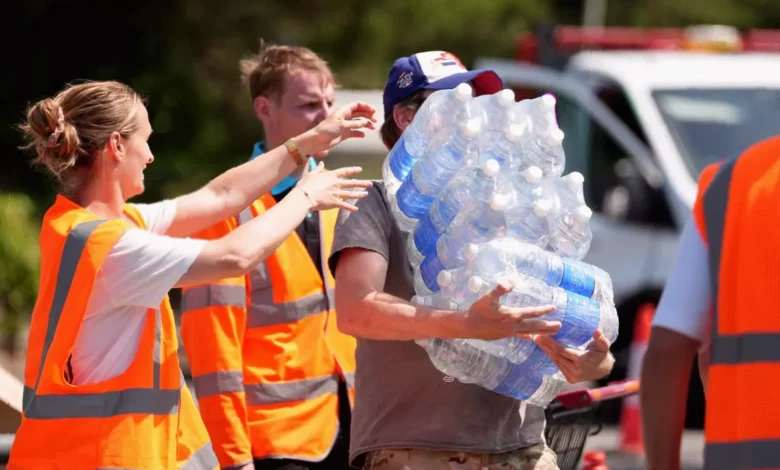
A key incident was the failure of the Pembury Treatment Works in late 2025, which left tens of thousands of people without drinking water for two weeks, affecting vulnerable residents, schools, and care settings. The company’s explanation for that failure was disputed by the chief drinking water inspector. Customers have expressed extreme frustration, with reviews highlighting incompetent staff, poor communication, and a lack of resilience. The outages also hit businesses hard: estimates suggest losses of between £10 million and £20 million during the Tunbridge Wells crisis alone.
The company has faced previous supply interruptions, including during a freeze-thaw event in February 2018 and Storm Eunice in February 2022. More recently, a hosepipe ban was in place across Kent and Sussex from July 2025 to February 2026 due to dry weather and high demand. In January 2026, the water regulator Ofwat opened an investigation into South East Water following repeated supply interruptions, looking at compliance with customer-focused licence conditions. Ofwat also has an ongoing investigation into the company’s supply resilience.
In March 2026, Ofwat proposed a £22 million fine after an investigation into multiple supply disruptions between 2020 and 2023 that affected more than 286,000 people. The regulator found that the company had failed to plan sufficiently, learn from incidents, and maintain key infrastructure. Ofwat has previously categorised South East Water as “action required” regarding its financial resilience.
The Efra Committee also turned its attention to the company’s shareholders — Utilities Trust of Australia, the NatWest Group Pension Fund, and Desjardins Group and associated holding companies — calling on them to hold the board to account. Meanwhile, South East Water’s business plan for 2025-2030 has been referred to the Competition and Markets Authority for redetermination, with an expected outcome of more than £100 million in additional funding.
South East Water has acknowledged “operational failures” and a loss of public trust, issuing an “unreserved apology” to affected customers. The company has said it plans to double investment in its water supply network over the next five years. It has submitted an ambitious five-year plan to Ofwat with an investment of £2.1 billion into infrastructure, including new reservoirs, pipelines, and water recycling schemes. A separate £1.2 billion investment programme over the next 50 years is planned for reservoirs, new transfers, and desalination schemes, alongside a commitment to halve leaks by 2075.
The company is expanding its operational and engineering teams and introducing new functions for infrastructure and digital innovation. A comprehensive review of coagulation processes at water treatment works has been completed to learn from past incidents, and AI-enabled tools are being developed for monitoring bottled water stations and managing emergency responses. South East Water also has an ambitious 25-Year Environment Plan (H25) focused on protecting the natural environment and aims to achieve operational net zero carbon by 2030, investing in renewable energy and electric vehicles. Ofwat expects the company to reduce its greenhouse gas emissions by 8% and invest £82 million in its environment programme between 2025 and 2030.
Despite these pledges, the company continues to face acute pressure. In May 2026, fresh outages in Kent and Sussex were attributed to extremely high demand during hot weather, underscoring the scale of the challenge that South East Water’s new leadership — once it is finally in place — will inherit.