The opening of the first phase of HS2 has been pushed back to a window between May 2036 and October 2039, with project costs soaring to between £87.7 billion and £102.7 billion in 2025 prices, the Transport Secretary, Heidi Alexander, has confirmed. The service, running between Old Oak Common and Birmingham, had been expected to begin operations by 2033.
The new cost estimate represents a sharp escalation from previous official figures, which ranged from £70 billion to £82 billion. Those older numbers were largely based on 2019 prices and had not been adjusted for inflation. The updated range now also includes the cost of delivering Euston station and associated London Underground upgrades, although the government is still seeking a private company to partner on that part of the project. Alexander said the government will now update the cost estimate for inflation every two years, rather than leaving it unchanged for seven years as had previously been the case.
Services between London Euston and Birmingham or Handsacre Junction are now expected to start sometime between May 2040 and December 2043. HS2’s chief executive, Mark Wild, has set his organisation the internal goal of delivering the programme at a cost of £93.2 billion and running the first passenger-carrying trains in late 2037.
Two-thirds of cost rise unrelated to inflation
Inflation accounts for only about one-third of the latest cost increase. The remaining two-thirds is driven by necessary works that were not included in the original project plan, underestimation of the scale of work required, and inefficient delivery. Among the specific issues identified are poorer-than-expected ground conditions demanding more extensive structural work, and the cost of legal challenges from public bodies. Transport Secretary Heidi Alexander has been sharply critical of past management, describing the project’s history as an “appalling mess” and a “shocking legacy” of previous governments. The research briefing also notes references to “original ‘gold plating’” and “over-specification” of the project, where the pursuit of the highest possible speeds led to bespoke, highly engineered designs.
Mark Wild’s “reset” of the programme has found that progress on completing civil engineering for the entire line of route is at least four years behind the original schedule. In addition, the time required to test and commission HS2 to ensure a reliable and safe service was underestimated by another three years. This mirrors the problems that caused the Crossrail project to overrun on both time and cost, as it also miscalculated the difficulty of that phase. Lessons from the James Stewart review and the Lovegrove report, which assessed past failings in HS2 delivery, are being applied to the current reset.
Euston station to open with six platforms, future-proofed for expansion
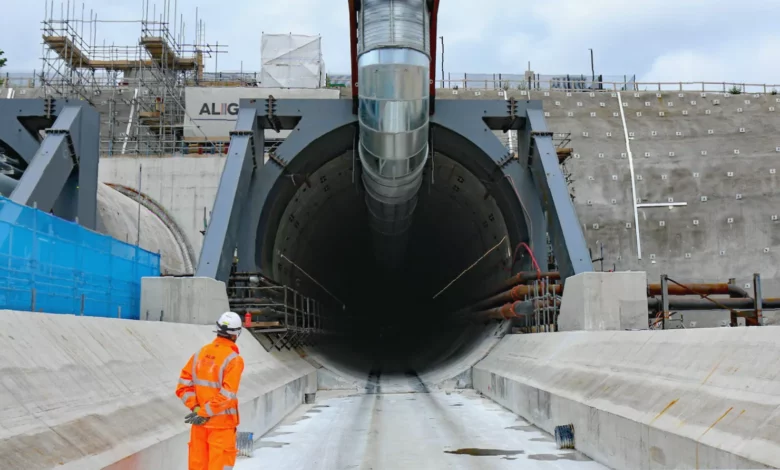
The government confirmed that Euston station will open with six platforms to serve services between Birmingham and London. It will be future-proofed to allow additional platforms to be added as services are extended further north. The redevelopment will also deliver a new station concourse designed to accommodate current and future passenger demand on the West Coast Main Line. The original plan for Euston involved 11 platforms, later reduced to ten, and eventually to six as costs escalated. A “Euston Delivery Company” has been established to oversee the development of the Euston campus with the aim of attracting private investment through a public-private partnership model for design, build, finance and maintenance. Money has already been allocated for the tunnel between Old Oak Common and Euston, with tunnel boring machines being prepared for a spring 2026 start.
Speed reduction to save a year and up to £2.5 billion
The line will open with trains running at up to 320 kilometres per hour (199 miles per hour), slightly slower than the 360 kilometres per hour (220 miles per hour) for which it was designed. Heidi Alexander said the reduction would save about a year in opening the railway and up to £2.5 billion on the project. The main savings come from avoiding the risks and costs associated with certifying a railway at a speed that is not operated anywhere else in the world. The lower speed aligns HS2 with the fastest high-speed services in mainland Europe and Japan, making it easier to test the new trains on existing high-speed railways before live trials in the UK.
The railway will use the same European Train Control System (ETCS) signalling system that is used on the Elizabeth line and is being extended along the East Coast Main Line. It will also be the same system used on the Transpennine Route Upgrade, which will serve services from Manchester to Grimsby.
Cancellation now almost as costly as completion
Estimates indicate that cancelling HS2 at this stage would cost almost as much as completing it, without delivering any of the project’s intended benefits. Cancelling and remediating the project is estimated to cost between £33 billion and £58 billion (2025 prices), excluding sunk costs. By comparison, the remaining spend required to complete the project is estimated at between £46.8 billion and £61.7 billion. The original concept for HS2 was proposed in 2009 by the Labour government to address capacity constraints on existing rail links. Despite its name, a crucial benefit of HS2 is the additional capacity it will create: by moving long-distance traffic onto a new line, it frees up space on existing networks for local, regional and freight services.