Transport for London (TfL) has set out its intention to take over the Heathrow Express route, arguing that the premium service’s valuable train paths into Paddington could be better used by the Elizabeth line as part of a wider push to improve public transport links to the airport ahead of a potential expansion.
In a submission to the Airports National Policy Statement (ANPS) review, TfL warns that without major upgrades to public transport, an expanded Heathrow will leave roads gridlocked by additional passengers and freight. The airport already faces targets to reduce road traffic and increase public transport use, but TfL argues those targets cannot be met without significant investment.
The review, which is examining the case for a third runway or other expansion, is using a proposal from Heathrow Airport Limited to inform its assessment. TfL’s submission highlights several areas where capacity must rise, from cycling and bus provision for airport workers to more fundamental changes on the rail network — including a possible takeover of the Heathrow Express.
Piccadilly line: stalled upgrade and new trains
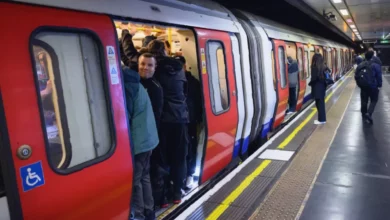
The Piccadilly line, which has served Heathrow since 1977 using the same original trains, is due to receive a new fleet later this year or early next year. These trains will eventually increase capacity on the line, allowing the number of services through central London to rise from 24 to 27 per hour — subject to fixing a signalling pinch point around King’s Cross.
However, the full Piccadilly Line Upgrade Project, which included a comprehensive signalling upgrade capable of boosting peak-hour services to 33 trains per hour, was put on hold during the pandemic. While the signalling system will eventually need replacing as old equipment wears out, funding for the upgrade is still not available. If the signalling were ever completed, it could support up to 36 trains per hour — though that would put pressure on some key stations, which might then require their own capacity upgrades.
The new Piccadilly line trains are expected to enter service in the second half of 2026, but without the signalling upgrade the full potential of the line will remain unrealised.
Heathrow Express: a premium service in decline
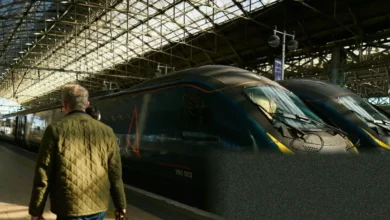
Much closer on the horizon is the fate of the Heathrow Express, the non-stop service linking Heathrow to Paddington. The airport built its own railway tunnel and stations connecting to the Great Western Main Line, and in 2018 handed over operation of the train service to Great Western Railway (GWR) under an agreement that runs until 2028. The service’s track access licence to use Network Rail tracks between the tunnel and Paddington also expires in 2028 unless renewed.
Since the Elizabeth line opened, passenger numbers on the Heathrow Express have fallen sharply. According to data from the Office of Rail and Road, annual ridership peaked at 6.2 million in 2018–19 before the pandemic sent it tumbling to 0.3 million. Numbers recovered to 4.7 million in 2022–23 but have since declined further, reaching 4.3 million in 2024–25. In 2024, the service carried 4.4 million passengers — a 10 per cent drop on the previous year — and fare revenues fell 11 per cent to £86.8 million. The decline is attributed to competition from the Elizabeth line and disruption caused by HS2 engineering works.
The Heathrow Express currently runs four trains per hour to terminals 2, 3 and 5, using trains designed for luggage and a faster journey. Yet each train carries on average around 80 passengers, far below its potential capacity of 374.
TfL now argues the ANPS review should “reconsider whether this service is the best use of these valuable train paths into Paddington”.
Taking over: capacity and financial implications
If the Elizabeth line were to take over the four train paths currently used by the Heathrow Express, it could increase capacity by around 5,600 passengers per hour. That figure is calculated as 6,000 passengers per hour on the Elizabeth line minus the roughly 400 who currently use the Heathrow Express during that hour.
A TfL takeover would also benefit mainline stations along the route to and from Paddington, which could see an additional four trains per hour calling at them. At Paddington itself, closing the Heathrow Express would free up two platforms, assuming all Elizabeth line services run through to central London. There is a possibility that some Elizabeth line trains could instead run as a shuttle between Heathrow and Paddington, as they already do first thing in the morning, but that would require regularly moving from Network Rail’s relief lines to the main line, which is technically possible but adds complexity.
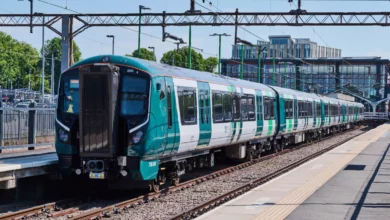
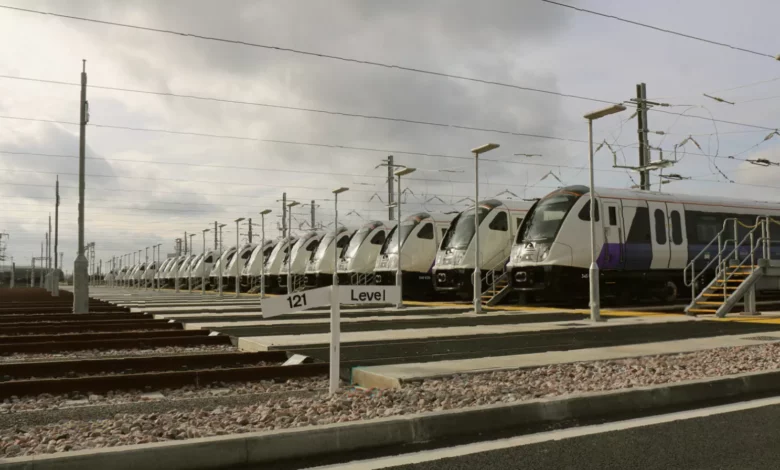
TfL would not need to cannibalise its existing fleet to replace the 12 GWR-supplied trains. The operator has 10 more Class 345 Aventra trains on order, built by Alstom in Derby, bringing the total fleet to 80. These trains, due to enter service by 2027, were originally ordered partly to cope with capacity at the new Old Oak Common station when HS2 opens. That station, currently under construction, will be a major interchange between HS2, the Elizabeth line and Great Western services, and sits between the airport and Paddington. Increasing Heathrow services would fit neatly into the planned service upgrades.
Heathrow Airport would not be left entirely empty-handed. It owns the tunnel and stations, and would retain revenue from track access charges and in-station advertising. The airport may also push for a reset of the premium Elizabeth line fares introduced in 2022 for travel to Heathrow, arguing that if it agrees to replace its own premium service, the public transport alternative should not be more expensive. TfL could counter that the Elizabeth line is already cheaper than the Heathrow Express for on-the-day travel — the current Heathrow to Zone 1 fare is £13.90 — though the Heathrow Express offers discounts for advance bookings made a month ahead.
Replacing a fast, non-stop service with a slower, stopping Elizabeth line service would be a downgrade for passengers who value speed, but TfL argues the wider benefits of a more frequent service would offset that.
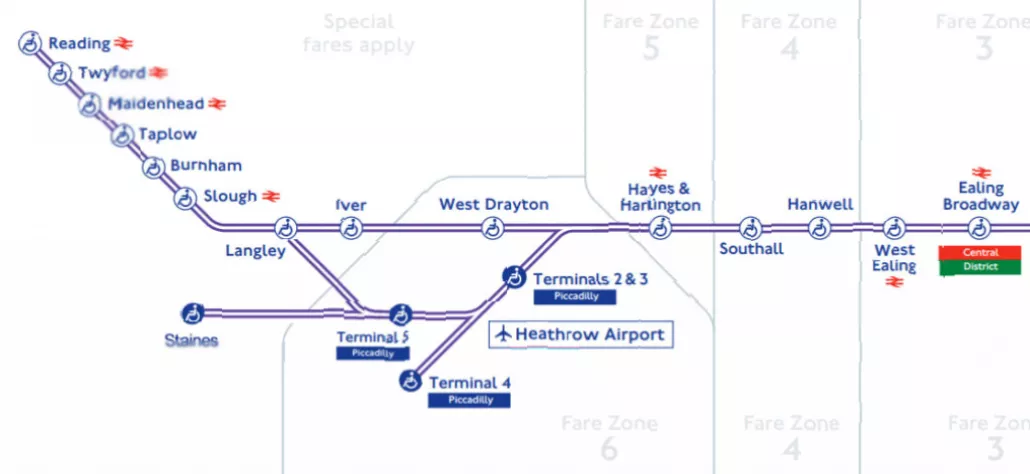
Much further down the line, there is also the tantalising possibility that Elizabeth line trains could run from Heathrow to Reading via the proposed Western Link, and out to Staines via the proposed Southern Rail Link — a project aimed at improving access from Surrey and south-west London, potentially reducing road traffic and emissions.