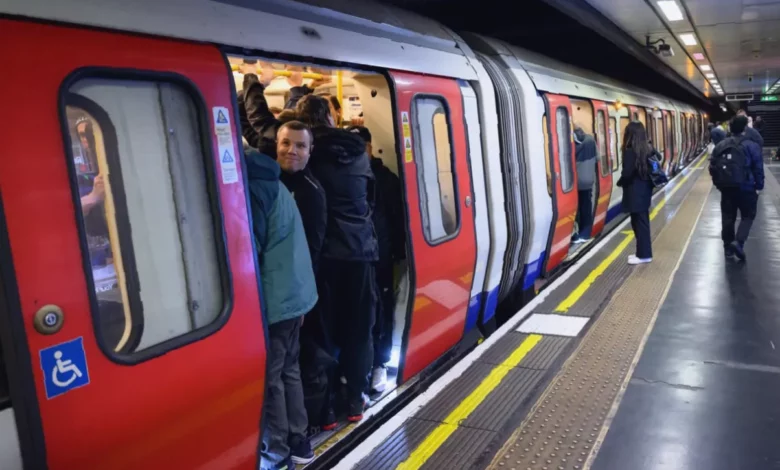
Drivers face just 24 hours’ notice for shift changes under Transport for London’s proposed four-day working week, the Rail, Maritime and Transport union has warned, as a fresh wave of industrial action looms despite the suspension of two 24-hour strikes scheduled for this week.
The RMT called off the strikes, which were due to begin at midday on Tuesday 19 May and again on Thursday 21 May, after what the union described as an “11th hour” shift in position by TfL. However, the union has cautioned that the dispute is far from resolved and that new strike dates – already set for 2 and 4 June, with a further two possible on 16 and 18 June – will go ahead if sufficient progress is not made in ongoing talks.
Shift patterns under fire
At the heart of the row is TfL’s plan to introduce a voluntary four-day working week for Tube drivers, compressing the current 36-hour, five-day schedule into a 35-hour, four-day pattern. Criticising the details of the proposals, an RMT spokesman said: “This includes reduced flexibility over shift patterns, with the potential for only 24 hours’ notice of what shifts drivers will be doing.”
The union has labelled the proposal a “fake four-day week”, arguing that it effectively forces five days’ work into four, with drivers given little time to plan their personal lives around last-minute changes. TfL has insisted the arrangement is entirely voluntary, stating that drivers who do not wish to opt into the new pattern can remain on the existing five-day arrangements.
Fatigue risks for Tube drivers
The RMT’s most detailed objections centre on the fatigue risks created by longer shifts. Under the compressed schedule, individual shifts would be extended, raising fears that drivers could become dangerously tired while operating trains on a network that carries millions of passengers each day.
The union has pointed to a recent report it commissioned on night work, which highlighted the severe impact of long and irregular shifts on rail workers. The report found widespread fatigue, long-term health problems including cardiovascular disease and diabetes, and significant strain on family relationships. It criticised management for inadequate fatigue management and support, warning that this can increase the risk of accidents in a role where even a momentary lapse in concentration could have catastrophic consequences.
Fatigue in a safety-critical role such as Tube driving is a “serious concern”, the RMT spokesman said, and the union has made clear that the proposed shift patterns could undermine safety across the network. The compressed working week, the union argues, leaves drivers more vulnerable to exhaustion, particularly during late or early shifts, and reduces the recovery time between duties.
TfL acknowledges fatigue as a recognised risk within its operations. The transport authority has developed a “Managing Fatigue at TfL” handbook and has piloted tools to assess fatigue risks, stating that fatigue management is a key part of its approach to ensuring a safe network. Claire Mann, TfL’s chief operating officer, has expressed disappointment at the strike action, suggesting that most issues could be resolved with more detailed work.
Safety impact and broader context
The safety implications of driver fatigue extend beyond individual wellbeing. The RMT has repeatedly warned that errors caused by tiredness – such as missed signals, incorrect braking, or failure to react in time – could lead to serious incidents on the Underground. While TfL maintains that its fatigue management procedures are robust, the union argues that compressing the working week without adequate safeguards undermines those systems.
The dispute has also exposed divisions between the two main rail unions. Members of ASLEF, the other major union representing Tube drivers, have reportedly accepted aspects of the four-day week proposal. An ASLEF spokesperson criticised the RMT strikes, suggesting it was unusual for a union to strike against a shorter working week.
London Underground has a long history of industrial action, with the RMT at the centre of disputes over job reductions, pensions, pay, safety and working conditions. The current row follows similar strikes in April and earlier walkouts linked to the Night Tube. Past stoppages have caused significant disruption, including severely curtailed services, partial or complete line closures and overcrowding on alternative transport. A 2022 strike was estimated to have cost London’s economy £14 million in lost output in a single day, though one report suggested recent industrial action had attracted “little public sympathy”.
The RMT has warned that if the current talks fail to address its members’ concerns around shift notice, fatigue and safety, further strike action will follow. The union has already scheduled the next wave of 24-hour stoppages for June, with no indication that the underlying dispute is close to resolution. TfL’s director of customer operations, Nick Dent, and RMT general secretary Eddie Dempsey are among the key figures expected to be involved in the continuing negotiations.