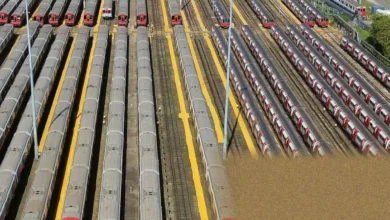
Two 24-hour Tube strikes are set for Tuesday 2 June and Thursday 4 June, after the RMT union confirmed it would proceed with industrial action over a dispute about a proposed four-day working week for London Underground drivers. The stoppages will run from 00:01 to 23:59 on both days.
RMT’s safety and fatigue concerns
The RMT has described Transport for London’s (TfL) plan as a “fake four-day week”, arguing that it would compress five days’ worth of work into four rather than offering a genuine reduction in hours. Under the proposal, shifts could last up to eight hours and 45 minutes, raising what the union says are serious concerns about fatigue in a safety-critical role. The union also claims members could be given as little as 24 hours’ notice for shift assignments, reducing flexibility over working patterns.
“Our members have raised serious concerns around fatigue, longer shifts, reduced flexibility and the impact these proposals could have in a safety-critical role,” an RMT spokesperson said. The union is advocating instead for a true 32-hour week spread over four days with no loss of pay, a demand TfL has described as “unaffordable”.
The RMT’s opposition to the voluntary four-day week pilot has already led to industrial action, most recently in April. Hopes of a resolution were raised when the union called off a two-day strike planned for mid-May at the last minute, but it simultaneously moved forward further strikes originally scheduled for 16 and 18 June to 2 and 4 June, making clear the dispute was not over. The RMT said it remained “available for meaningful talks” but cautioned London Underground against implementing what it called a change to drivers’ working conditions “while refusing to properly address legitimate safety and workplace concerns”.
The RMT’s stance has contrasted sharply with that of the Aslef union, which represents a slight majority of Tube drivers and has accepted TfL’s proposal. Aslef has highlighted that the agreement gives drivers an extra day off each week — equivalent to 35 days per year — along with a reduction in weekly hours to 34 and a paid meal break. It has been critical of the RMT’s opposition, accusing the union of obstructing improvements for drivers. Previous waves of RMT industrial action over the four-day week have found little public sympathy and have mystified Aslef, which views the proposal as a significant improvement in working conditions.
Transport for London’s response
TfL has stressed that its four-day week proposal is entirely voluntary and that drivers who do not wish to opt in can continue with the existing five-day pattern. A pilot of the new working arrangement is planned for the Bakerloo line. Claire Mann, TfL’s chief operating officer, said the organisation was disappointed that the RMT was continuing with industrial action. “We still believe that the points they have raised can be worked out in time, through more detailed discussions and we are continuing to talk to the union’s representatives to find a way to avoid disruption to London,” she said. She urged the RMT to work with TfL to resolve the dispute, adding: “A significant number of drivers have indicated that they want us to progress plans for the pilot of this new working pattern on the Bakerloo line, bringing benefits both for our colleagues and our customers.”
TfL has said it expects services to run on most Tube lines during the strike periods, but has warned commuters to expect disruption. No service is anticipated on the Circle, Piccadilly, and parts of the Metropolitan and Central lines. Passengers are advised to use TfL’s travel tools such as the TfL Go app and Journey Planner before travelling, to plan ahead, and to expect services to start later and finish earlier, with journeys needing to be completed by 9pm. The Elizabeth line, London Overground, DLR and trams are expected to run as scheduled but will be busier than normal. TfL’s financial position has been under strain since the COVID-19 pandemic, which caused a substantial drop in farebox revenue; in June 2020 the organisation received a £1.6 billion government funding package to help manage the impact. The RMT said it remained “available for meaningful talks” with TfL, but cautioned London Underground against carrying out changes while refusing to properly address the union’s safety and workplace concerns.