The sweeping asylum reforms unveiled by UK Home Secretary Shabana Mahmood, described as the most significant in decades, find a clear blueprint in the stringent immigration policies long championed by Denmark. It is against this backdrop of policy emulation that a visiting Danish minister has offered a pointed critique of how Britain distributes new arrivals within its own borders.
Danish Model Informs UK Overhaul
Since 2015, Denmark’s centre-left Social Democratic Party has shifted decisively to the right on immigration, a move credited with shoring up its working-class vote against populist challengers. This “Danish model” is now a direct inspiration for the UK government’s plans. Key parallels include a move to temporary refugee status subject to regular review, rather than permanent protection. The UK intends to review status every 2.5 years and extend the wait for permanent settlement to up to 20 years for irregular arrivals, mirroring Denmark’s approach.
Further emulation is seen in stricter integration and welfare requirements. Denmark imposes conditions on benefit claimants, including financial and language tests, and even has a so-called “jewellery law” allowing the confiscation of asylum seekers’ assets. The UK is considering similar measures, such as linking benefits more closely to work. Both nations are also focusing on increasing migrant returns; Denmark has a high rate of voluntary departures, incentivised by cash grants, a practice the UK is studying. Denmark has also pursued a controversial policy of revoking residence permits for Syrian refugees by declaring parts of Syria safe.
Family reunification rules are another area of alignment, with both countries imposing or planning stricter age and financial independence criteria. However, one Danish policy the UK is not expected to copy is its so-called “ghetto law”. This legislation allows the state to demolish or sell social housing in areas where over 50% of residents are of “non-Western” background, an attempt to prevent “parallel societies” that has faced legal challenges and criticism for potential ethnic discrimination.
A Minister’s View on UK Diversity
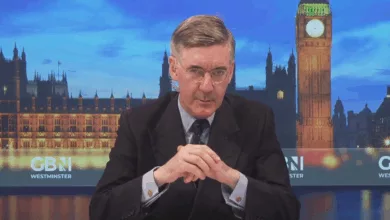
It is this Danish philosophy of enforced integration that informed the comments of Kaare Dybvad Bek, Denmark’s Employment Minister, during a visit to Westminster. Referencing the rural idyll of the detective series Midsomer Murders—a television favourite in Denmark for over a decade—Mr Dybvad Bek said he found it “curious” that areas like Somerset and Dorset had fundamentally no one with foreign backgrounds, while northern cities were highly diverse.
“I think it’s strange that you can have these big differences,” he told an event at the Policy Exchange think tank. “Why don’t you make the people in Somerset also take part in this task for the nation?” His observation reflects UK demographic data which shows highly diverse neighbourhoods are concentrated in large cities like London, Birmingham, and Manchester, while rural areas generally have lower proportions of non-British nationals.
Mr Dybvad Bek argued such separation was “fundamentally wrong” and contrary to Danish principles. Defending his country’s radical approach, he cited an estate in Denmark’s third-largest city where 77% of residents were from non-Western countries and 52% were unemployed. “This doesn’t give people who grow up there an opportunity to understand Danish society,” he said, advocating for public housing in wealthy areas to share the “burden” of integration.
Criticisms and Political Repercussions
Denmark’s hardline stance, however, has drawn sustained criticism. Human rights organisations, the United Nations, and the Council of Europe have raised concerns. The European Court of Justice has suggested the “ghetto law” may be unlawful under EU equality directives. Some analysts describe Denmark’s post-2019 policy as a “paradigm shift” towards return over integration, which they argue is unrealistic given conditions in refugees’ home countries.
Politically, the strategy has been a double-edged sword for the Social Democrats, securing their base while alienating some progressive voters. This tension is mirrored in the UK, where Labour’s adoption of similar policies has caused internal division. Mr Dybvad Bek offered a stark warning to centre-left parties across Europe, stating that representing working-class communities necessitated “democratic control of migration flows.” He argued that if mainstream parties did not address public concerns, “we will all be populist governments at some point”.
On other policies, the minister noted that 95% of Denmark’s migrant returns were voluntary. While Denmark has explored processing asylum claims abroad—holding talks with Rwanda—he said plans for an East African asylum hub had been ruled out, with focus shifting to building partnerships within Europe.