Keir Starmer faces calls to back emergency measures for Iranian activist as Tories pledge support

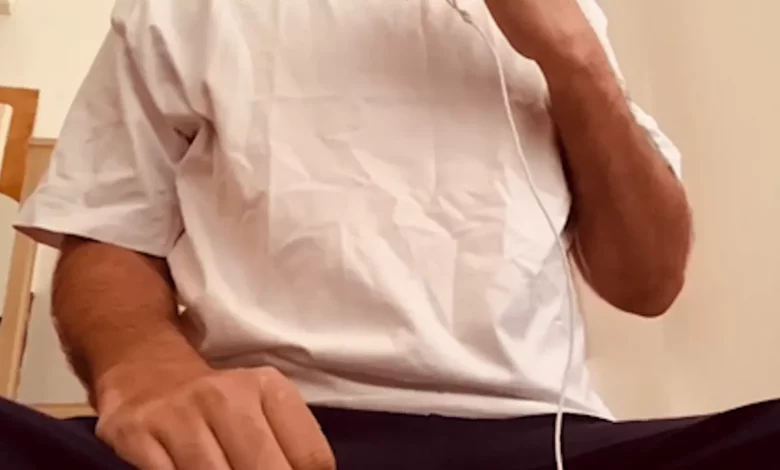
From inside Iran, a 41-year-old dissident has risked his life to send a direct plea to the British government: proscribe the Islamic Revolutionary Guard Corps (IRGC) as a terrorist organisation. In a video message, the man, whose identity remains secret to protect him from reprisals, questioned why the UK had not yet added the IRGC to its terror list, describing the inaction as “disappointing”.
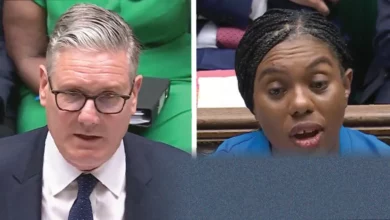
His call comes as the new Labour government faces mounting pressure to act on a pledge made in opposition. The Shadow Foreign Secretary, Dame Priti Patel, has told the Prime Minister that political rivals are ready to work with the government to back emergency legislation. “If the Government brings forward emergency legislation to proscribe it, then we stand ready to work with them on it,” she stated.
A Reluctant Government
Despite this cross-party offer, and following the lead of key allies, the UK government has so far failed to follow suit. The position has been maintained by both the previous Conservative administration and the current Labour one. Business Secretary Peter Kyle articulated the government’s stance in January 2026, stating that the UK had already used sanctions against Iran “to the full extent we can” and suggesting that proscription powers, designed for domestic terror groups, might not be the appropriate tool for a foreign state organisation.
This rationale references a review by Jonathan Hall KC, the independent reviewer of terrorism legislation, which indicated that domestic terrorism laws might not be directly applicable to state-backed entities. The government is reportedly considering new legal approaches, potentially including a new category for state-sponsored terrorism.

The International Consensus and the Case for Proscription
The UK’s hesitation places it at odds with a growing international consensus. The European Union formally added the IRGC to its terror list in January 2026, a move Iranian Foreign Minister Abbas Araghchi condemned as a “major strategic mistake” and a “PR stunt”. The United States designated the IRGC as a Foreign Terrorist Organization in 2019, a first for an arm of a foreign government. Australia, Canada, Argentina, Paraguay, Israel, Bahrain, and Saudi Arabia have also taken similar steps.
The specific reasons cited by allies for these designations form a damning indictment. The IRGC, established after Iran’s 1979 Islamic Revolution, is accused of severe human rights abuses, including the violent suppression of internal dissent and the lethal targeting of protesters within Iran. Beyond its borders, it is widely accused of sponsoring terrorism, supporting regional proxies like Hamas, Hezbollah, and the Houthis, and running illicit oil trafficking networks through its overseas arm, the Quds Force.
Critics of the UK’s delay argue it poses a direct national security risk. MI5 has previously revealed it thwarted over 20 potentially lethal Iranian plots in the UK. The IRGC stands accused of inciting radicalisation, engaging criminal gangs for surveillance, intimidating opponents, and plotting assassinations on British soil, including an alleged attempt against two British-Iranian journalists in January 2024.
The Legislative Impasse and the Final Plea
Proscription under the Terrorism Act 2000 would make it a criminal offence in the UK to belong to, support, or arrange meetings for the IRGC. While a government source told The Times in January that legislation would be introduced “when parliamentary time allows”, no timeline has been set.
The dissident who contacted from southern Iran offered a stark warning that mere proscription, while welcome, would be insufficient. He urged Britain to take a more assertive stance against what he called an “uncontrollable” regime. “Rest assured that keeping the Islamic Republic of Iran in place will lead to much bigger disaster,” he said. “We hope that they too will take action against this regime, just like the Americans and Israel, and not only take a defence position.”
With cross-party political pressure building and the experiences of international allies underscoring the threat, the government’s continuing review of its legal options is being watched closely by those living in fear both inside Iran and within the UK.