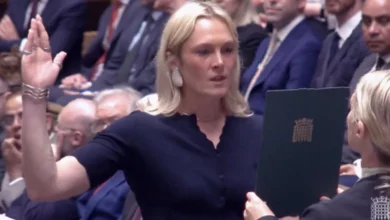
First Minister John Swinney has asserted that the Scottish Government is in full compliance with a landmark Supreme Court ruling on the legal definition of sex, amid fierce criticism from a former party colleague who claims the administration is deliberately ignoring the law.
Speaking to journalists in Dundee while unveiling the SNP’s election campaign bus, Mr Swinney stated he was “satisfied the Scottish Government has taken the necessary steps to implement the Supreme Court ruling.” He dismissed recent controversies as being “in the past,” adding that his focus was squarely on the future.
Cherry’s scathing critique and party departure
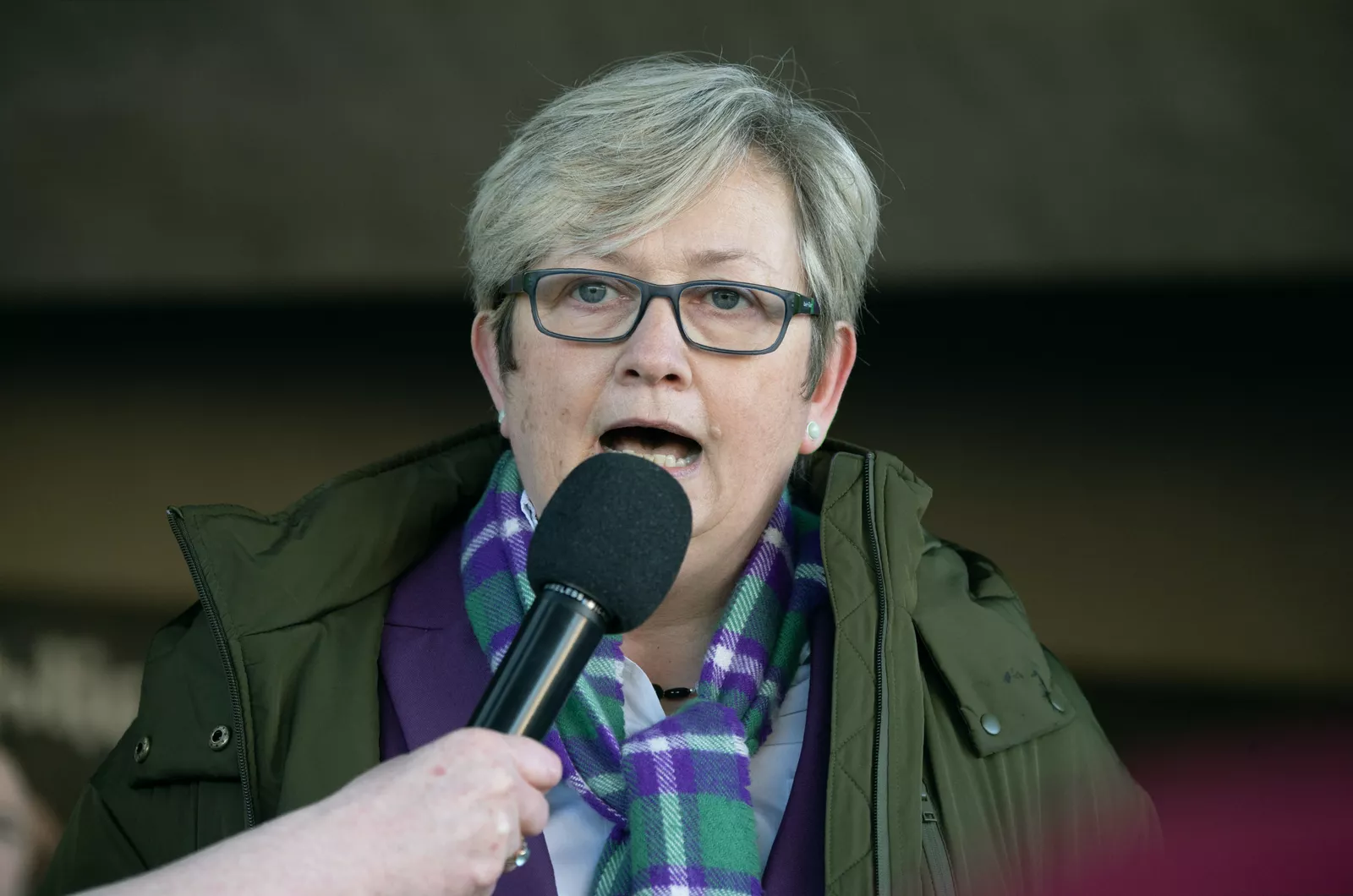
His comments come in direct response to a highly personal attack from Joanna Cherry KC, the former SNP MP for Edinburgh South West. In an interview with the Times, Ms Cherry revealed she had now left the party, stating she had become “absolutely disgusted by the SNP, and ashamed of being a member.”
Ms Cherry, a prominent gender-critical voice, claimed the SNP’s recently unveiled Holyrood election manifesto made clear the party “intend to continue ignoring the law” on biological sex. She alleged the First Minister was “too afraid” to stand up to his own party on the issue of women’s rights, and called on both Mr Swinney and Prime Minister Keir Starmer to ensure the law is obeyed.
Her departure follows years of internal conflict. She was sacked from the SNP’s frontbench in February 2021 for what the party called “unacceptable behaviour,” and later resigned from its National Executive Committee, citing frustrations with party transparency and direction.
The landmark ruling: ‘sex’ means biological sex
The central issue is a unanimous UK Supreme Court judgment delivered on April 16, 2025, in the case of *For Women Scotland Ltd v The Scottish Ministers*. The ruling provides the definitive interpretation of key terms in the Equality Act 2010.
The Court found that the words “sex,” “man,” and “woman” in the Act refer exclusively to biological sex, meaning the sex recorded at birth. Crucially, it ruled that a Gender Recognition Certificate (GRC) does not change a person’s legal sex for the purposes of the Equality Act. The judgment stated that to interpret “sex” as “certificated sex” would render the legislation “incoherent and impracticable to operate.”
This has profound implications for single-sex spaces and services, such as changing rooms, shelters, and sports, potentially allowing for greater restrictions on access based on biological sex. The ruling has been hailed as a victory by gender-critical groups like For Women Scotland, who brought the original case challenging the Scottish Government’s interpretation of “woman” in public board legislation.
However, trans rights organisations have warned the judgment creates a “legal limbo” and is a significant setback, arguing it was reached without hearing from transgender individuals. The Court itself emphasised that transgender people remain protected from discrimination under the separate protected characteristic of “gender reassignment.”

The Scottish Government has officially accepted the judgment and is analysing its implications, including amending guidance for public boards.
Yet, a major secondary legal battle is ongoing. For Women Scotland has launched a fresh judicial review against the Scottish Government’s policy on housing transgender prisoners. The group argues that the Scottish Prison Service’s use of individual risk assessments to place transgender inmates is unlawful following the Supreme Court ruling, and that prisons must be segregated by biological sex.
The Scottish Government defends its approach, arguing a blanket ban would violate the European Convention on Human Rights. It contends the Equality Act does not mandate absolute segregation and that individualised assessments are necessary to balance all rights. The Scottish Human Rights Commission has intervened in the case, which was heard at the Court of Session in February 2026. Current policy, updated in March 2026, continues to support transgender individuals’ gender identity while applying new criteria, particularly for those with a history of violence against women and girls.
Pressed on this ongoing challenge, Mr Swinney told the Press Association that parts of the issue remained subject to live legal proceedings, which he could not comment on, but reiterated his satisfaction that the necessary steps for compliance had been taken.