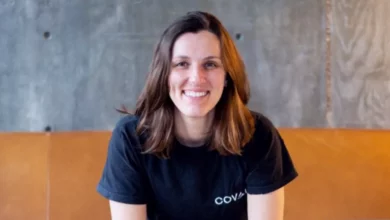
When Ashley Terrell graduated from the University of Hawaii in 2024 with a business administration degree and a résumé that included a student marketing job for Red Bull, she expected to land a marketing role at a tech company. Instead, after months of applying, the only offer she received was to work in the power tools section at Home Depot. “It was quite a shock,” she said. “I searched for jobs every single day in that Home Depot bathroom.” Terrell is far from alone. Her generation is entering the workforce at a moment when hiring in the United States has slumped to its lowest rate since 2020, according to the Bureau of Labor Statistics, and the picture is even starker in the United Kingdom. In the 2023/2024 academic year, 1.2 million new graduates applied for only 17,000 starter jobs – the worst applicant-to-job ratio since records began in 1991. Faced with a market that offers little, many Gen Z graduates are choosing to create their own careers rather than wait for a position that may never materialise.
The problem: a generation locked out of the ladder
The unemployment rate for Americans between 22 and 27 is now at its highest level since the pandemic, and in the UK youth unemployment has climbed to 15% – the sharpest increase among G7 countries. Almost one million young people (957,000) are not in education, employment, or training, a rise of 259,000 between 2021 and 2024. “The job market is really sluggish right now,” said Daniel Zhao, chief economist at the workplace review company Glassdoor. “Entry-level workers are finding it difficult right now to get their foot on the ladder at all.” Graduate roles in the UK have declined by 33% in 2025 alone, reaching the lowest level since 2018, marking the second consecutive year of decrease. Overall vacancies across the British labour market are down 16% compared with the previous year. “The job market is really sluggish right now,” Zhao added. For many would-be workers, that has translated into taking jobs they never imagined after earning a four-year degree: retail work, dog walking, or other part-time roles without benefits. Some have remained unemployed months or years after graduating. As of July 2025, 58% of Gen Z graduates were still seeking steady employment – a significantly higher rate than previous generations at the same age.
The reasons for the poor market are complex. An uncertain political climate, an unstable global economy, and emerging technological disruptions – specifically artificial intelligence – are all contributing. Entry-level jobs are particularly vulnerable to AI, which can perform the routine cognitive work that many junior roles involve. “This is particularly true for recent college graduates because many of the types of jobs that are entry-level involve substantial amounts of routine cognitive work,” said Joseph Fuller, a professor at Harvard Business School and co-director of the Project on Workforce at Harvard. In a 2025 LinkedIn survey, 63% of executives reported that AI would replace at least some of the work of entry-level employees at their companies. A report from Stanford University’s Digital Economy Lab found a “substantial decline” in employment for early-career workers in AI-exposed fields such as customer service, data entry and coding. The impacts appear greatest on “knowledge workers” – those with university degrees. Ethan Choi, a partner at venture capital firm Khosla Ventures, illustrated the shift: as recently as two years ago he worked with a fairly big team of associates who were earlier in their careers; today he has “zero associates”. Partners and more tenured employees now use AI to do the work associates used to do.
The solution: making your own ladder
When traditional routes close, young workers are building their own. Terrell, who started a YouTube channel as a student, decided to build a marketing portfolio by making videos for brands. She began by direct-messaging companies she liked and offering to create content – sometimes for free. Eventually, Jamba Juice bought a video she had made to use as an Instagram and TikTok ad. Two years later, armed with a portfolio of similar work, she parlayed the experience into a part-time marketing role for a local distillery and now has a roster of clients she continues to work with. “No one was offering me anything like what I wanted to do,” she said. “So I just tried to see what I could do on my own.”
The Guardian interviewed more than a dozen young workers who feel, like Terrell, that the rules for finding a job changed just as they were entering the workforce. As the number of entry-level postings has fallen, expectations for early-career workers have risen. For a generation that wants more purpose, flexibility and alignment with their work, the recent job market has felt disenchanting. Suhit Agarwal graduated from the University of Southern California in 2025 with a degree in computational and applied mathematics and hoped to secure a job at Google. After applying more than six times for internships and jobs, he never even got an interview. Applications to other big tech companies were also dead ends, so he pivoted. At 24, his résumé includes job titles such as “founding engineer” for companies he helped start. In those roles, he used AI tools including Claude Code to take on bigger responsibilities than he could have managed alone. It is not the path he expected – or the one his parents hoped for – but “charting my own course has been working so far”, he said. One startup he helped found was acquired, netting him a small equity payout, and that work experience recently helped him land a job at a fintech startup.
Shola West, 25, worked at media agencies in her early 20s and never planned to create her own business. But in 2024, shortly after starting a new job, her entire team was laid off. Navigating an unpromising job market, she came to believe that working for herself was the most viable path. Now she runs her own brand consultancy in London and works as a content creator on TikTok. “I was kind of forced into it, given how the market was,” she said. Since starting her consultancy, she has partnered with high-profile brands such as Paramount and Sony Music. “The transition was definitely hard, but I had that motivation of, well, my career basically flopped,” she said. “Now I have to prove to myself and everyone else that I can survive.”
In the UK, the trend is even more pronounced. Over seven in ten people aged 18 to 24 want to run their own venture, with almost a third describing it as a closely held dream. Research from Virgin StartUp indicated that 26% of 18- to 24-year-olds intended to launch a business in 2025. By 2025, there were nearly 400,000 Gen Z company directors active in the UK, with an average annual growth of 78%. Online retail and real estate are among their top trades. A global report from the freelancing platform Fiverr found that 67% of Gen Z workers wanted multiple income streams to feel financially secure. About half of respondents also believed traditional employment would soon become “obsolete”.
AI: threat and enabler
The same technology that threatens to cut into entry-level positions is also making it easier for some young workers to start their own businesses, compensating for skills they do not yet have and allowing them to do more with less. “All of the sudden, you’ve got to have some way to get up to the fourth rung of the career ladder,” said Harvard’s Fuller. “One way to ascend the rungs? Make your own ladder.”
With the rise of “low-code” AI tools – ones that allow users to build and deploy AI models without technical experience – Choi of Khosla Ventures said anyone, at any level of seniority, can use AI to handle parts of their jobs. At the extreme end, it is becoming possible to build nearly an entire company by leveraging these AI tools, instead of hiring a whole team of engineers. “The ones getting jobs will be the ones who are building stuff,” he said. Madison Hsieh, a 25-year-old program manager at Amazon, is putting that into practice. Earlier this year, she used the coding platform Cursor to create a prototype of a social media app in her spare time. “I definitely don’t think I could’ve done it without AI,” she said, adding that it took only about a month to get a working prototype. Without a platform like Cursor, building an app like that would have required several months and several skilled engineers. While she remains employed at Amazon, Hsieh likes the idea of starting her own company. “I want to have a more impactful role if I’m going to do something for the rest of my life,” she said. “It’s really hard to find that passion in your corporate 9 to 5.” She plans to continue working on the app in her spare time until it becomes viable full-time.
Celeste Amadon, 22, turned down an investment banking internship at JP Morgan last summer to start a dating app company called Known. At first her parents were not supportive. “My mom called me, like, three different times to try and stage an intervention,” she said. When she raised over $9m in venture capital last year, they came around. Now she is CEO of her own company – one that uses AI to help singles meet. Amadon said the experience of starting a company is “like having done an MBA”. Before becoming CEO, her résumé included a series of internships. Now she has had to learn how to hire, fire, manage a growing team, and allocate millions of dollars in funding. Elijah Khasabo, the 22-year-old co-founder and CEO of Vidovo, a content platform, described the learning curve: “The last job I had was at TJ Maxx, folding clothes. What do I know about managing a marketing team, or a sales team? It’s all learned by doing.” Both Amadon and Khasabo emphasised the importance of surrounding themselves with mentors, hiring employees with more years of experience, and being open to learning. “I think a lot of young founders make the mistake of only hiring young people because they’re intimidated by having to create a serious work environment for serious real adults,” Amadon said. “At the end of the day, I am a 22-year-old. I have 22-year-old friends. But I also now have 34-year-old friends. That has been the biggest growth opportunity.”
The UK government has taken notice. The Startup Loans scheme offers up to £25,000 in funding and mentoring, and a £2.5 billion youth employment package was announced in March 2026, including a £3,000 Youth Jobs Grant for hiring young people on Universal Credit. The venture capital market is robust, with UK startups and scaleups raising $23.6 billion in 2025, a 35% increase on 2024. Yet significant barriers remain for young entrepreneurs: lack of access to finance (46%), fear of failure (40%), and fear of financial insecurity (34%). Support networks and mentorship are crucial.
Broader implications
Starting a company is far from a golden ticket. Most startups do not get funding and do not succeed. Founders who do succeed tend to be white, male, well-educated and well-connected – stacking the deck against those from underrepresented groups. Even successful startups require founders to live modestly for many years, often working around the clock. Yet in an uncertain market, young people say it offers a surprising benefit: a sense of control. “For our parents or grandparents, the job felt like the prize, because if you had a good job, you could get a house, you could have a nice car, you could go on holiday. People weren’t just randomly getting laid off or replaced by AI,” said West, the media consultant. “Now, there is no guaranteed outcome with any job.” Working for yourself at least allows you some control over your fate.
Francesca Albo, the 29-year-old co-founder and CEO of Puppy Sphere, a company offering puppy yoga and dog therapy, previously worked at a biotech company but left because she wanted more control and to spend her time on something she was passionate about. “I always thought the traditional path was safe. But that’s a completely wrong mindset,” she said. “The old promise was stability. The new promise is ownership.” That idea of stability still appeals, though: Terrell, the content marketer, said she is still looking for full-time work because she would like a steady paycheck and employer-sponsored health insurance.
As Gen Z workers navigate a changing economy, their choices could be a guide for everyone else. In an op-ed for the New York Times, Aneesh Raman, LinkedIn’s chief economic opportunity officer, argued that resolving the entry-level work crisis is “the first step to fixing all work”. The young people struggling to find their place in the corporate world, he wrote, are indicating what is already starting to affect the rest of the workforce: “All our jobs are going to come up against this same wave of change sooner or later.” Harvard’s Fuller put it simply: “Plenty of opportunities will open up. They just won’t look like the ones your high school counselor may have suggested.”