Surge in attendance for Welcome to Country after Aboriginal leaders jeered at Anzac dawn services

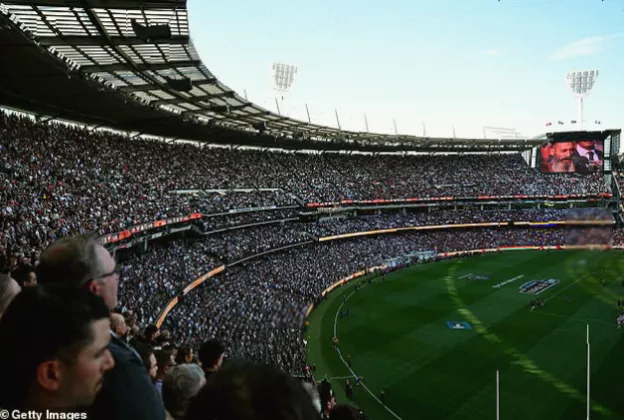
Nearly 100,000 AFL fans rose as one at the Melbourne Cricket Ground on Saturday to give a standing ovation to a Welcome to Country ceremony, hours after Aboriginal elders were booed and heckled at Anzac Day dawn services across the country.
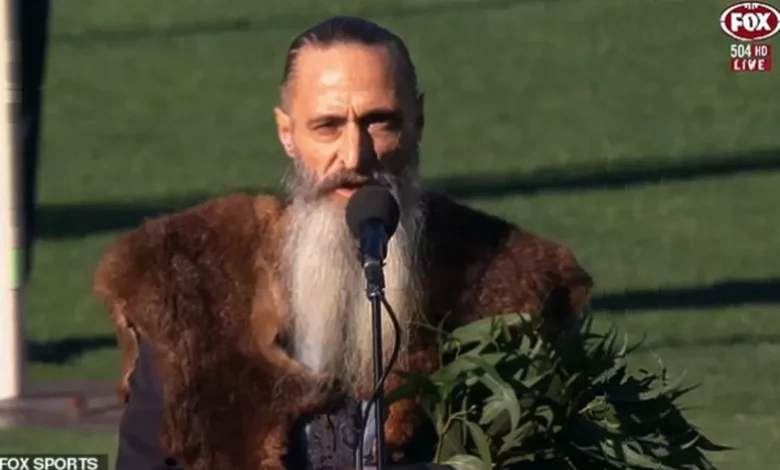
The pre-match ceremony before the traditional Anzac Day clash between Collingwood and Essendon saw Wurundjeri Elder Uncle Colin Hunter Jr. greeted with huge cheers and prolonged applause when he was introduced to the crowd of more than 92,000. “I would like to start by saying that this afternoon we are gathering on the lands of my ancestors, the Wurundjeri people,” he began. He paid his respects to Aboriginal and Torres Strait Islander people before making a “special acknowledgement” to the men and women who have served this country. “Wominjeka, welcome. Enjoy the game,” he concluded, as the applause continued.
Viewers at home were moved by the reception. “95,000 people showed respect to the Welcome to Country from Uncle Colin. And showed the same respect to the Ode to the fallen. This is how we should all be, showing respect to each other,” one wrote. Another added: “Always feel proud that Melbourne always gives Uncle Colin Hunter Jr. the respect, love and appreciation he deserves.” Some dissented, however. “It’s divisive and unnecessary and highlights one section of our community over others. It must be stopped at all Anzac services, otherwise the protests will continue,” one commented. Another said: “Today isn’t the day for it! Today should only be for the Anzacs! They gave their lives for this country, they certainly don’t need to be welcomed to it.”
Dawn service disruptions
The contrast with earlier events could hardly have been starker. At Sydney’s Martin Place dawn service, Pastor Uncle Ray Minniecon — a Kabi-Kabi and Gurang-Gurang elder and an Australian Defence Force veteran — was met with loud boos just seconds into his Acknowledgement of Country. Despite the disruption, he bravely continued and finished to loud applause. A 24-year-old man was arrested for an “alleged act of nuisance” and several other hecklers were moved on by police. NSW Premier Chris Minns condemned the booing, saying he had never heard such an outburst at a dawn service but was heartened by the crowd’s spontaneous applause. Uncle Ray later stated that this racism had been experienced for over 230 years and that those responsible needed to understand their place and show respect. Vincent Williams, acting president of RSL NSW, described the booing as the “most appalling act” he had ever witnessed at a dawn service and apologised unreservedly to Uncle Ray.
In Melbourne, at the Shrine of Remembrance, Bunurong and Gunditjmara man Uncle Mark Brown delivered his Welcome to Country only to be booed and heckled. Some protesters shouted, “What about the Anzacs?” and “We’re here for the Australians.” Victorian Governor Margaret Gardner was also booed when she acknowledged the pre-European landowners. Jacob Hersant, a self-proclaimed neo-Nazi previously convicted for performing a Nazi salute, was identified as one of those involved in the Melbourne disruption. Defence Minister Richard Marles called the booing “disgraceful” and “deeply disappointing,” emphasising that Acknowledgements to Country are an act of respect.
In Perth, Whadjuk and Noongar elder Aunty Di Ryder, also a veteran, faced heckling during her Welcome to Country. RSL Victoria president Mark Schroffel said those who booed were “weak-minded individuals who do not belong at this service.” Despite these incidents, the overwhelming response from the majority of attendees at both dawn services and the AFL match was one of support and applause for the Indigenous leaders.
Understanding the ceremony
The Welcome to Country is a traditional practice dating back 65,000 years, in which Traditional Owners — or those given permission by them — formally welcome visitors to their Country. Performed by a recognised First Nations Elder or Leader of the relevant clan, it can include smoking ceremonies, music or dance. It signifies the recognition of Indigenous Australians as the original inhabitants and their continuing connection to the land. An Acknowledgement of Country is a similar ritual performed when a recognised owner is not available or traditional owners are unknown, and it offers anyone the opportunity to show respect for Traditional Owners and their connection to Country. The Returned and Services League officially supports the inclusion of Acknowledgements of Country at Anzac Day services.
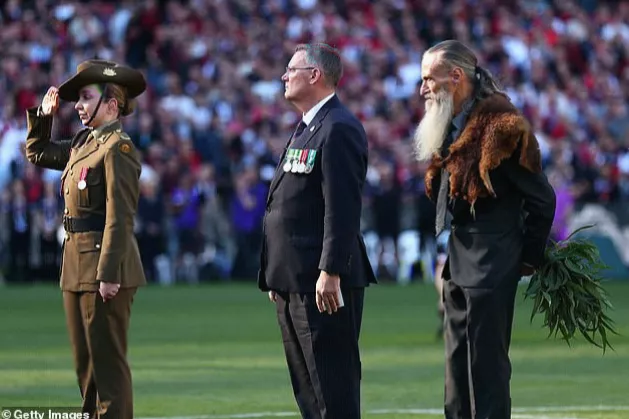
The incidents have sparked a broader debate about the place of Indigenous acknowledgements in national commemorative events. Some argue that these ceremonies are essential for reconciliation and recognising the First Peoples of Australia, while others believe they detract from the core purpose of Anzac Day. A group called Fight for Australia reportedly encouraged people to contact RSLs to demand the removal of Welcome to Country ceremonies. Those who condemned the booing highlighted that Indigenous Australians have a long history of serving in the Australian Defence Force — from World War I to the present day — often while facing discrimination at home. Uncle Ray Minniecon and Aunty Di Ryder are themselves veterans, and Uncle Ray’s grandfather served in the Light Horse Brigade.
Game outcome
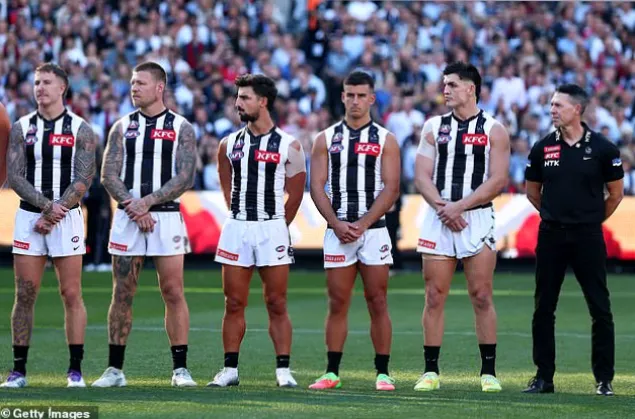
On the field, Collingwood thrashed Essendon in a 77-point demolition. Collingwood veteran Scott Pendlebury claimed his fourth Anzac Day Medal for best-on-ground, finishing with two goals and 43 possessions, one game shy of equalling the all-time VFL-AFL games record.