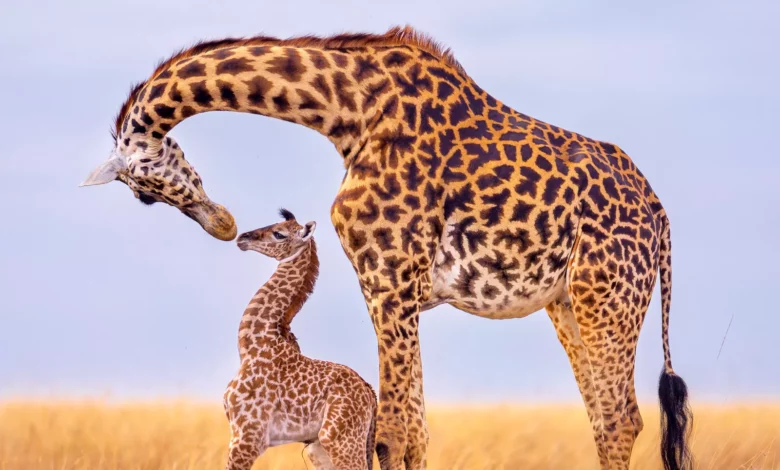
A new book of striking giraffe photography is set to raise funds for wildlife protection, with its organisers hoping to draw attention to what conservationists describe as the species’ “silent extinction”.
Remembering Giraffes, the latest volume in the award-winning Remembering Wildlife series, will be published on 12 October 2026. It features 20 winning images chosen from a global competition, alongside photographs donated by some of the world’s leading wildlife photographers. The series was founded by British wildlife photographer Margot Raggett after she witnessed the aftermath of a poached elephant in Kenya in 2014, and has since raised more than £1.2 million for 82 conservation initiatives across 35 countries.
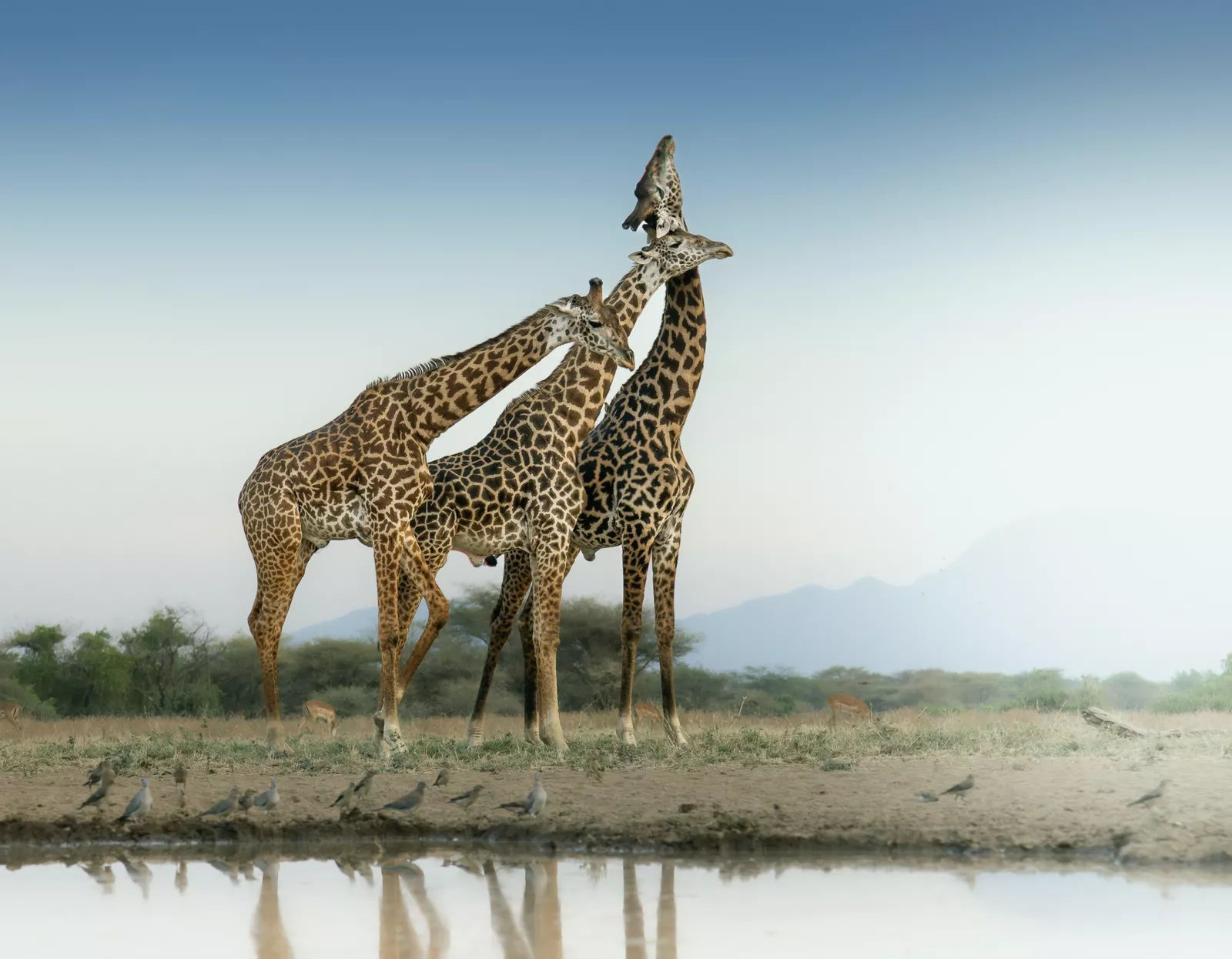
Among the competition winners is Mark Fernley, from the UK, whose image The Language Of Touch captures three bull Masai giraffes gently entwining their necks at a waterhole in Shompole Conservancy, Kenya. Describing the moment, Fernley said: “With no force, no dominance posturing, the trio gently entwined their long necks, rubbing together in a slow, deliberate exchange that lasted nearly 20 seconds. Masai giraffes are often associated with dramatic sparring displays, yet moments like this reveal a more nuanced social world – one built not only on competition, but also on tactile communication and affiliative bonds. At Shompole, even the tallest giants remind us that the wild is full of unexpected tenderness.”
Another selected image, taken by Thomas Nicholson, shows two Masai giraffes in the Maasai Mara National Reserve, Kenya. The photographs will sit alongside work from established wildlife photographers including Wim van den Heever and Daryl Balfour, who also served as judges for the competition.
Raggett said: “Photographers from around the world answered our call once again and entered striking images of giraffes in their natural habitat for our competition. These 20 competition winners rightly deserve their place among our regular contributors, whose stunning work has made the series possible.”
The threats giraffes face and how conservation can help
Giraffes are disappearing because of habitat loss, poaching and civil unrest, Raggett said, adding: “Because they are quiet, gentle creatures, their decline has gone largely unnoticed.” The scale of the problem is stark. Giraffe populations have fallen by an estimated 40 per cent over recent decades. From approximately 140,000 individuals in 1999, numbers dropped to under 80,000 by 2015, and there are now thought to be around 117,000 giraffes left in the wild.
The International Union for Conservation of Nature (IUCN) moved the global giraffe population from “Least Concern” to “Vulnerable” on its Red List in December 2016, though the classification masks significant variation between subspecies. Three of the four giraffe species are now considered endangered or critically endangered. Populations have become locally extinct in at least seven African countries, including Eritrea, Guinea, Mauritania and Senegal. Specific subspecies, such as the Kordofan giraffe, face local extinction within 15 years if poaching continues at current rates, while Reticulated giraffes have seen numbers drop by more than 80 per cent in some areas over the last 15 years.
Habitat loss and fragmentation are consistently cited as the primary threats. Human population growth, urban development, agriculture, infrastructure projects such as roads and railways, and mining and quarrying have all contributed to the shrinking of giraffe habitat. Fencing and shifts from traditional pastoralism to farming further restrict the animals’ movement. Poaching remains a serious concern, driven by demand for giraffe meat, hides, bones, hair and tails, which are used in traditional medicine, jewellery and crafts. Commercial bushmeat poaching is on the rise, and some sources report claims that giraffe bone marrow can protect against HIV/AIDS, increasing demand. Civil unrest and armed conflict disrupt conservation efforts, with militants sometimes killing giraffes for food. Climate change, including droughts and unpredictable rainfall, degrades the vegetation on which giraffes depend, while human-wildlife conflict arises when giraffes raid crops or compete with livestock.
Yet there is evidence that where giraffes are protected, populations can recover. Initiatives in and around the Maasai Mara National Reserve in Kenya have shown measurable success. The Mara Conservancy has arrested thousands of poachers and removed thousands of snares. The development of private conservancies, often owned by Maasai communities, has provided both revenue and incentives for wildlife protection, allowing animals to move freely and limiting human impact. The Wajir Giraffe Sanctuary in northern Kenya provides a dedicated refuge. The Giraffe Conservation Foundation (GCF) works across 21 African countries, supporting initiatives that cover more than 400,000 square kilometres of giraffe habitat. Its work includes translocation projects, habitat expansion and the development of national and regional conservation strategies, as well as GPS satellite tracking studies to understand giraffe movements. The GCF has expanded more than 11 million acres of giraffe habitat through its translocation programme alone.
Raggett said: “The good news is that, where giraffes are protected, populations can recover. Remembering Giraffes aims to shine a light on the threats affecting giraffes and help ensure that future generations don’t just remember giraffes but see them standing tall in the wild.”
A Kickstarter crowdfunding campaign to raise money to produce the new book topped £107,000 just 48 hours after being launched in March and will run until 8pm on Sunday, with rewards offered to supporters depending on the amount pledged. All profits from the sale of the book will be donated to wildlife protection projects.