No licensed treatments or vaccines exist for the strain of Ebola fuelling the current outbreak in the Democratic Republic of Congo and Uganda, forcing global health authorities to turn to a raft of experimental candidates that have yet to complete human trials.
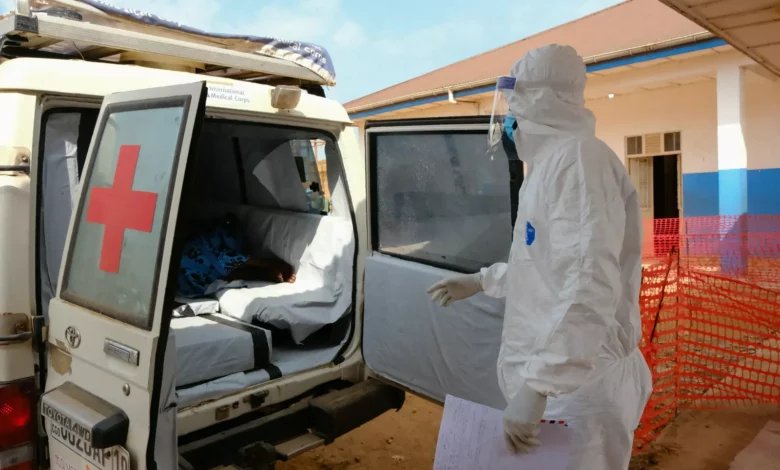
The outbreak, caused by the Bundibugyo ebolavirus (BDBV), was declared a Public Health Emergency of International Concern by the World Health Organization after it was officially identified on 15 May 2026. According to the Congolese Ministry of Health, confirmed cases in the DRC stood at 782 on Sunday, including 181 confirmed fatalities. The WHO reported a more recent tally as of 13 June showing 676 confirmed cases and 136 deaths in the DRC, alongside 19 confirmed cases and two deaths in Uganda. The Bundibugyo strain carries a historically significant fatality rate, estimated between 25 and 50 percent; the current outbreak has a case fatality rate of approximately 20.1 percent in the DRC, though officials caution this may be an undercount. The epidemic is now the largest Bundibugyo outbreak on record and the third-largest Ebola outbreak in history, concentrated in the Ituri Province and expanding into new health zones.
Unlike the more common Zaire strain – for which the approved Ervebo vaccine and treatments such as Regeneron’s Inmazeb exist – no specific medical countermeasures are authorised for Bundibugyo. The WHO has recommended prioritising several experimental drugs and vaccines for clinical trials, but most require emergency or compassionate-use authorisation before deployment in the field.
Experimental vaccines
The WHO said on Thursday that the most promising candidate to prevent BDBV is a single-dose vaccine being developed by the International AIDS Vaccine Initiative (IAVI). The candidate, rVSVΔG/BDBV-GP, uses the same recombinant vesicular stomatitis virus technology as Merck’s approved Zaire-strain vaccine Ervebo. A 2023 proof-of-concept study in non-human primates demonstrated a survival benefit. IAVI is advancing the candidate toward a clinical trial and preparing for manufacturing, including the transfer of the vaccine virus for Good Manufacturing Practices production. The WHO estimates development will take seven to nine months before the vaccine is ready for assessment in a human trial.
Oxford University and the Serum Institute of India are developing a second vaccine candidate, ChAdOx1 Bundibugyo, which employs the same ChAdOx1 viral-vector technology used in the Oxford/AstraZeneca COVID-19 vaccine. The Serum Institute began production under its emergency response framework as soon as it learned of the outbreak this month, a spokesperson said. Doses could be ready within two to three months for efficacy assessment through a clinical trial, according to the WHO, though additional animal studies have yet to be conducted. The WHO said experts consider a single dose potentially suitable for contacts of Ebola cases, while a two-dose regimen might be used for high-risk but unexposed groups such as healthcare workers and frontline responders. The Oxford Vaccine Group is generating pre-clinical data to support development. The Coalition for Epidemic Preparedness Innovations (CEPI), which funds rapid vaccine development, said it is in talks with both IAVI and Oxford about accelerating timelines. CEPI has provided significant funding to the Oxford candidate.
Moderna, the US biotechnology firm, is also developing an mRNA-based vaccine for the Bundibugyo strain, building on the platform used in its COVID-19 vaccine, according to research sources.
Antibody drugs
The WHO has recommended prioritising Mapp Biopharmaceutical’s pan-ebolavirus antibody drug, MBP134, for clinical trials among confirmed BDBV cases. MBP134 is a combination of two human monoclonal antibodies initially studied against the Sudan ebolavirus strain, and early-stage trials found it safe and well tolerated. Preclinical studies have shown it can protect against Zaire, Sudan and Bundibugyo ebolaviruses in animal models, even when treatment begins several days after infection. The US Biomedical Advanced Research and Development Authority (BARDA) is coordinating shipments of the investigational treatment for potential use in high-risk Americans exposed to the virus. Mapp said it is working with the WHO and other authorities as part of the outbreak response.
Regeneron Pharmaceuticals’ antibody drug candidate maftivimab is also being explored by the WHO. The company said laboratory studies indicate maftivimab is active against the Bundibugyo virus. Maftivimab is a component of Inmazeb, the FDA-approved cocktail (maftivimab, atoltivimab and odesivimab) for treating Zaire ebolavirus infection in adults and children. Regeneron said it recently donated 500 doses of Inmazeb to the WHO, which could be used if found helpful. “Supply of Inmazeb is already on the ground in the DRC, should WHO wish to utilise it for immediate treatment or as an additional component of the study,” the company said. Regeneron is working to prepare existing supplies of maftivimab for use in upcoming clinical trials as a monotherapy for Bundibugyo.
Human monoclonal antibodies isolated from survivors of previous Bundibugyo outbreaks are also under evaluation. One candidate, BDBV289-N, demonstrated efficacy in a 2018 animal study conducted by researchers with support from the US National Institutes of Health. The antibody provided up to 100 percent protection in infected monkeys, even when treatment began up to eight days after infection.
Antiviral drugs
Gilead Sciences’ experimental oral antiviral obeldesivir is being considered by the WHO as a potential post-exposure treatment to prevent individuals exposed to the virus from developing disease. Once-daily obeldesivir given for ten days provided up to 100 percent protection in monkeys against the Zaire and Sudan Ebola strains when treatment began 24 hours after exposure. A company spokesperson said obeldesivir “is predicted to be active against this particular [Bundibugyo] strain” and that preclinical data show positive results.
Gilead’s intravenous antiviral remdesivir has shown activity against the Bundibugyo virus in laboratory studies conducted by researchers at the University of Texas Medical Branch. Some data suggest the drug may have stronger activity against BDBV than against the Zaire strain. The WHO has recommended a combination therapy using a monoclonal antibody and remdesivir for evaluation. Gilead has donated remdesivir to Uganda to support the response and is preparing additional supplies for the DRC and the WHO under compassionate use and monitored emergency use frameworks. The safety and efficacy of remdesivir for the Bundibugyo strain have not yet been established.
Diagnostic tests
Limited testing capacity for the Bundibugyo strain has been slowing the response to the outbreak, the WHO has indicated. BioFire Defense, an affiliate of French diagnostics firm bioMérieux, manufactures an FDA-cleared test – the BioFire Global Fever Special Pathogens Panel – that can detect multiple Ebola species, including Bundibugyo. A company spokesperson said it is increasing production capacity and engaging with public health stakeholders to assess potential needs. Germany-based Altona Diagnostics produces the RealStar Filovirus Screen RT-PCR Kit 1.0, which is being used to detect the current outbreak in Congo. The firm has ramped up production to support local testing facilities. Altona also offers a dedicated RealStar Bundibugyo Virus RT-PCR Kit 1.0 for research use, and these kits have been validated and are recommended by the Africa Centres for Disease Control and Prevention.