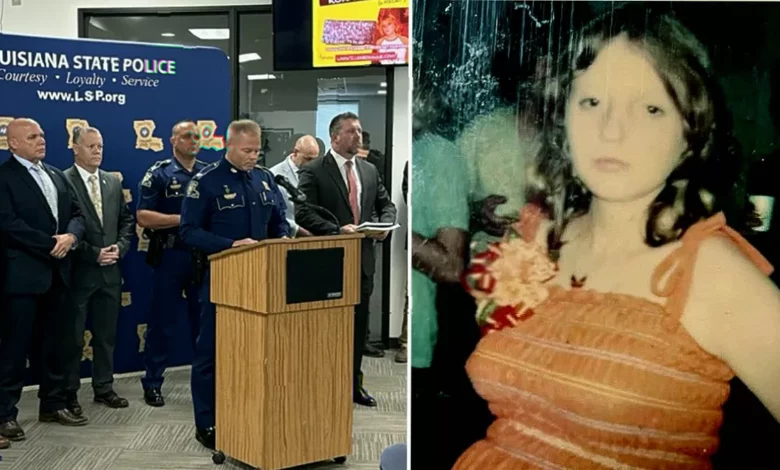
A true crime podcast has led to four arrests in a 1982 murder case, after the six-part series generated crucial new tips and broke decades of silence in a Louisiana community.
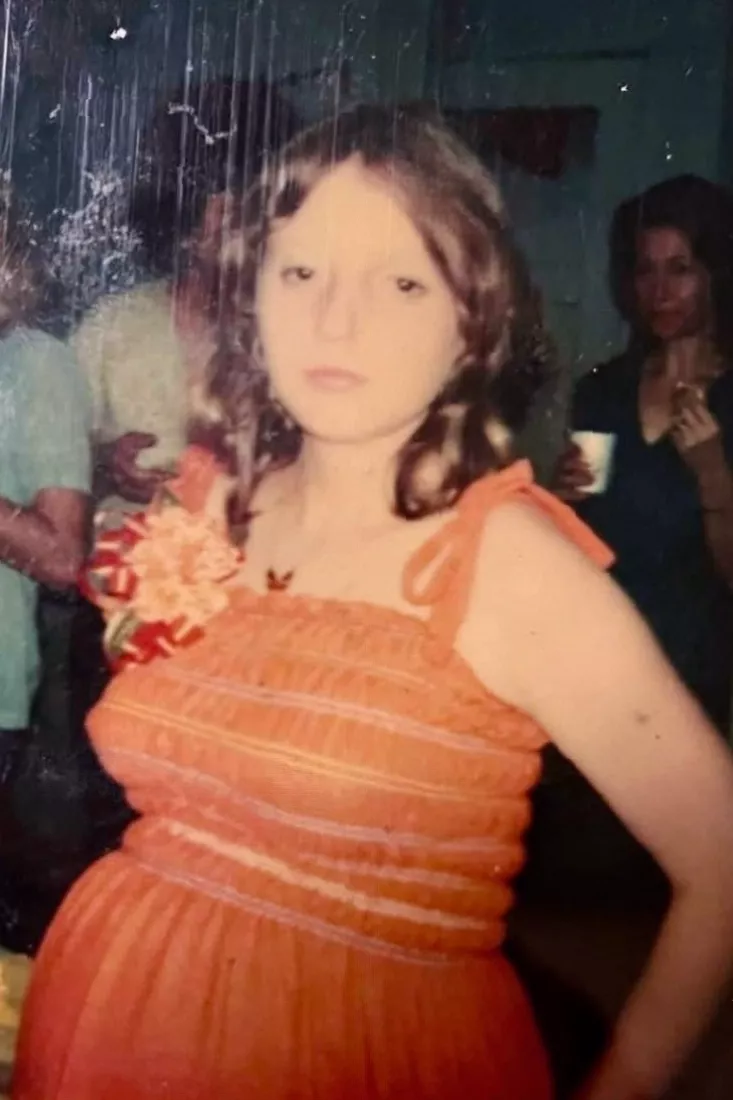
The remains of 16-year-old Roxanne Sharp were found in woodland in St Tammany Parish, roughly 30 miles north of New Orleans, on 12 February 1982. For more than 40 years, detectives struggled to solve the case amid a lack of physical evidence and a reluctance among witnesses to come forward – a situation Louisiana State Police Lieutenant Heath Miller described as rooted in “a culture of fear”. That changed last year, when investigators approached a local media company to produce a podcast titled Who Killed Roxanne Sharp?
Charles Dowdy, vice president of Northshore Media Group, which produced the podcast in partnership with the Louisiana State Police Public Affairs office, said the team initially believed “nobody cared” about the cold case. “We were quickly corrected,” he told the Associated Press. “A lot of people stepped up and said they knew Roxanne, they remembered her, they were friends with her.” The six-part series, which also involved local radio host Charles Dowdy of Lake 94.7, included a dedicated tip line that proved instrumental in gathering new leads.
Louisiana State Police spokesperson Marc Gremillion credited the podcast with generating crucial tips from the public and prompting new witnesses to approach investigators. “It helped our investigators piece together where Roxanne was days before to the time she died, to where we’re at now,” he said. “It was a very large help with getting that message out to the public, and then, therefore, those witnesses getting back to us.”
The podcast’s impact extended beyond direct evidence. Dowdy recorded audio as investigators physically recreated the crime scene, using measuring tapes to mark the exact locations where Roxanne’s body was found and where other items of evidence were uncovered. “It clearly showed that she’d been grabbed on the street and dragged into the woods,” Dowdy said. The reconstruction helped visualise the attack and prompted additional information from the public.
Community members also felt the shift. Justin Joiner, a 39-year-old resident of St Tammany Parish, told the AP that his father – a Covington police officer who was among the first law enforcement officers to arrive at the scene – had kept a briefcase full of his notes on the case until he died last year, frustrated by the lack of closure. “It’s been a big black cloud on the community,” Joiner said. “Nobody would talk about it – it was hush, hush, you talk about it in your house, not in public.” He added that the podcast opened up discussion about the case across generations and throughout the community.
Four men charged
As a direct result of the information generated by the podcast and advances in forensic technology, four men have been arrested and charged with aggravated rape and second-degree murder in connection with Roxanne Sharp’s death. They are Perry Wayne Taylor, 64; Darrell Dean Spell, 64; Carlos Cooper, 64; and Billy Williams Jr, 62. If convicted, they face mandatory life imprisonment.
Cooper and Taylor were already incarcerated in Louisiana’s state prison system on unrelated charges at the time of their arrests. Williams was arrested at his home in Covington, Louisiana. Spell was apprehended at his home in Ohio, where he is currently awaiting extradition to Louisiana. Billy Williams Jr’s son, Billy Williams III, has stated his father is innocent and believes he is being wrongly accused.
District Attorney Collin Sims of the 22nd Judicial District Court highlighted the case as a powerful example of persistence, collaboration and technological advancement in achieving justice. Roxanne Sharp’s niece, Michele Lappin, expressed gratitude for the efforts and voiced hopes for healing and closure.
Investigation challenges
The original investigation was initially led by the Covington Police Department, with Louisiana State Police taking over in 2023. State Police investigators conducted new interviews, resubmitted evidence for DNA testing, and gathered additional materials. The 22nd Judicial District Court District Attorney’s Office and the Covington Police Department collaborated with the State Police on the arrests.
At one point, police believed they had solved the case after serial killer Henry Lucas claimed responsibility for Roxanne Sharp’s murder. Lucas, however, was known for making false confessions; he later retracted his claim, and other evidence disproved his connection to the killing. The false lead added to the community’s sense of frustration.
Covington Police Department Chief Michael Ferrell said in a statement: “Cold cases don’t close themselves. They close because people show up, year after year, and refuse to quit. That is exactly what our agencies did, and today, Roxanne and her family finally have the justice they have waited so long for.”
The podcast website – www.whokilledroxanne.com – continues to serve as a resource for the case. Northshore Media Group, which has a podcast division that offers production services to individuals, businesses and public agencies, said the experience demonstrated how the medium can be used not just for entertainment but as a genuine investigative tool. The Roxanne Sharp case adds to a growing number of instances where true crime podcasts have generated leads, though the genre has also faced criticism over ethical concerns, potential sensationalism and the impact on victims’ families.