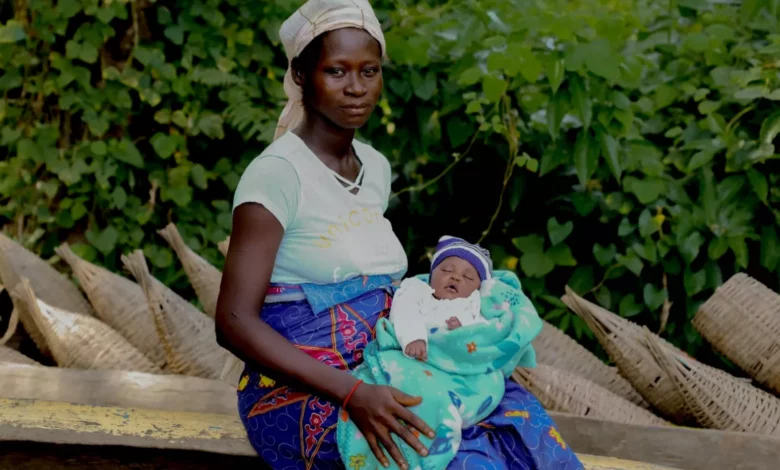
In a health centre in Zambia, Elizabeth, 63, watched her daughter-in-law prepare to give birth without one of the most fundamental necessities: clean water. “If I met our president, I would tell him about the trouble we have of lack of water at health centres,” she said. “I will tell him of how much women are suffering… I will ask him to immediately do something about it.”
Her testimony forms part of a stark new campaign by the international charity WaterAid, which warns that every two seconds, a woman somewhere in the world gives birth in a health facility lacking clean water, decent toilets, or basic hygiene. The “Time to Deliver” project, launched with a video and petition, states this deprivation can be the difference between life and death for mothers and their newborns.
The preventable toll of infection
Without water to wash hands, clean instruments, or maintain sanitary wards, mothers and newborns are exposed to deadly, yet preventable, infections. Campaigners and health workers argue that each year, more than a million women and babies die from infections linked to childbirth—tragedies that could often be avoided with basic infrastructure.
The global data underscores the scale of the crisis. While maternal deaths have declined by 40% between 2000 and 2023, an estimated 260,000 women still died from pregnancy-related complications in 2023 alone—roughly one death every two minutes. According to global health statistics, direct obstetric infections are the third leading cause of maternal mortality worldwide, responsible for almost 11% of all such deaths, a figure that rises to between 12% and 14% in South Asia and sub-Saharan Africa. In the United States, infections and sepsis were the second-biggest cause of maternal deaths from 2017 to 2019.
The risk extends to infants. Neonatal sepsis is a major cause of infant morbidity and mortality, with over one-third of neonatal deaths occurring within the first day of life.
A political problem with existing solutions
WaterAid’s campaign, backed by public figures including singer Beverley Knight, presenter Myleene Klass, and journalist Yomi Adegoke, calls on world leaders to use major international forums, specifically citing the upcoming UN Water Conference, to commit to guaranteeing clean water, sanitation, and hygiene in every health centre globally.
The charity argues the solutions are well-known but require political will and investment. It urges governments to place women’s voices at the centre of maternal healthcare planning and to fund the critical infrastructure health workers desperately need. This includes investing in clean water systems, building safe toilets and handwashing facilities, training healthcare staff in hygienic care, and setting clear, enforceable standards for dignified care.
WaterAid points to its own work as proof of concept. In countries like Zambia and Ghana, the organisation has partnered with groups such as the Helmsley Charitable Trust and the YWCA to rehabilitate health facilities, providing water, sanitation, and hygiene access while empowering communities to hold local authorities accountable.
Progress under threat from funding cuts
The campaign launches against a troubling backdrop of international aid reductions. Significant cuts from the US, the UK, and across Europe are severely impacting essential healthcare and maternal health services, leading to facility closures, loss of health workers, and broken supply chains for medicines.
The consequences are quantifiable. A US foreign aid freeze in January 2025, for example, was estimated to affect services for 16.8 million pregnant women annually. Modelling studies have suggested that the cessation of US funding for maternal and child health could reverse decades of progress, leading to millions of additional deaths and stillbirths by 2040. These cuts, campaigners warn, risk undoing the global decline in the maternal mortality ratio, which fell from 328 deaths per 100,000 live births in 2000 to 197 in 2023, but remains far above the Sustainable Development Goal target of less than 70 by 2030.
This funding crisis compounds other setbacks, such as the impact of the COVID-19 pandemic, which an estimated 40,000 additional women dying in 2021 due to disruptions in maternity services.
The campaign’s call for action at the UN Water Conference references the legacy of the 2023 conference, which produced the Water Action Agenda—a collection of over 700 voluntary commitments. However, analyses of those pledges suggest many lacked sufficient finance, measurable targets, or consideration of major water consumers, indicating a gap between commitment and actionable implementation that the new campaign seeks to close.
For health workers on the front lines and mothers like Constance in Zambia, the issue remains painfully immediate. As one mother in the campaign video describes, the moment before giving birth feels like standing “between life and death,” with the fear that a lack of something as basic as water will determine the outcome.