African men are arriving in Russian military trenches in Ukraine having been promised jobs as supermarket security guards or industrial welders, only to be handed rifles and sent to the front with little training. Their testimonies, given from prisoner-of-war camps, reveal a systematic and deceptive recruitment drive that is drawing citizens from across the continent into a foreign war.
The scale of this mobilisation is coming into sharp focus through diplomatic channels. During a visit to Kyiv, Ghana’s Foreign Minister, Samuel Okudzeto Ablakwa, was informed that 272 of his countrymen are believed to have been lured into battle since 2022. He stated that an estimated 55 have been killed and two captured as prisoners of war. “This is not our war and we cannot allow our youth to become human shields for others,” Ablakwa said, vowing to intensify public education and dismantle “dark web illegal recruitment schemes” operating in Ghana.
The issue extends far beyond Ghana. Standing alongside Minister Ablakwa, Ukrainian Foreign Minister Andrii Sybiha stated that more than 1,780 Africans from 36 different nations are currently fighting in the Russian army. A monitoring project, “All Eyes on Wagner”, has identified Egypt, Cameroon, and Ghana as sources of the biggest contingents of African recruits, describing the practice as a “deliberate and organised strategy” by Russia to bolster its ranks.
The recruitment machinery exploits socio-economic desperation. Networks use social media and clandestine online channels to advertise lucrative work-study programs or civilian security jobs in Russia. Upon arrival, recruits report having their passports confiscated and being coerced into signing military contracts with the Russian Ministry of Defense—sometimes in a language they cannot read. They are promised one-year terms but are instead obligated to serve until the end of the conflict, which marked its fourth anniversary in February 2026.
Once deployed, they face brutal realities. Survivors describe being used as “cannon fodder”, with many not surviving their first combat mission. Ukrainian officials note that most foreign mercenaries they capture are taken during that initial engagement. The casualty toll is mounting across Africa: two South African citizens have died on the frontlines, separate from a group of 17 who were allegedly tricked into fighting and later repatriated. Two Nigerian citizens were killed in late 2025. A Kenyan intelligence report presented to parliament indicated over 1,000 Kenyans have been recruited, with 89 on the front line, 39 hospitalised, 28 missing, and at least one confirmed death.
Diplomatic Repercussions and Denials
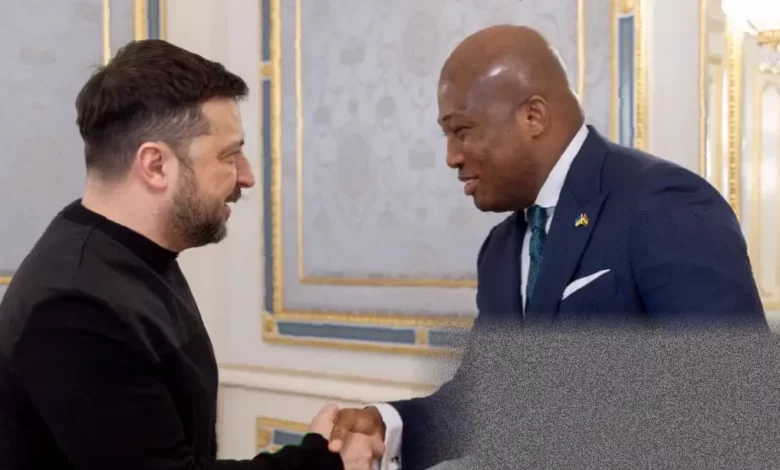
African governments are scrambling to respond. Ghana, which is set to chair an African Union regional bloc, intends to use the platform to raise awareness about what it calls trafficking networks. Minister Ablakwa also met with Ukrainian President Volodymyr Zelenskyy to discuss the issue and seek the release of the two Ghanaian prisoners of war.
Kenya has revoked the licenses of over 600 employment agencies suspected of sending citizens to Russia under false pretences and has repatriated 27 Kenyans who were stranded after being enlisted. Foreign Minister Musalia Mudavadi plans to visit Moscow for talks on the issue. In South Africa, police are investigating Duduzile Zuma-Sambudla, a daughter of former President Jacob Zuma, for her alleged involvement in luring men to Russia. The opposition Democratic Alliance has laid criminal charges against her for alleged trafficking and contraventions of the country’s strict anti-mercenary laws.
Moscow has consistently rejected these allegations. Russian authorities deny illegally recruiting African citizens, calling the claims a “dangerous and misleading propaganda campaign.” They acknowledge that foreign nationals legally present in Russia can voluntarily enlist. The Russian embassy in Nairobi has specifically denied issuing visas to individuals intending to fight in Ukraine.
Ukraine, meanwhile, is urging African governments to warn their citizens and is encouraging those already in Russian uniforms to desert and surrender, promising treatment in accordance with international humanitarian law for prisoners of war. The network’s reach appears vast and is not limited to combat roles or to Africa. Reports indicate African women have also been duped by social media adverts into working in factories assembling attack drones for Russia. Furthermore, similar deceptive recruitment tactics targeting workers from Bangladesh under false pretenses of civilian work have been documented, showing the strategy’s global span.